Showing posts with label BlackBerry. Show all posts

Thursday, September 3, 2009

Epocrates on the BlackBerry Storm


Last month, I had the opportunity to use a BlackBerry Storm as my own smartphone. I installed several medical applications (apps) on it, but I was quickly disappointed by the fact that it only has 120 MB (not GB, but MB) of memory for apps. It has plenty of storage space (thanks to an 8 GB storage card), but I need space for applications, not for things like MP3 files and videos. I quickly filled up that 120 MB of space and that was one of the reasons why I ended up returning it to Verizon.

Of course, I installed Epocrates to see how it would run on the BlackBerry Storm. I was very impressed by the way it operated and I noticed that Epocrates was always running in the background, even after a reboot (which took over 5 minutes!). Epocrates was fast and responsive and I think it ran really well on the BlackBerry Storm. Unfortunately, you're currently limited to Epocrates Rx or Rx Pro. You can't get Epocrates Essentials for BlackBerry right now.

You can read about my initial impressions of the BlackBerry Storm here at MedicalSmartphones.com.

I returned the BlackBerry Storm to Verizon Wireless and I have no regrets. I'm back to Windows Mobile (now running 6.5) and I'm sure that the BlackBerry hardware and operating system will continue to improve over the next year. The Storm 2 is coming out this fall and the price on the current Storm is very low ($50). I really hope that the Storm 2 has much more space devoted to apps.

If you're a healthcare professional and you're using a BlackBerry Storm, you've probably loaded Epocrates. What else are you running on your BlackBerry?

To keep up with all my smartphone discussions, visit: http://www.medicalsmartphones.com

Friday, May 29, 2009

Medical Students and Smartphones


Today, many people are entering medical school with an Apple iPhone, BlackBerry, or other smartphone. Students may not be aware that their school has a PDA/smartphone requirement. I wonder how these requirements have evolved over the past several years. In the past, you had to record procedures and patient encounters on your PDA. Now, I’d have to think that most of these forms are web-based. If that’s the case, then you wouldn’t technically need a smartphone because you’d simply need to have access to a web browser. However, maybe some schools still have native applications that must reside on a PDA/smartphone. If that’s the case, then you’ll need to make sure that you have a smartphone that meets those system requirements.

Tuesday, May 26, 2009

My PCP Makes House Calls. Does Yours?


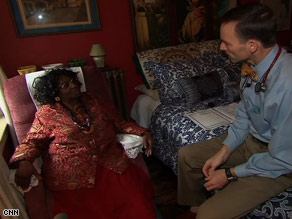
My primary care physician (PCP) makes house calls. Does yours? CNN is reporting about a geriatric physician who makes house calls with a black bag and a BlackBerry. I'm not sure how the BlackBerry fits into the picture since many physicians carry a smartphone these days.

Here's an interesting point from CNN: "Ten years ago, Medicare made it easier for physicians to receive payments for house calls by modifying the way doctors bill for their procedures. And this month, a new "Independence at Home" bill -- designed to coordinate benefits for Medicare's most expensive beneficiaries... -- will be reintroduced, making it easier and less expensive to carry out house calls."

So, if your physician doesn't make house calls, maybe you should tell him or her about this story. That may make it easier for you to get someone to see your geriatric loved one who has a difficult time leaving the house.

Monday, May 18, 2009

Free Epocrates Rx PRO

Well, if you recently purchased a BlackBerry then you may qualify for this great deal Free Epocrates Rx PRO through BlackBerry

Sunday, May 17, 2009

Medical Software for the BlackBerry Storm


With all the recent buzz about the BlackBerry Storm 2 (which won't have the clickable SurePress screen), I've been inundated with questions about medical software for the BlackBerry Storm. Why do I get so many questions? Because I also author the site: http://www.medicalsmartphones.com

There are several options for physicians, medical students, nurses, and pharmacists who are looking for medical software for their BlackBerry Storm. Let me start by highlighting 3 of those:
  • The first is Epocrates. Epocrates is a great free mobile drug and formulary reference. I've been using it for many years.
  • Now, if you're willing to spend some money, then you could also use PEPID.
  • Finally, QxMD is also free. Great for medical calculators.
There are obviously others and I'll be highlighting them in future posts.

Finally, don't forget about this special offer: Free Epocrates Rx PRO through BlackBerry

Monday, May 11, 2009

Top Search Engine Keywords Last Week

Over the last week, here are the top search engine keywords that people typed to reach this site:
  1. medicine and technology
  2. blackberry storm medical
  3. joe kim blog
  4. technology in medicine
  5. free emr
  6. technology and medicine
I'm not surprised to see that people are still looking into free EMR solutions and medical software for the BlackBerry Storm.

BlackBerry Thumb to PDA Nail


  • Look at my thumbs doc! I thought technology was supposed to improve health, not cause new medical problems! I've already had BlackBerry thumb because of Twitter. I think I'm going to sue RIM and Twitter because now, I'm getting PDA Nail!
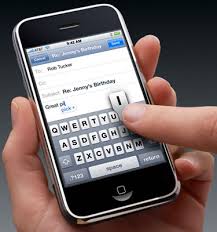
Sound ridiculous? Well, BlackBerry thumb is a type of repetitive motion injury that is becoming more prevalent among working professionals who Twitter, I mean who use their BlackBerry for corporate e-mail. People who use their mobile smartphones for hours each day are even developing dystrophic nail changes that some clinical experts are calling PDA nail. The Am J Clin Dermatol. 2009;10(3):193-6. has a case study (two cases actually) titled, "The 'PDA Nail': Traumatic Nail Dystrophy in Habitual Users of Personal Digital Assistants."

Here's a snippet: "We describe two cases of traumatic thumb nail dystrophy associated with using a PDA keyboard for several hours per day... In conclusion, biomechanical stress resulting from overuse of PDAs may result in various types of nail dystrophy. We suggest the general term 'PDA nails' for these nail abnormalities."

So, what do your thumbs look like? Are your nails turning dystrophic? Image Source: Access Emergency Medicine I

Sunday, April 26, 2009

Using Web 2.0 to Combat Swine Flu

Swine flu is hitting a country that has tremendous technology resources. As healthcare professionals, how can we leverage existing Web 2.0 resources such as wikis, RSS feeds, blogs, forums, and other social networks to battle this threatening epidemic? On Twitter, you can find many discussions related to swine flu. The same is going on at Sermo. Since more doctors are equipped with mobile communication devices such as iPhones, BlackBerrys, Treos, and other smartphones, there may be an opportunity to send mass messages to healthcare professionals who are constantly connected. The old days of simple alphanumeric pagers are starting to fade.

Tuesday, April 21, 2009

Top 10 Keywords in the Last 30 Days


Here are the top 10 keywords that are bringing people to my website through search engines:
  1. medicine and technology
  2. joe kim
  3. joseph kim
  4. jobs for mds without residency
  5. blackberry storm medical applications
  6. free emr
  7. cchit 2009
  8. medicine and technology joe kim
  9. opera mini vs opera mobile
  10. rivaroxaban fda

I guess people are still looking for a free EMR solution.

Sunday, April 19, 2009

Multi-Touch Screens on a Tablet PC


The phrase "multi-touch" has gotten confusing in the tablet PC industry. My Lenovo Thinkpad X200 tablet is considered to have a multi-touch screen because I can use my active digitizer pen or my finger as an input device. However, I can't use two fingers on the screen because it is a passive screen (not a capacitive touch screen like the iPhone or BlackBerry Storm).

I was walking through Best Buy today and I played with the convertible tablet PC made by HP. It was the HP tablet TX2Z that features a capacitive multi-touch display (which means that you can use two fingers on the screen and perform gestures).

Windows 7 will include the capability to use some of those cool multi-touch gestures. Apple already leverages this technology on the iPhone and on their MacBooks.

Wednesday, April 15, 2009

Smartphone Use Among Physicians on the Rise

According to a recent study by Manhattan Research, the use of smartphones among physicians is now at 64%. The study is titled, "Taking the Pulse v9.0." The use of mobile devices like the iPhone and BlackBerry increased by 20% in one year. It's not a surprise that the number of physicians who use the iPhone more than doubled in the past year. Now with the availability of the touch screen BlackBerry Storm, I anticipate that more doctors will be using the BlackBerry. Overall, physicians are spending more time online and are using both computers and smartphones to stay current and access medical information. They are also using mobile devices to access CME activities. So smartphones have a bright future ahead in the medical industry. As these devices become more powerful and ubiquitous, they will permeate the healthcare space and play an even larger role in the daily workflow of medical students, residents, physicians, nurses, and pharmacists.

I currently use a Windows Mobile device (the Verizon Wireless XV6800, also known as the Sprint Mogul and the HTC Titan). If I were on the AT&T network, I'd be an iPhone user. If I had to buy a new phone on Verizon, I'd probably get the new BlackBerry Storm that will have Wi-Fi. If I were on T-Mobile, I would get the G1 running Google Android.

Monday, April 13, 2009

MedicalSmartphones.com

I've registered a new URL: MedicalSmartphones.com

I've been an avid PDA/smartphone user for many years. During medical school and residency, I used to provide advice about these devices. I've been blogging about it for a while, but now I want to keep a dedicated blog about this topic. I hope you'll visit and find some useful information.

Saturday, April 11, 2009

HTC Touch Diamond Now on Verizon Wireless


The HTC Touch Pro has been available through Verizon Wireless for a while now. Well, they're moving backwards and they're now offering the HTC Touch Diamond (the slim version without the slideout keyboard). It still has TouchFLO™ 3D, so it's touch-friendly and it looks like a great phone for medical students, residents, and physicians who want something small, thin, and light. It's a shame that Verizon Wireless doesn't offer the Apple iPhone, but I suppose this allows other companies like HTC and RIM to market phones like the Touch Diamond and the BlackBerry Storm.

Friday, April 10, 2009

At what point is a PC too small?

We live in a world of mobile technology. We see PDAs, BlackBerrys, iPhones, Smartphones, iPods, and all sorts of other mobile devices. Computers are also getting smaller and we see young people using UMPCs, netbooks, micro PCs, and other miniature computers. But at what point is the PC so small that you fail to be productive? At what point does the small size hinder your ability to do what you need to do? How do you balance size, weight, and functionality? After all, you can probably find a PC in a very small size, and then if you look some more, you can probably find another one that's 25% larger. So how should a physician, pharmacist, or nurse decide on the size of that mobile PC when working in the clinical setting? At what point is an ultra-mobile PC too small?

Wednesday, April 8, 2009

The BlackBerry Storm 2 will have Wi-Fi


Yes, the rumors seem to be true. There will be a newer version of the BlackBerry Storm that will have Wi-Fi. Why the big deal? Because most hospitals have Wi-Fi and you won't be relying on a slow data plan to access the Internet. Also, what if you could use Skype or some other Voice Over IP (VoIP) solution to make free calls? Do you think Verizon will allow that? If so, sounds like some great perks for medical students and residents. So what other cool new features will the updated Storm include?

Wednesday, March 18, 2009

Medical Students and BlackBerry

Medical students often need to get some type of PDA for their clinical clerkships. They may be required to enter patient information or log their procedures. Also, since they're often asked to write prescriptions (not sign them, just write them), they need to know how to look up drug dosing. Software like Epocrates can be very helpful when you're filling out 15 scripts on different medications. Gone are the days of flipping through a huge PDR to look up dosing.

So how does the BlackBerry fit into all of this? Traditionally, Palm had the greatest marketshare in the medical field. Recently, the Apple iPhone has become very popular among medical students, residents, fellows, and attendings. Yet you still find some medical students who are in their early years of training who are attracted to the BlackBerry. Why? Part of the reason could be that they may have come from a corporate background. Others may be serious "texters" and they may have gravitated to the BlackBerry because of the excellent keyboard and texting capabilities. For others, it's simply about cost. You can get a free BlackBerry from many carriers.

I've been wondering why RIM hasn't been more aggressive with their marketing towards medical professionals. They should partner with more software developers and have more available for their devices. Otherwise, they'll be left in the dust with the Apple iPhone and the Microsoft Windows Phone running off into the sunset.

Saturday, March 7, 2009

Medical Students and PDA SmartPhones

What percentage of 3rd and 4th year medical students have either a PDA or a mobile smartphone? I would guess that number is very high, especially since many schools now require it. They require students to carry a PDA (either running Palm OS or Windows Mobile) so they can record patient encounters, procedures, etc. Several years ago, the dominant operating system was the Palm OS. I'm not sure what the case is right now. Are medical schools developing software that is compatible for the new Palm OS (which will be running on the Palm Pre), RIM/BlackBerry, and Apple iPhone? I'd have to think that it makes more sense to make everything web-based. This way, you can have any device you want. Most hospitals have Wi-Fi, so as long as you can get connected, you can enter all your information. As the iPhone becomes more common among medical students, residents, and attending physicians, there is a growing need to develop medical software. Or, will everything become web-based? It's difficult to multi-task if all your applications are dependent on a web browser.

Friday, March 6, 2009

BlackBerry Storm and Medical Applications

It really is a shame. I've not seen many medical applications for the BlackBerry Storm. The iPhone has a growing number of medical applications that are currently available, but the paucity of apps for the BlackBerry Storm is truly sad. Having Epocrates just isn't enough. I suppose the folks at RIM weren't thinking about medical students and residents when they released the Storm.

The developers and marketers at Apple have the right idea - focus on education by creating the iTunes U (the U stands for University) and get students and professionals to use their iPhone or iPod touch to learn or to engage in continuing education. This is the right way to apply technology, innovation, and education to improve healthcare.

Monday, March 2, 2009

iPhone Dominating the Mobile Web Space


According to this CNN Money/Fortunate blog, the iPhone has 67% of the mobile Internet marketplace. Windows Mobile has roughly 7%. This data was collected by a group called the Net Applications.

Could this be true? Yes. Most doctors who use smartphones aren't browsing many websites. They mainly use drug database software like Epocrates. However, many medical students and doctors have been switching from Palm or Windows Mobile to the iPhone and the Blackberry. The iPhone has such a nice mobile browser that more and more people are using this to browse the Internet. Hopefully Windows Mobile will catch up as they improve Pocket Internet Explorer.