Friday, September 3, 2010
2010 Healthcare Mobile Technology Symposium
The Healthcare Symposium is an invitation-only event.
Thursday, November 5, 2009
FDA to regulate social media? Ask Sermo physicians.

Here's a letter I got from the founder or Sermo:
On November 12th & 13th the FDA will hold public hearings to assess the role of social media relative to the FDA's charter. Sermo has been asked to provide the FDA with insight on this question. This is an important opportunity for this community to help define what its role should be relative to the FDA and what role the FDA should play in this medium. Key issues that the FDA wants to address are:
- For what online communications are manufacturers, packers, or distributors accountable?
- How can manufacturers, packers, or distributors fulfill regulatory requirements (e.g., fair balance, disclosure of indication and risk information, postmarketing submission requirements) in their Internet and social media promotion, particularly when using tools that are associated with space limitations and tools that allow for real-time communications (e.g. microblogs, mobile technology)?
- Questions specific to Internet adverse event reporting.
How many people at the FDA really understand social media? I still meet people on a regular basis who don't know about Twitter. What's Twitter? They hear the name on the radio or television, but they have no concept of microblogging.
Mark your calendars for November 12 and 13 and stay tuned...
Saturday, May 2, 2009
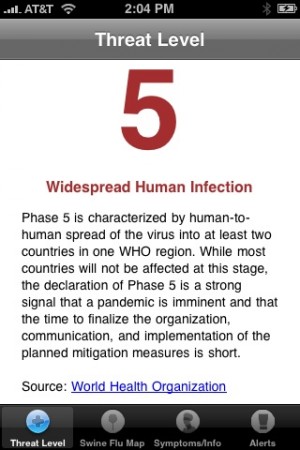
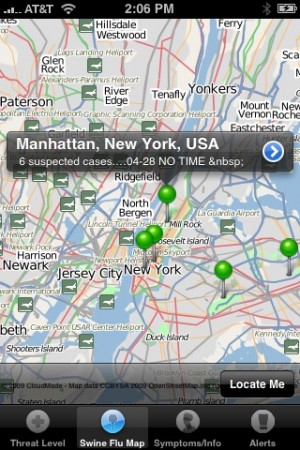
Swine Flu iPhone Tracker
Thursday, April 23, 2009
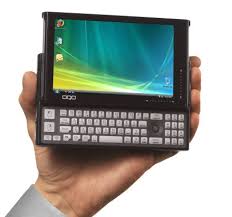
Goodbye OQO
The writing is on the wall. OQO has canceled pre-orders for the new model 02+. This probably means that the model 02 will be the last OQO. I now own a collector's item. Of course, I could also say that about the Apple Newton Messagepad 2100 (which is now a relic, but was very advanced for its time). I used to carry my Newton in the hospital. It was a bit heavy for the white coat, but it was very useful because I kept all my patient notes on it. I was paperless even before most hospitals had computerized physician order entry (CPOE)! Will we ever see another gadget that compares with the OQO? I'm sure we will as more manufacturers build small PCs that have full capabilities. As hardware technology improves, we'll see more tiny devices permeate the healthcare industry and soon hospitals will be full of gadgets and gizmos.
Wednesday, April 15, 2009
Smartphone Use Among Physicians on the Rise
I currently use a Windows Mobile device (the Verizon Wireless XV6800, also known as the Sprint Mogul and the HTC Titan). If I were on the AT&T network, I'd be an iPhone user. If I had to buy a new phone on Verizon, I'd probably get the new BlackBerry Storm that will have Wi-Fi. If I were on T-Mobile, I would get the G1 running Google Android.
Sunday, March 15, 2009
Mobile Phones and Public Health Implications
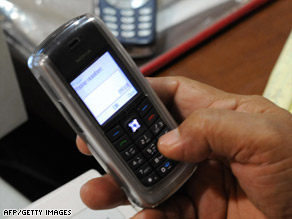
There's been a lot of controversy regarding the health effects of mobile phones. Recently, CNN reported about some of the potential public health implications of homes that only rely on mobile phones. My home is one of them. We don't have a landline phone. In fact, we haven't had a landline phone in years. I should sell my old landline phones on eBay.
Anyways, this article addresses the importance of epidemiological surveys conducted by the CDC and other organizations. These surveys are primarily conducted by phone, and only landline phone numbers get included in these studies. At 26 percent, Oklahoma has the highest percentage of homes that only have a mobile phone. Vermont has the lowest at only 5 percent. These are old statistics and most experts suspect that the numbers are considerably higher in 2009.
So if the CDC and other government agencies can't accurately track the health of the nation, where does that put us? Surveys will result in skewed data because of selection bias. The question remains, what type of people are more likely to live in a home that doesn't have a landline phone? My guess: just about anyone. Why? Because almost everyone now has a mobile phone. If you're young and single, why do you need a landline? What if you're a young married couple with no kids? Once again, no need for a landline. What if you're an active senior? You probably have a mobile phone since you're active and you're going out. Do you need a landline? What if you're a family with teenage kids? If they each have a mobile phone and both parents have phones, then who needs a landline?
I'm not making the argument that people should get rid of their landline phones. I think there are some serious public health implications at stake and perhaps the government needs to come up with a way to conduct surveys using more creative measures (like e-mail?).
Friday, March 6, 2009
BlackBerry Storm and Medical Applications
The developers and marketers at Apple have the right idea - focus on education by creating the iTunes U (the U stands for University) and get students and professionals to use their iPhone or iPod touch to learn or to engage in continuing education. This is the right way to apply technology, innovation, and education to improve healthcare.
Sunday, March 1, 2009
I Love eBay
eBay is such a great way to get rid of old electronics and other gadgets. I just sold a few items and it's great to clean up some of the clutter around the house.
I also find eBay to be a useful source for cellphone accessories, computer parts, and other small peripherals. I avoid buying things from China because the shipping cost to replace/refund just isn't worth the hassle.
Monday, January 26, 2009
Intel Webinar on Mobile Health Technology
Managing Change: How to Overcome Obstacles and Encourage Mobile Technology Adoption
Can you make the case for healthcare IT to your staff and clinicians?
This complimentary, one-hour webinar shows you how to create a change-management process, one that succinctly outlines the benefits of adopting mobile point-of-care solutions including:
- More safeguards to prevent life-threatening errors
- Faster decisions in caring for patients based on the latest changes in their condition
- More time for nurses to spend at a patient’s bedside and less pushing paper
- More efficient care, which means less waste and less cost
Mobile point-of-care technologies contribute to efficiency and patient safety, but moving staff and clinicians into this new world can be a battle. At this event you'll hear Ohio Health, SunStone Consulting, and St. John’s Hospital tell their own adoption stories. You'll also get a chance to submit questions and join the conversation.
A recent national survey reveals that adoption of new technologies by clinicians is the biggest challenge when launching mobile point-of-care solutions (63 percent).