I am in New Orleans attending the 2013 HIMSS conference. Follow updates on Twitter by following the #HIMSS13 hashtag.
Today, I was in the HIMSS/AMDIS Physicians' IT Symposium: Reviewing the Past, Assessing the Present and Planning for the Future. Let me highlight a few key points and reflections I jotted down as I sat through several presentations about Meaningful Use (MU) and the future of clinical informatics:
Health IT is about improving clinical workflow efficiency and patient care. The HITECH Act was signed in 2009. How far have we come? New laws and regulations are forcing physicians and hospitals to change. They may not want to change, but they have no choice. The carrot and the stick approach is driving people to buy systems and force changes in workflow. Are these changes all beneficial for patients? Not necessarily. Some are clearly going to help patients as physicians rely on evidence-based information when they make clinical decisions. We should see a reduction in medical errors. Medication tracking and reconciliation will be easier. But, are we actually improving patient care? Or, are we putting too much emphasis on achieving Meaningful Use?
We've seen many physicians and hospitals achieve Meaningful Use (MU) Stage 1. Now, we are hearing growing discussions around Stage 2. It's probably a good thing that Stage 2 was delayed to 2014.
Showing posts with label CPOE. Show all posts
Sunday, March 3, 2013
Tuesday, December 14, 2010
Institute of Medicine (IOM) studies the safety of electronic health records (EHRs)
Are electronic health records (EHRs) safer than paper records? Or, will we see an increase in medical errors as clinicians switch from paper to electronic systems?
The Institute of Medicine (IOM) is conducting a study to examine the safety of EHRs. It's easy to accidentally enter data into the wrong patient's record. Or, it's easy to miss a check box when you're placing an order. Then again, these errors could be made if you're using a paper-based system, so why would mistakes occur more frequently if we're now using electronic systems?
I think that some physicians develop a dependency on some of the automated alerts and clinical decision support resources that are included in EHRs. There's also the fact that every screen looks the same and it's not as easy to circle your notes or write little comments on the side of the chart. There's no easy way to add colored flags or post-it notes on an electronic chart.
The Institute of Medicine (IOM) is conducting a study to examine the safety of EHRs. It's easy to accidentally enter data into the wrong patient's record. Or, it's easy to miss a check box when you're placing an order. Then again, these errors could be made if you're using a paper-based system, so why would mistakes occur more frequently if we're now using electronic systems?
I think that some physicians develop a dependency on some of the automated alerts and clinical decision support resources that are included in EHRs. There's also the fact that every screen looks the same and it's not as easy to circle your notes or write little comments on the side of the chart. There's no easy way to add colored flags or post-it notes on an electronic chart.
Labels:
CPOE,
EHR,
electronic health record,
hospital,
IOM,
medical errors,
patient safety
Wednesday, November 10, 2010
HIMSS Launches New CPOE Wiki
The HIMSS CPOE Wiki is a valuable resource with Computerized Provider Order Entry recognized as a vital component to improve healthcare delivery and achieve meaningful useCHICAGO (November 10, 2010) – Streamlining the search for CPOE information and insight, the new HIMSS CPOE Wiki brings data, documents and valuable guidelines on meeting and exceeding meaningful use into one location. The HIMSS Enterprise CPOE Workgroup developed the wiki with the leadership of workgroup Chair Paul Kleeberg, MD, Clinical Director for Minnesota and North Dakota REC REACH.
“The workgroup launched the wiki to broaden use and understanding of CPOE, a health IT application with continued growth and relevance to electronic health record system implementations,” said Dr. Kleeberg. “Physicians, nurses, implementation staff, pharmacists and anyone supporting the adoption and use of CPOE can find and contribute valuable information resources on the wiki.”
Labels:
Computerized Physician Order Entry,
CPOE,
HIMSS,
medical wiki,
wikis
Wednesday, September 8, 2010
The Future for Physician Mobility #mHealth
As a physician champion for the HCPLive Network, I'm excited to blog about some of the highlights from this meeting. You can also follow updates about the mHealth Networking Conference on HCPLive.com.
This afternoon, I attended a session titled, "A New and Better State of the Future for Physician Mobility." The speaker was Richard Pentella from PatientKeeper. He spoke about the mobility of physicians and then spent some time focusing on verbal orders in the era of HITECH and CPOE..
So, let's take a look at verbal orders. How do we deal with this when a hospital is relying on computerized physician order entry (CPOE)? Back in the day of paper orders, it was easy to call a verbal order and then swing by the chart to sign the verbal order at a later time/date. Now, the implementation of verbal orders is getting more complicated as hospitals are aiming to become 100% digital.
Wednesday, July 14, 2010
Thoughts about the final "meaningful use" rules
The final "meaningful use" rules came out yesterday. I'm still reading through the 800 page document and thinking about the amount of time it must have taken to come up with all these rules. The New England Journal of Medicine (NEJM) published a perspective article yesterday titled, "The “Meaningful Use” Regulation for Electronic Health Records." David Blumenthal, M.D., M.P.P., and Marilyn Tavenner, R.N., M.H.A. start the article with this paragraph:
Healthcare IT News is reporting that "Overall, AHA leaders said they remain concerned that the requirements may be out of reach for many hospitals. "Unfortunately, CMS continues to place some barriers in the way of achieving widespread IT adoption," AHA said in its statement."
The widespread use of electronic health records (EHRs) in the United States is inevitable. EHRs will improve caregivers’ decisions and patients’ outcomes. Once patients experience the benefits of this technology, they will demand nothing less from their providers. Hundreds of thousands of physicians have already seen these benefits in their clinical practice.They then remind the readers that:
Through HITECH, the federal government will commit unprecedented resources to supporting the adoption and use of EHRs. It will make available incentive payments totaling up to $27 billion over 10 years, or as much as $44,000 (through Medicare) and $63,750 (through Medicaid) per clinician. This funding will provide important support to achieve liftoff for the creation of a nationwide system of EHRs.That's a lot of money, but will it be adequate to ensure that hospitals and physicians are equipped with the support staff and the IT infrastructure to achieve "meaningful use" within their organizations?
Healthcare IT News is reporting that "Overall, AHA leaders said they remain concerned that the requirements may be out of reach for many hospitals. "Unfortunately, CMS continues to place some barriers in the way of achieving widespread IT adoption," AHA said in its statement."
Monday, July 12, 2010
Using Clinical Decision Support to Meet Your HIE Objectives
This webinar is sponsored by PEPID and it will cover "how you can meet your HIE objectives and achieve meaningful use through clinical decision support."
• How to achieve TRUE “meaningful use”Hear from the experts who have extensive experience in both wireless and system integration and have been implemented in hundreds of systems, hospitals and clinics worldwide.
• What content and features are important to healthcare professionals
• Developing a HIT system that maximizes usability
• How to integrate clinical decision support into any EMR, EHR, EDIS, CPOE or HIT system
• How the right API can drive down costs, maximize workflow and improve efficiency
• Overcoming nomenclature obstacles and lowering switching costs
• Enhancing web portals with clinical decision support and drug data
You can register for this complimentary event here.
Wednesday, March 3, 2010
Inpatient "lessons learned" from health IT implementations (#HIMSS10)
- MultiCare
- Children's Hospital Boston
- Kaiser Permanente in Southern CA
- Conduct regular interdisciplinary workflow meetings
- Medication reconciliation remains a challenge
- Who owns the MAR when you transition from a paper MAR to an e-MAR? (Medication Administration Record)
- Train, re-train, and then train again
- Physician champions are key
- Involve the nurses!
- Account for variations in clinical workflow in different settings
- Be prepared for verbal orders
- Physicians want to learn from other clinicians
- Re-evaluate and continue to make improvements and refinements
Thursday, December 31, 2009
2009 was about H1N1, health care reform, and health IT
2009 was also a year where we saw so much happen in health care reform. The HITECH provisions within the American Recovery and Reinvestment Act (ARRA) of 2009 drove significant changes in the health IT space and we will continue to see major changes in 2010. The buzz around EHR, EMR, PHR, and CPOE has never been stronger (the world of Health IT is all about strange acronyms). Meetings like HIMSS and AHIMA have never been more full of energy.
As we prepare for 2010, I'm sure many of us are wondering what type of impact H1N1 will make this winter. Will we see a second wave of swine flu?
Also, are you prepared for all the health IT changes that will be taking place in your hospital/office/practice in 2010?
It's been an amazing year and it's flown by so quickly. They say that time seems to go faster as you get older. Do you think that's true for you? It sure feels like it for me.
Tuesday, November 24, 2009
Computerized Alerts Can Influence Drug Prescribing
Thanks to Epocrates for pointing me to these 2 interesting abstracts on computer-based decision support:
- The first one (published in the J Am Geriatr Soc.) is titled, "Computerized decision support to reduce potentially inappropriate prescribing to older emergency department patients: a randomized, controlled trial." The authors found that "Computerized physician order entry (CPOE) with decision support significantly reduced prescribing of potentially inappropriate medications for seniors."
- The second one (published in the J Gen Intern Med.) is, "Reducing the prescribing of heavily marketed medications: a randomized controlled trial." The authors found that "Computerized decision support is an effective tool to reduce the prescribing of heavily marketed hypnotic medications in ambulatory care settings."
Here are the links for the abstracts:
http://www.ncbi.nlm.nih.gov/pubmed/19549022
http://www.ncbi.nlm.nih.gov/pubmed/19475459
Sunday, August 9, 2009
Integrating PACS with EHR
PACS = picture archiving and communications system (used in radiology)
EHR = electronic health record
So, it should be simple to integrate digital radiology images into an existing EHR, right? Well, it can be more complex than that because you have different PACS and EHR systems out there. The systems may not "talk to each other" very effectively.
One recent project demonstrates a successful link between Merge’s Fusion PACS with an EHR system from Epic. Where did this occur? Minneapolis-based HealthPartners and Merge Healthcare. Epic is widely used in many hospital systems. This Epic/Merge integration certainly won't be the last. However, I wonder which PACS solution will emerge as the leading option for hospitals running EHRs such as Epic.
Here are some interesting tidbits about PACS according to Wikipedia:
Most PACSs handle images from various medical imaging instruments, including ultrasound (US), magnetic resonance (MR), positron emission tomography (PET), computed tomography (CT), endoscopy (ENDO), mammograms (MG), digital radiography (DR), computed radiography (CR) etc.So, did you catch all those acronyms? Welcome to the world of Health IT!
In August of 2004, DR Systems was the first to announce that it had received FDA clearance for diagnostic reading of digital mammography images on a PACS. Since that time, other PACS vendors including CareStream Health, GE Healthcare, Cedara, FUJIFILM, Philips Healthcare, Sectra, Emageon, and Siemens Medical Solutions have also obtained FDA clearance for full field digital mammography (FFDM).
Digital Imaging and Communications in Medicine (DICOM) is a standard for handling, storing, printing, and transmitting information in medical imaging. There are several Digital Imaging and Communications in Medicine (DICOM) Viewers available both free and proprietary. Some of the DICOM Viewers include: Medstrat, eFilm, K-Pacs, DICOM Works, OsiriX, SureVistaVision , UniPACS, Syngo Imaging, VRRender, ImageJ and MicroDicom. Various viewers can connect directly to a PACS server or retrieve images from local storage. Of note, OsiriX is an open-source DICOM viewer.
Labels:
CPOE,
EHR,
electronic health record,
Epic,
Epic Systems Corporation,
Merge,
PACS
Tuesday, July 14, 2009
Grand Rounds July 14, 2009: Technology and Healthcare
Welcome to Grand Rounds Vol. 5 No. 43 @ Medicine & Technology. The theme is this week is to look at different ways technology is changing the world of healthcare. I am your host this week and I hope you'll enjoy some of these interesting stories.
To start things off, we see Marya (Healthcare, etc.) talking about patient rights and the potential effects of false positive results. This may lead to unnecessary tests and/or medications and possibly even some invasive procedures. Do we really need to biopsy every small incidentaloma that appears on imaging studies? Perhaps as diagnostic testing improves over time, we will have fewer false positives.
Ramona (Suture for a Living) reminds us that we must not Forget HIPAA Privacy Rules as we continue to expand the use of electronic health records (EHRs). We know that EHR adoption will increase rapidly over the next several years as billions of dollars get channeled from the government.
Jolie (I am Dr. Jolie Bookspan, The Fitness Fixer) describes some of the high-tech things she got to do as a military research scientist. I wonder what those pilots experience as they go through acceleration testing and undergo serious g-force effects.
Bongi (other things amanzi) writes about a funny story that happened during his Saturday rounds when his boss focused on clothes and not on anyone's morning breath (improved breathalyzers in the future should pick up faint signals of ETOH during morning rounds).
Alison (Shoot Up or Put Up) talks how the internet has provided her with some useful tips to help her live with diabetes. The web is full of both reliable and unreliable health information for patients. Even healthcare professional sometimes get misguided by the information that can be found online.
Ryan (ACP Internist) shares an awesome acronym of the week: SHUTi, a new Internet program that shows promise for helping people get to sleep. Can stories, quizzes and games really teach people to have better sleep habits? Let's see.
Hank (InsureBlog) talks about how some patients are cleaning up their own hospital rooms. Perhaps once we have some fully-automated cleaning robots, we should be free of that problem. We just need iRobot to make make some hospital-grade Roomba and Scooba cleaning robots.
Nancy (Teen Health 411) writes about an exciting electronic Wellness Assessment for Youth - called WAY2GO! that's coming to We're Talking Teen Health at the Palo Alto Medical Foundation (PAMF). Thanks to a partnership between the Health Trust, Vive, and PAMF, teens will be able to get a personalized health report back with links to a new service providing free personal health coaching via the web and their cell phones.
Sam (Canadian Medicine) writes about Dr. Bob Thirsk, a Canadian physician who is living on the International Space Station. What's he doing up there? Providing medical care for his fellow astronauts and operating the Canadarm2. I'd love to head out to space some day.
Jay (Colorado Health Insurance Insider) suggests that change in protocol for breech births may actually benefit mothers, babies, and health insurance companies. Is it possible that surgical technology has made it too convenient to opt for a C-section? What if we performed fewer C-sections?
Dr. Charles (The Examining Room of Dr. Charles) writes about the low-tech importance of empathy in taking a family history, and the precarious control of emotions that is needed in being a good listener. What does that look like? A level-headed, composed and somewhat thoughtful response.
OTW (On The Wards) writes how the increasing prevalence of drug-resistant bacteria is generating a need for newer weapons against infectious diseases. Why do we have all these superbugs? Are healthcare professionals too eager to prescribe antibiotics? Let's hope some advances in drug development will lead to more effective therapies against these multi-drug-resistant organisms.
Clinical Cases (Clinical Cases and Images - Blog) writes about ways to improve medical RSS aggregators. Do you even know what RSS stands for? What about Web 2.0? Speaking of RSS and Web 2.0, do you Twitter? Make sure to follow interesting medical bloggers on Twitter. You can start by following me @DrJosephKim
Allergy Notes (Allergy Notes) talks about one of my favorite topics: chocolate. Or, actually, chocolate allergies. I think if I ever developed that, I'd be taking Benadryl all the time. It's hard for me to imagine a life without chocolate. I could live without many things, but I'd really miss chocolate. If I developed a chocolate allergy that resulted in anaphylaxis, I'd probably go through several epi-pens each day.
Murali (SharpBrains) discusses the Pros and Cons of the most common assessments to identify cognitive problems, introducing the opportunity presented by innovative computerized neuropsychological tests. I think I'd prefer going through a battery of assessment tests over a brain biopsy. How about you?
Barb (Florencedotcom) writes about the well-known IT caveat "garbage in-garbage out," and what it means since the medication use system we rely on is rife with failure points. I haven't thought about GIGO in a very long time. We definitely need more drug safety specialists to help prevent medication errors. Computerized Prescriber Order Entry (CPOE) may reduce some errors, but it won't eliminate all of them.
In a guest post, Michael (Health Business Blog) talks about how Dr. Francis Collins (nominated as the head of the NIH) is getting a bum rap. What do you think about the Human Genome Project? I think it's rather amazing to see how far we've come in human genomic science.
The Samurai Radiologist (The Samurai Radiologist) asks: Which background music/sound is optimal for cognitive activities such as film interpretation? A quick and dirty study while on call suggests classical music. Bach, to be precise. In my former life, I used to play the oboe (but I wasn't one of those crazy, fanatical oboe players).
Randel (Disruptive Women in Health Care) blogs about the medical device industry, particularly the “use (or underuse)” of technology as it relates to what she describes as an “arcane” payment system. Although comparative effectiveness research must be used to test new medical technology, reform in the payment system is equally necessary.
Jan (Doc Gurley, Posts From An Insane Healthcare System) covers new information about the placebo effect, including a hierarchy of results (did you know big pills work better than small ones?). In her article, she also points out that positively reinforcing a result makes it more likely to happen. So does this mean all those TV and internet drug adds are boosting a drug's efficacy?
David (HealthBlawg :: David Harlow’s Health Care Law Blog) spoke with Prof. Rodwin about his proposal that all de-identified health data be subject to public ownership, so that private companies cannot restrict access to it and/or monetize it. Public ownership would ensure availability of data for comprehensive public health and evidence-based medicine uses.
Chris (Life in the Fast Lane) offers some pointers to help ‘Web 2.0 laggards’ pull their heads out of the ground and off-load the stress of information overload. Fear of information overload is a barrier preventing doctors from using web resources. But, given that humanity has been experiencing information overload since the invention of the Gutenberg press, ignoring web resources to avoid confronting this daunting problem is a maladaptive, self-defeating strategy.
Well, that wraps it up for this week. Thanks for attending Grand Rounds here at Medicine and Technology. And next week, head over to our surprise, last-minute guest host's site: www.docgurley.com (Doc Gurley, Posts From An Insane Healthcare System), for details on how you can submit. In addition to hosting Grand Rounds, Doc Gurley also will be, that same weekend, speaking at the Mystery Writer's conference in Marin about death, mayhem and the urban underside of life. If you're looking for inspiration, or a theme for Grand Rounds' July 21 submissions, the code word for next week's Grand Rounds is...mystery! Get your submission in early and win big Big BIG karma points! [AND, if you're a San Francisco Bay Area health blogger, send an email to Doc Gurley at docgurley (at) gmail (dot) com for details about the first ever health bloggers' meet-and-greet - ALSO on July 21!]
Tuesday, June 16, 2009
Defining "Meaningful Use" Begins Today
We've all been waiting for today. Today (June 16), those in the health information technology (Health IT, HIT, or HITECH) industry began getting glimpses of the definition of "meaningful use" from government leaders. If physicians use an electronic health record (EHR), they must use it in a meaningful way if they are to reap the benefits and avoid the punishments stated in the ARRA. Who gets to decide if you're using an EHR in a meaningful way? The government.
Today is just the beginning of a long conversation, according to Dr. David Blumenthal, National Coordinator for Health Information Technology. Today, the HIT Policy Committee met and highlighted some of the essential components that outlines this mysterious phrase, "meaningful use." We won't see physicians meaningfully using an EHR overnight. This will happen in three stages (although many things will also be happening simultaneously):
- Data capture and sharing by 2011
- Advanced clinical processes by 2013
- Improved outcomes by 2015
- Physicians must actually document outpatient progress notes using an EHR (so can you still dictate your note and have it manually transcribed into the EHR?)
- They must use computerized physician order entry (CPOE) for all order types, including e-prescribing
- They must improve care coordination (that's a bit nebulous if you ask me, but I'm sure they will eventually iron out the critiera for this)
- Submit electronic data to registries and other databases to improve public health and assist with disease surveillance
- Comply with HIPAA Rules and state laws (isn't this obvious?)
Thursday, April 23, 2009
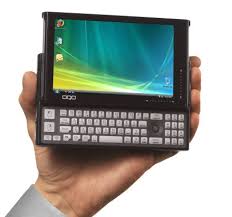
Goodbye OQO
The writing is on the wall. OQO has canceled pre-orders for the new model 02+. This probably means that the model 02 will be the last OQO. I now own a collector's item. Of course, I could also say that about the Apple Newton Messagepad 2100 (which is now a relic, but was very advanced for its time). I used to carry my Newton in the hospital. It was a bit heavy for the white coat, but it was very useful because I kept all my patient notes on it. I was paperless even before most hospitals had computerized physician order entry (CPOE)! Will we ever see another gadget that compares with the OQO? I'm sure we will as more manufacturers build small PCs that have full capabilities. As hardware technology improves, we'll see more tiny devices permeate the healthcare industry and soon hospitals will be full of gadgets and gizmos.
Tuesday, April 7, 2009
Do Electronic Health Records Reduce Medical Errors
Guns don't kill people, but people can use guns to shoot and kill people. Electronic health records (EHRs) or electronic medical records (EMRs) don't reduce medical errors by themselves. However, they can help clinicians reduce the risk of medical errors if they are used properly. Hence, although they have many automated alerts, reminders, and warnings that may pop up when an error is about to occur, there is still a need for human discretion when using these systems. Doctors (and other prescribers), pharmacists, and nurses need to be know how to use EHRs to reduce medical errors. As they become more familiar with the advantages of EHR/EMR solutions and as they get more proficient as using them, medical errors will decrease.
Actor Dennis Quaid has been pushing hard for EHRs and he made quite an argument at HIMSS 2009 in Chicago. He told his story of how his 10-day-old twins nearly died after they were mistakenly given excess doses of heparin at a Los Angeles hospital. Could this have been prevented by more robust EHR systems that alerted the entire healthcare team about the improper dose? Technologies such as computer physician-order entry (CPOE) and bar coding may have reduced the possibility of confusing drug packaging. Dennis Quaid and his wife have started the Quaid Foundation to promote awareness of the need for more information technology as a way to prevent medical errors.
Saturday, March 28, 2009
Incentives to Boost Health IT Adoption in Massachusetts
The state of Massachusetts has seen an impressive uptake of health IT because of incentives from health plans and a state-mandated deadline to have computerized physician order entry (CPOE) implemented in all hospitals within four years. Plus, with all those medical universities like Harvard, Tufts, Boston University, and U Mass Amherst, you have a state with a huge resource of technologists and scientists developing EHRs that are tailored for their health systems.
Subscribe to:
Posts (Atom)