Showing posts with label Apple. Show all posts

Tuesday, May 1, 2012

Steve Wozniak on "The Future of Personal Healthcare Technology" #ATA2012

Today is the last day of the American Telemedicine Association (ATA) annual conference and the plenary this morning was Steve Wozniak, Co-Founder of Apple Computer & Inventor of the World's First Personal Computer. The plenary was supported by GlobalMed Telemedicine.

Woz shared his personal story of how he learned about computers as a little kid. He was an innovator from his early days and that innovation never ended. His stories were funny and the entire audience was laughing the entire time. He taught himself to build small computers and he met Steve Jobs and they both hit it off. He went to work at HP where his job was to design handheld calculators. Steve Jobs went to work at Atari (and Woz got to play with all those games).

The name "Apple" came about when he was at a doctor's office, there was a story about an orchard, and someone came up with the name "Apple Computer"

He was asked, "what advice would you give health care entrepreneurs?"
  • The driving force behind innovation and success has to be personal.
  • Failure is a valuable learning experience.
  • Small companies offer greater opportunities for innovation. 
  • It's OK to take risks and do different things when you're young. 
The Apple II was the product that allowed them to grow and as Apple grew, they maintained the small company mentality to allow them to innovate. Woz developed the inside while Jobs designed the outside of their computers. Woz calls Apple the "Secret Silent Company." They were a disruptive force as they created an ecosystem that all fell under the Apple umbrella: they owned the hardware, the operating system, the iTunes music store, the iOS app store, etc. The entire ecosystem was Apple.

Woz now has the "traveling rock star" lifestyle as he speaks at conferences around the world.

The biggest challenge in technology and the future direction of computers:
  • Computers are now acting more like humans: artificial intelligence like IBM Watson, Siri on iPhone, etc.
  • Computers will look, listen, and learn.
  • The cloud will process everything to save battery life on mobile devices.
  • Mobile devices will incorporate more "sensors" (like smell) and it will develop insights about the owner.
  • Computers will get smarter and smarter.
  • Will the computer replace the doctor? Will the doctor merely become a technician who is skilled at navigating a computer to manage a patient? 
The entire audience listened intently when he said that he knows how long it takes to build a human brain: 9 months.

Woz spent several years teaching kids and teachers. He loved the experience and transferred his passions to students. He reminded the audience that the driving force behind innovation must be personal.

ATA12 coverage is sponsored by HP. HP’s extensive portfolio of products, solutions, services and relationships can help your healthcare organization achieve quality business practices and provide quality patient care.


Tuesday, April 27, 2010

Medicine, technology, and the iPad

This is being republished from MobileHealthComputing.com

In the Washington Post, you may have caught the article titled, "With the iPad, Apple may just revolutionize medicine." How will the iPad revolutionize medicine? This weekend, I saw a few medical students attending the Association of MD/MBA Programs 8th Annual Conference and at least two students were taking notes on the iPad.

So, how will this mobile device revolutionize medicine? If the iPad becomes ubiquitous in the hospital setting and if health care providers are using this mobile device to access patient data and imaging studies, then the small and light iPad could improve efficiencies in many aspects. However, we know that the iPad is not a "rugged" device, so will we see other versions that are specifically designed for the health care environment? We've seen several manufacturers create Mobile Clinical Assistants like the Motion C5 and the Panasonic Toughbook H1. These devices are designed for inpatient settings, so will we see a "clinical" version of the iPad emerge soon? The addition of a silicon sleeve won't protect it from other common hospital forces like splashes, drops, and germs.

The iPad has been engineered for the consumer market, but let's see what Apple comes up with for the health care industry.

Monday, April 5, 2010

Apple iPad

On MobileHealthComputing.com, I've written quite a few posts about the Apple iPad. In case you haven't had a chance to take a look at those iPad stories, click here to read about the new Apple iPad.

Friday, March 12, 2010

Apple iPads for every medical student?

This is being republished from MobileHealthComputing.com

We've heard of several medical schools requiring students to use either an Apple iPhone or iPod touch, but what about the iPad? Some schools have been experimenting with digital e-book readers like the Amazon Kindle. Medical textbooks are frequently filled with photos and other color-rich images, so the grayscale Kindle isn't the ideal e-book reader for medical students who wish to carry their textbooks electronically. This is where the Apple iPad could revolutionize the way medical students learn. Will some medical schools try to educate their students using digital technology? I'm sure it's bound to happen. What I don't know is whether the iPad will improve the way students learn medicine. Since I'm a technology advocate, I could make several compelling arguments to say that interactive learning is much more effective than traditional lectures and didactic education. I could also say that retention could be enhanced with the use of digital quizzes that occur at the point-of-learning. You can't do that with a text book, but you could do that with a digital version. I could argue that multimedia enhances the educational experience compared to static color images. But all these arguments could fail if students are not ready and willing to embrace technology to enhance their education. The average pre-med college student is probably tech-savvy and digitally connected via a smartphone, several social media accounts, and a laptop computer. If you hand that student an iPad filled with medical textbooks and multimedia resources, will that student learn effectively? I would think so.

Friday, February 26, 2010

The Apple iPad in health care

On my other blog MobileHealthComputing.com, I've had the chance to write several blog posts related to the new Apple iPad and its potential application in the world of health care.  If you haven't visited that site, click here to read my posts related to the iPad.

Thursday, December 17, 2009

Epocrates expanding their product line for the iPhone and iPod touch

Are you using Epocrates? Do you have an Apple iPhone or iPod touch? You may be interested in this story on MedicalSmartphones.com:
Epocrates Essentials Deluxe for the iPhone and iPod touch

I've been using Epocrates for many years and it's great to see how they've continued to serve the medical community with their software.

Sunday, June 7, 2009

Excited about the 2009 Apple WWDC


I'm very excited to see what's going to be coming out of the 2009 Apple Worldwide Developers Conference (WWDC) that starts tomorrow. In particular, I'm eager to learn about 2 specific things:
  1. Apple Tablet (will we see this revealed?)
  2. Next iPhone (will it be cheaper and better?)
I envy those who are in San Francisco for the conference. I'm sure we'll see many tweets on Twitter about this. Will you be one of those people sending tweets (hopefully linked to plenty of photos and videos). Image source: iphonebuzz

Thursday, May 7, 2009

Rethinking the Kindle DX

I've been thinking about the rationale behind the Kindle DX. Why would Amazon want to release something so large and expensive? You could purchase a mobile computer (like a laptop or netbook) for the same amount. Does it really make sense to release an e-book reader that's so expensive?

The folks over at Amazon must really think that people are willing to replace textbooks with e-books. I'm a big fan of being paperless, but that's why I use my convertible Lenovo Thinkpad X200 tablet PC. I have a large color screen (12") and I can read all the PDFs I want to without panning, scrolling, etc.

How will the Apple iPad (I call it that right now, but it could end up being called the MacPad, MacTablet or iTablet) change the way people view these portable digital devices? Many people read on their iPhone. Will a larger tablet-sized gadget be preferred? How will doctors react to this surge of slate tablet-type gadgets? Will physicians become more inclined to embrace pen-based input and move away from the keyboard? Will Microsoft Surface reinforce the fact that you can be so much more efficient if you're using natural touch and finger gestures?

Wednesday, May 6, 2009

Medical Textbooks on the Amazon Kindle DX?


Will we see medical textbooks on the Amazon Kindle DX? Not until we see one that has a color screen (I think that's called a slate tablet PC).

How many medical students use tablet PCs during medical school? I think if I were to go back to medical school today, I would definitely use a tablet PC during my basic science courses and also during my clinical clerkships. I still remember using the Apple Newton during medical school. The Newton was killed by Apple in 1998 and that was a very sad moment for me.

Saturday, May 2, 2009

Swine Flu iPhone Tracker


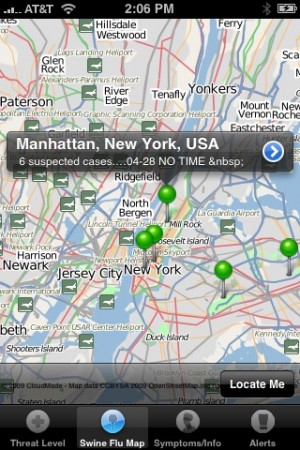
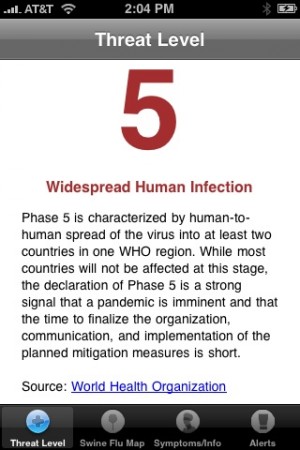
When SARS hit in 2002-2003, the iPhone (or iPod Touch) didn't exist. Today in 2009, we have millions of iPhone users around the globe. As we prepare for a potential swine flu pandemic, technologists are developing an iPhone Swine Flu Tracker to help you avoid catching swine flu. It's amazing where mobile technology is taking us. This application hasn't been approved as of yet, but if it does, I'm sure you'll be hearing about it through the Apple store. The software developer is IntuApps. Image Source: TechCrunch

Thursday, April 30, 2009

MacBooks On Sale

Apple is trying to get rid of older MacBook models. Sales must be suffering because of the economy. If you're looking for a relatively good deal on an older generation of the MacBook Air, take a look at this: MacBook Air Closeout

Thursday, April 23, 2009

Goodbye OQO


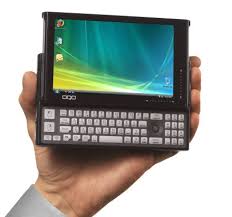
The writing is on the wall. OQO has canceled pre-orders for the new model 02+. This probably means that the model 02 will be the last OQO. I now own a collector's item. Of course, I could also say that about the Apple Newton Messagepad 2100 (which is now a relic, but was very advanced for its time). I used to carry my Newton in the hospital. It was a bit heavy for the white coat, but it was very useful because I kept all my patient notes on it. I was paperless even before most hospitals had computerized physician order entry (CPOE)! Will we ever see another gadget that compares with the OQO? I'm sure we will as more manufacturers build small PCs that have full capabilities. As hardware technology improves, we'll see more tiny devices permeate the healthcare industry and soon hospitals will be full of gadgets and gizmos.

Sunday, April 19, 2009

Multi-Touch Screens on a Tablet PC


The phrase "multi-touch" has gotten confusing in the tablet PC industry. My Lenovo Thinkpad X200 tablet is considered to have a multi-touch screen because I can use my active digitizer pen or my finger as an input device. However, I can't use two fingers on the screen because it is a passive screen (not a capacitive touch screen like the iPhone or BlackBerry Storm).

I was walking through Best Buy today and I played with the convertible tablet PC made by HP. It was the HP tablet TX2Z that features a capacitive multi-touch display (which means that you can use two fingers on the screen and perform gestures).

Windows 7 will include the capability to use some of those cool multi-touch gestures. Apple already leverages this technology on the iPhone and on their MacBooks.

Friday, April 17, 2009

OQO Future is Uncertain

What's going to happen to OQO? I've had my OQO model 02 for a while now and I'm torn about the news that the company might not survive. I wonder if Dennis saw the writing on the wall and decided to leave the company. I was scarred when Apple decided to kill the Newton. Now I'll be scarred again if OQO dies. The company is managed by MIT and Harvard alumni, so you'd have to think that they're doing everything they can. Jory Bell is an MIT alumni and one of the founders of OQO. I wonder what he's up to these days.

Tuesday, April 7, 2009

Coupons for the Apple Store

I'm a big fan of the Apple Store. But, it's hard to find really good coupons for the Apple Store. Have you looked at Savings.com? You can find some incredible Apple coupons, discount codes, and more. Certain promotions are only available to teachers and students. Apple has been loyal to the education industry. You can also get certain Apple discounts through various alumni networks and honor societies like Phi Kappa Phi. But if you look on Savings.com, you can some great deals and discount codes even if you're not a student.

I've been playing around with the iPod touch and I've been having a blast testing software and evaluating how the iPod and other handheld devices will change healthcare. My wife has a Macbook Pro and she loves using that at night because of the backlit keyboard. I'm often tempted to get a Macbook myself just for that feature alone - glowing keyboards. If you're looking to make a purchase at the Apple store or any other online retailer, make sure to look for coupons and other valid promotions codes that can help you save money. Medical students and residents, are you listening?

Monday, April 6, 2009

Old iPod Chargers and new iPods

So I have several older iPods and a few new ones (yes, I admit that I'm a gadget freak, but most of these were not purchased). I've had the opportunity to win some iPods through drawings, Sermo, and a few others sources. I love iPods because they are great travel companions. However, I've recently noticed that my older iPod chargers don't charge my new iPod nano (4th generation) and iPod touch (2nd generation). If you have no idea what models I'm referring to, then take a look at this Apple Support page on different iPod generation models.

So I'm very disappointed that my Firewire charger, my Kensington Universal Charger (tip J3), and several other old iPod chargers do not work on my newer iPods. What's going on Apple?

Using the iPhone or iPod Touch in Healthcare

The Apple iPhone and iPod Touch are versatile devices that can be used in the healthcare setting. Can you think of more than 15 ways they can be used? If you're a medical student or a resident, maybe you can empty your white coat and replace some of your tools with this single device. Here's my list of 15 ways:

1. Epocrates (drug reference)
2. Web browsing (research)
3. Record patient data
4. 2-way communication with others (get rid of those pagers!)
5. Neuro/rehab tests and exercises (use the built-in accelerometer and improve your gait)
6. Visual acuity tests and exercises
7. Vibratory stimulation test (no need for that bulky tuning fork)
8. Auditory test (can you hear that high-pitched sound?)
9. Reflex hammer? Maybe, if you're really talented.
10. Take a photo of that rash or wound (great for surgery and dermatology)
11. Flash cards
12. Anatomy reference (try ADAM)
13. As a phone to answer your pages (if you still carry a pager)
14. As a flashlight in your call room
15. To watch Scrubs, ER, or other educational medical TV shows.
16. Medical podcasts, earn CME/CE credits.

I could go on and on, but I was thinking about these things as I played around with my iPod. Can you add to this list?

Thursday, March 26, 2009

ZAGG Invisible Shield

If you need to protect your cell phone, PDA, smartphone, pager, iPod, iPhone, UMPC, or any other gadget, I would suggest the ZAGG Invisible Shield. They make some incredible device protectors that go beyond protecting the screen. I used to protect everything, but recently I've decided that it's not really worth the hassle because I switch gadgets too frequently (I admit I am trying to change that). I've also found that as long as I'm careful, I usually don't end up with any scratches. However, if you're clumsy, then you should definitely protect your device.

Sony Vaio P


So, when will Sony add a backlit keyboard to their Vaio P series? I'm a big fan of Sony products, but I will not purchase the Vaio P unless it comes with a backlit keyboard. I'm willing to pass on a touch screen (unless we're talking about a convertible tablet), but I must insist that the device have an illuminated keyboard.

Why am I so insistent? Well, I spend a fair amount of time doing work while I'm sitting in my bed and my wife is asleep. I have a USB light that shines down on the keyboard, but this can be quite disruptive. My wife has a MacBook Pro that has a backlit keyboard and it's a great machine (but a bit too big for my uses). I like tiny gadgets - that's just who I am. I used to use my OQO model 02 (which does have illuminated keys), but that's just too small and the fan is too loud. So, I often sit in bed typing on my Lenovo Thinkpad X200 tablet and using the USB light that has a bright LED on the end.