The application of some treatments in cosmetic surgery has been truly revolutionary, minimizing risks and reducing the size of scars. The science of the new plastic surgery has achieved many of these objectives, and can offer, for example, several easy and non-invasive methods that provide the results of a facelift without the disadvantages and dangers of real surgery.
In fact, cosmetic surgery in UK implemented in recent years is revolutionizing many areas of medicine and surgery, with minimally invasive procedures to facilitate easy recovery, smaller scars and less risk of bleeding or infection. So there is a popular trend towards cosmetic improvements.

Showing posts with label surgery. Show all posts
Showing posts with label surgery. Show all posts
Saturday, September 24, 2011


Wednesday, June 29, 2011
Joint Commission Center for Transforming Healthcare Aims to Reduce the Risk of Wrong Site Surgery
Targeted Solutions Seek to Prevent Adverse Outcomes
(OAKBROOK TERRACE, IL – June 29, 2011) Health care professionals and patients all agree that wrong site surgery is a serious and preventable adverse event that should never happen. Although reporting is not mandatory in most states, some estimates put the national incidence rate, which includes wrong patient, wrong procedure, wrong site, and wrong side surgeries, as high as 40 per week. Recognizing this as a critical patient safety issue, eight U.S. hospitals and ambulatory surgical centers teamed up with the Joint Commission Center for Transforming Healthcare to address the problem. The Center and the participating organizations used methods such as Lean Six Sigma and change management to discover the causes of and put a stop to these preventable breakdowns in patient care.
(OAKBROOK TERRACE, IL – June 29, 2011) Health care professionals and patients all agree that wrong site surgery is a serious and preventable adverse event that should never happen. Although reporting is not mandatory in most states, some estimates put the national incidence rate, which includes wrong patient, wrong procedure, wrong site, and wrong side surgeries, as high as 40 per week. Recognizing this as a critical patient safety issue, eight U.S. hospitals and ambulatory surgical centers teamed up with the Joint Commission Center for Transforming Healthcare to address the problem. The Center and the participating organizations used methods such as Lean Six Sigma and change management to discover the causes of and put a stop to these preventable breakdowns in patient care.
Thursday, May 5, 2011
Medigus Announces World's Smallest Video Camera for Medical Endoscopic Procedures
 Medigus Announces World’s Smallest Video Camera
 Less than 1 mm in diameter, the camera is used for medical endoscopic procedures.
PR Newswire - Omer, Israel, May 2nd, 2011 – Medigus Ltd. (TASE: MDGS) has developed the world’s smallest video camera - just 0.99 mm in diameter.
These miniature cameras are manufactured from materials suitable for human medical procedures. They are designed specifically for small-diameter disposable endoscopic devices, used in diagnostic and surgical procedures in regions of the anatomy where larger scopes are not viable. Medical fields in which such tools are required include: cardiology; orthopedics; gastroenterology; gynecology; otolaryngology, bronchoscopy and robotic surgery.
Monday, January 24, 2011
Make Way for the Robots – Automated Medical Care is a Reality

The terms “robotics” and “artificial intelligence” have been bandied about for quite some time now, and we’ve seen the advances that have been made in robotics technology and applied successfully in various industries. The world of medicine however, was lagging behind – when lives are at stake, perhaps human intuition was considered superior to robotic efficiency. However, all that is set to change in the coming decade, with research in medicinal robots advancing by leaps and bounds. In particular, robots are already being used or will soon be used in:
• Providing care for senior citizens: In a nation filled with baby boomers who don’t have caregivers and who live alone, these robots are definitely going to be a boon not just to the elderly, but also to the ailing healthcare system of this country. Charles Kemp, assistant biomedical engineering professor at the Georgia Institute of Technology and his team at the institute’s Healthcare Robotics Lab are working on robots that can safely and effectively help care for senior citizens. Ideally, the machines would be able to provide their charges with access to the Internet, remind them to take their medicines, open doors and drawers, and retrieve objects like pill bottles when guided by a laser pointer, radio signals or touch.
• Aiding surgical teams: This one’s already happening – a tiny robotic arm and workstation unit together called SpineAssist is helping surgeons map out a patient’s spinal anatomy in advance so that patients are spared of complications and pain during and after the surgery. SpineAssist helps surgeons avoid making deep incisions while repairing the spine. Over 2,000 spinal implant surgeries have been completed with a 98 percent success rate with no cases of nerve damage. The use of the robot reduced patients’ hospital stay by 33 percent and produced a 70 percent reduction in misplaced implants.
Monday, October 25, 2010
Cell Saver blood-recovery system (Haemonetics)
 I was reading about a medical case the other day in the New England Journal of Medicine about a "Pregnant Woman with Abdominal Pain and Fluid in the Peritoneal Cavity." The management of this patient involved the use of the Cell Saver blood-recovery system (Haemonetics). The Cell Saver system recovered approximately 600 ml of red cells. That's quite impressive. Here's some information about this technology (from the company's website:
Haemonetics pioneered intraoperative cell salvage. Since its introduction in 1972 our Cell Saver® Autologous Blood Recovery system led the industry to become the standard of care.
The Cell Saver 5+ system is designed for surgeries like CABG, valve replacement, trauma, transplant, and other procedures where medium- to high-volume blood loss occurs. With the ability to deliver between 50-60% hematocrit and to remove nearly all traces of undesirable components such as free hemoglobin, the Cell Saver system is the standard of care and a critical tool to help avoid unnecessary allogeneic transfusions. And in a recent lab test, SmartSuction Harmony® surgical suction system significantly reduced hemolysis. Based on this finding, when a SmartSuction Harmony device is used with the Cell Saver system there may be an increase in the number of viable red blood cells reinfused to patients.
Tuesday, May 4, 2010
World's first remote heart surgery completed in the UK

World first remote heart operation to be carried out in Leicester using robotic arm
Expert at University of Leicester and Glenfield Hospital to conduct pioneering treatment
A pioneering world first robotics system operation is to be conducted at Glenfield Hospital Leicester thanks to expertise at the University of Leicester and University Hospitals of Leicester.
Dr André Ng, Senior Lecturer in Cardiovascular Sciences at the University of Leicester and Consultant Cardiologist and Electrophysiologist, Glenfield Hospital, University Hospitals of Leicester, is the first person in the world to carry out the operation remotely on patients using this system.You can read more at Science Daily.
He will use the Catheter Robotics Remote Catheter Manipulation System for the first time in a heart rhythm treatment procedure.
The system is novel because it allows a doctor to carry out a common heart treatment procedure remotely using a robotic arm.
Monday, April 5, 2010
FDA Approves First Biodegradable Sealant Patch for Cardiovascular Surgery
FDA Approves First Biodegradable Sealant Patch for
Cardiovascular Surgery
Blood-clotting patch is absorbed by the body
The U.S. Food and Drug Administration today approved TachoSil, the first absorbable fibrin sealant patch for use in cardiovascular surgery to prevent mild and moderate bleeding from small blood vessels, when standard surgical techniques are ineffective or impractical.
TachoSil is a ready-to-use surgical patch composed of a dry collagen sponge made from horse tendons, and coated with fibrinogen and thrombin. At the site of a wound, the two proteins, through a series of chemical reactions, produce fibrin, a stringy, white, insoluble protein that allows a clot to form.
Blood-clotting patch is absorbed by the body
The U.S. Food and Drug Administration today approved TachoSil, the first absorbable fibrin sealant patch for use in cardiovascular surgery to prevent mild and moderate bleeding from small blood vessels, when standard surgical techniques are ineffective or impractical.
TachoSil is a ready-to-use surgical patch composed of a dry collagen sponge made from horse tendons, and coated with fibrinogen and thrombin. At the site of a wound, the two proteins, through a series of chemical reactions, produce fibrin, a stringy, white, insoluble protein that allows a clot to form.
Saturday, March 20, 2010
A Cheap, Portable Wound-Healing Device
 Technology Review has a very fascinating article about a medical device used to speed wound healing.
At first glance, this device does not look like a medical device. However, it's a bellows pump designed to generate negative pressure on a wound. According to the article: Negative-pressure devices, which act like a vacuum over the bandaged wound, have become a central part of wound therapy.
Current devices are heavy and expensive. Plus, they require electricity, so we're talking about a ton of batteries if you're in a crisis area like Haiti. Maybe you've seen a wound VAC in a hospital. You wouldn't want to carry that thing around for several miles.
Sometimes, medical innovation requires us to go "low tech." As we consider the medical needs of developing nations, it's critical that new innovations are designed to be practical in such economic climates.
Thursday, January 14, 2010
Medline to Distribute Only FDA-Cleared System to Both Count and Locate Surgical Sponges Left in Patients
 Here's an interesting press release that I wanted to share:
Medline to Distribute Only FDA-Cleared System to Both Count and Locate Surgical Sponges Left in Patients
Medline Extends Its "Prevention Above All" Priority Through Exclusive Distribution Agreement With ClearCount Medical Solutions
MUNDELEIN, IL--(Marketwire - January 13, 2010) - Medline Industries, Inc. has been named the exclusive distributor for the SmartWand-DTX™ and SmartSponge® System, the only FDA-cleared systems using radio-frequency identification to both count and locate surgical sponges. The systems, created by ClearCount Medical Solutions, use a technology featuring chip-embedded sponges to count and locate sponges during surgery which, in turn, helps eliminate surgical errors and improve patient safety.
Retained surgical sponges are a big problem. They can hurt and even kill affected patients and cost hospitals an average of $63,000 in follow-up operation expenses (according to Federal Register and Medicare statistics) per incident, not including legal fees and potentially large settlements. Human counting error is the most common cause of unaccounted-for sponges being left behind. Integrating radio frequency identification (RFID) chip technology into surgical sponges -- the sterile, absorbent textiles used inside a patient during an operation -- gives surgeons and operating room teams a new tool to prevent the anxiety of a potentially devastating operating room error.
Wednesday, December 9, 2009
Chinese woman had surgery to switch fingerprints

Do you remember the Steven Spielberg movie Minority Report? In that futuristic movie, Tom Cruise undergoes an eye transplant because of all the retinal scanners that permeate public places. Well, in a real-life story similar to Minority Report, a Chinese woman had a fingerprint transplant operation to enter Japan and fool the immigration department. Lin Rong, 27, had previously been deported from Japan for overstaying her visa. Her case is known as biometric fraud. I suppose you can get any type of surgery in China if you find the right surgeon. Read the interesting story on BBC News.
Thursday, November 12, 2009
Plastic surgeon "builds" his wife (after 8 surgeries)

You don't hear these types of stories every day (unless you're standing in line at the grocery store and you're glancing through the magazine rack). Forgive me, I don't usually write about stories from "The Sun," but this one was too good to pass:
Doctor: I built myself a new wife
Reza Vossough hated 33-year-old Cany's body, but they tied the knot anyway after he spotted her "potential". He performed EIGHT operations to change her chest, thighs, eyes and face. Vossough spent five years pumping 1,600g of silicone into her body, boosting her size A chest to a giant F cup. He also enhanced her lips, lifted her eyelids and decreased her forehead.Want to see some photos? Click here to view them on "The Sun"
Wednesday, September 16, 2009
Implanting a tooth in your eye?

As technology advances medicine, perhaps this procedure won't require a tooth in the future. New synthetic materials will emerge. Maybe we'll even see some form of an artificial eye in the future.
Monday, August 31, 2009
Wrapping a baby's heart in Gore-Tex

You won't read about this every day: "Baby born with heart outside his chest." Apparently, a newborn baby boy with a heart protruding from his chest is set to undergo a complex surgery in New Delhi, India. According to CNN, the child also has a hole in his heart and is thought to have an extremely rare condition called ectopia cordis where the chest fails to close over all or part of the heart.
So where does Gore-Tex (a waterproof, breathable fabric used in outdoor clothing) fit into the story? Back in 2006, surgeons in Florida wrapped a baby's heart in Gore-Tex because that baby had a similar condition where the heart was outside the chest.
I don't know if the surgeons in India will be using Gore-Tex, but it sounds like they will be using a total circulatory arrest procedure during the surgery. I hope and pray that the baby will have a positive outcome. I'm sure we'll be hearing more about this in days to come...
Sunday, August 23, 2009
Physicians and medical dreams

What type of medical dreams do you think physicians have at night? Do you think surgeons dream about surgery?
So my wife (who is a family physician) had a dream where she was performing surgery. However, she was performing a very unusual surgery (I won't get into the details right now) and she was puzzled that she was performing such a strange procedure. In the dream, she was finishing the surgery and she wanted to make the incision look really clean. She was surprised at the minimal amount of bleeding. So you may be wondering: why was the surgery so unusual? She was performing brain surgery (even though she's not a neurosurgeon).
So I wonder how often physicians have dreams that are unrelated to their specialty. I should conduct a survey...
Saturday, June 20, 2009
Faith, Religion, Praying, and Medicine

Do you pray? How would you feel if your physician wanted to pray with you? What role does faith play in the world of medicine?
We live in a world where people don't wish to offend anyone with religious comments. There are many people who would welcome prayers (even if they're not religious). Do prayers actually impact clinical outcomes? Various studies have been performed to evaluate this question. One of the most famous studies was a Harvard study published in the American Heart Journal. The 2006 study was titled, "Study of the Therapeutic Effects of Intercessory Prayer (STEP) in cardiac bypass patients: A multicenter randomized trial of uncertainty and certainty of receiving intercessory prayer." Researchers concluded that "Intercessory prayer itself had no effect on complication-free recovery from CABG, but certainty of receiving intercessory prayer was associated with a higher incidence of complications."
In a press briefing, Rev. Dean Marek, a co-author who is director of chaplain service at the Mayo Clinic, called the results "unexpected and counter-intuitive." How are we to interpret these results?
Here's my opinion: It's not just about prayer. We have to ask a critical question: Who are you praying to? This is critical. After all, if you're praying to a false god that doesn't exist, then your prayers won't do anything. If God doesn't exist, then prayer is meaningless. However, if you're praying to a real God who does exist, then your prayers can do mighty things. Those who pray and believe in God will attest to that.
Do you pray? Do you believe in God? Do you consider yourself to be a spiritual person? I do and I pray. Painting titled, "Chief of the Medical Staff," by Nathan Greene.
Tuesday, May 5, 2009
Face Transplant Photos
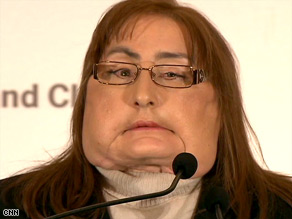
Wow, this is quite an incredible story. CNN actually has photos of the first U.S. face transplant patient and they are quite remarkable (viewer discretion is advised). Click on this link to see the photos.
Connie Culp was shot in the face in 2004 and now she has a face again. Culp received the face transplant at the Cleveland Clinic and she has publicly expressed her gratitude. Medical technology has played a tremendous role in this example and I wonder what we will be capable of doing in several years. I admire her courage and wish her the best recovery.
Monday, April 6, 2009
Using the iPhone or iPod Touch in Healthcare
The Apple iPhone and iPod Touch are versatile devices that can be used in the healthcare setting. Can you think of more than 15 ways they can be used? If you're a medical student or a resident, maybe you can empty your white coat and replace some of your tools with this single device. Here's my list of 15 ways:
1. Epocrates (drug reference)
2. Web browsing (research)
3. Record patient data
4. 2-way communication with others (get rid of those pagers!)
5. Neuro/rehab tests and exercises (use the built-in accelerometer and improve your gait)
6. Visual acuity tests and exercises
7. Vibratory stimulation test (no need for that bulky tuning fork)
8. Auditory test (can you hear that high-pitched sound?)
9. Reflex hammer? Maybe, if you're really talented.
10. Take a photo of that rash or wound (great for surgery and dermatology)
11. Flash cards
12. Anatomy reference (try ADAM)
13. As a phone to answer your pages (if you still carry a pager)
14. As a flashlight in your call room
15. To watch Scrubs, ER, or other educational medical TV shows.
16. Medical podcasts, earn CME/CE credits.
I could go on and on, but I was thinking about these things as I played around with my iPod. Can you add to this list?
1. Epocrates (drug reference)
2. Web browsing (research)
3. Record patient data
4. 2-way communication with others (get rid of those pagers!)
5. Neuro/rehab tests and exercises (use the built-in accelerometer and improve your gait)
6. Visual acuity tests and exercises
7. Vibratory stimulation test (no need for that bulky tuning fork)
8. Auditory test (can you hear that high-pitched sound?)
9. Reflex hammer? Maybe, if you're really talented.
10. Take a photo of that rash or wound (great for surgery and dermatology)
11. Flash cards
12. Anatomy reference (try ADAM)
13. As a phone to answer your pages (if you still carry a pager)
14. As a flashlight in your call room
15. To watch Scrubs, ER, or other educational medical TV shows.
16. Medical podcasts, earn CME/CE credits.
I could go on and on, but I was thinking about these things as I played around with my iPod. Can you add to this list?
Wednesday, February 11, 2009
Green lasers healing surgical incisions

Wow, this is very impressive. Researchers at Mass General are working with green surgical lasers to heal incisions. Does this sound like Star Trek? The principle of laser-bonded healing has been around for a long time, but these guys have made some recent advances in this technique. I think you'll find this story fascinating:
http://www.technologyreview.com/biomedicine/22088/
I have scars all over my body. If scientists can find the right balance to heal incisions without destroying tissue, then people may walk around with fewer visible scars.
Subscribe to:
Posts (Atom)