Showing posts with label apple iphone. Show all posts

Monday, June 21, 2010

NEJM This Week on the iPhone or iPod touch

Now you can access the New England Journal of Medicine on your Apple iPhone or iPod touch. There's a medical app called "NEJM This Week." I installed it the other day and I was able to access many articles, images, and videos. Given that I have an active NEJM subscription, I'll probably continue to have access to the NEJM content on my mobile device. 

This app is a great example of a smartphone version of a medical journal. I'm sure we'll soon see every major medical journal offer smartphone apps so that busy health care professionals can access this content easily. Click here to access NEJM This Week

Friday, March 12, 2010

Apple iPads for every medical student?

This is being republished from MobileHealthComputing.com

We've heard of several medical schools requiring students to use either an Apple iPhone or iPod touch, but what about the iPad? Some schools have been experimenting with digital e-book readers like the Amazon Kindle. Medical textbooks are frequently filled with photos and other color-rich images, so the grayscale Kindle isn't the ideal e-book reader for medical students who wish to carry their textbooks electronically. This is where the Apple iPad could revolutionize the way medical students learn. Will some medical schools try to educate their students using digital technology? I'm sure it's bound to happen. What I don't know is whether the iPad will improve the way students learn medicine. Since I'm a technology advocate, I could make several compelling arguments to say that interactive learning is much more effective than traditional lectures and didactic education. I could also say that retention could be enhanced with the use of digital quizzes that occur at the point-of-learning. You can't do that with a text book, but you could do that with a digital version. I could argue that multimedia enhances the educational experience compared to static color images. But all these arguments could fail if students are not ready and willing to embrace technology to enhance their education. The average pre-med college student is probably tech-savvy and digitally connected via a smartphone, several social media accounts, and a laptop computer. If you hand that student an iPad filled with medical textbooks and multimedia resources, will that student learn effectively? I would think so.

Thursday, December 17, 2009

Epocrates expanding their product line for the iPhone and iPod touch

Are you using Epocrates? Do you have an Apple iPhone or iPod touch? You may be interested in this story on MedicalSmartphones.com:
Epocrates Essentials Deluxe for the iPhone and iPod touch

I've been using Epocrates for many years and it's great to see how they've continued to serve the medical community with their software.

Saturday, June 27, 2009

Medical apps for the Apple iPhone

The other day, I was thinking about the Apple iPhone.

Medical apps for the iPhone - how far have we come?

It's amazing how far we've come in 1 year.

Sunday, June 7, 2009

Excited about the 2009 Apple WWDC


I'm very excited to see what's going to be coming out of the 2009 Apple Worldwide Developers Conference (WWDC) that starts tomorrow. In particular, I'm eager to learn about 2 specific things:
  1. Apple Tablet (will we see this revealed?)
  2. Next iPhone (will it be cheaper and better?)
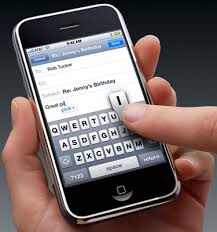
I envy those who are in San Francisco for the conference. I'm sure we'll see many tweets on Twitter about this. Will you be one of those people sending tweets (hopefully linked to plenty of photos and videos). Image source: iphonebuzz

Friday, May 29, 2009

Medical Students and Smartphones


Today, many people are entering medical school with an Apple iPhone, BlackBerry, or other smartphone. Students may not be aware that their school has a PDA/smartphone requirement. I wonder how these requirements have evolved over the past several years. In the past, you had to record procedures and patient encounters on your PDA. Now, I’d have to think that most of these forms are web-based. If that’s the case, then you wouldn’t technically need a smartphone because you’d simply need to have access to a web browser. However, maybe some schools still have native applications that must reside on a PDA/smartphone. If that’s the case, then you’ll need to make sure that you have a smartphone that meets those system requirements.

Wednesday, May 13, 2009

Saturday, May 2, 2009

Swine Flu iPhone Tracker


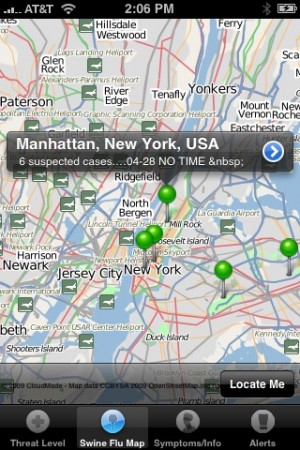
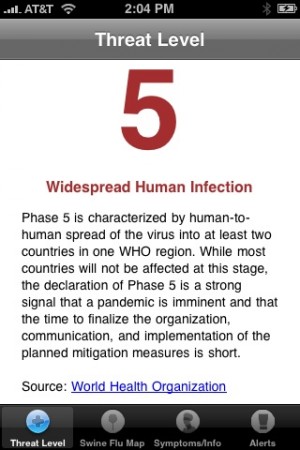
When SARS hit in 2002-2003, the iPhone (or iPod Touch) didn't exist. Today in 2009, we have millions of iPhone users around the globe. As we prepare for a potential swine flu pandemic, technologists are developing an iPhone Swine Flu Tracker to help you avoid catching swine flu. It's amazing where mobile technology is taking us. This application hasn't been approved as of yet, but if it does, I'm sure you'll be hearing about it through the Apple store. The software developer is IntuApps. Image Source: TechCrunch

Sunday, April 26, 2009

Using Web 2.0 to Combat Swine Flu

Swine flu is hitting a country that has tremendous technology resources. As healthcare professionals, how can we leverage existing Web 2.0 resources such as wikis, RSS feeds, blogs, forums, and other social networks to battle this threatening epidemic? On Twitter, you can find many discussions related to swine flu. The same is going on at Sermo. Since more doctors are equipped with mobile communication devices such as iPhones, BlackBerrys, Treos, and other smartphones, there may be an opportunity to send mass messages to healthcare professionals who are constantly connected. The old days of simple alphanumeric pagers are starting to fade.

Saturday, April 25, 2009

EHRs and the iPhone

Read about how more EHR/EMR (electronic health/medical record) providers are developing a platform that is compatible with the Apple iPhone at MedicalSmartphones.com. Will the iPhone dominate the mobile EHR space?

Wednesday, April 22, 2009

Portable Ultrasound Fits in Your Pocket


That would be the tagline for this new product if one ever gets developed. If you could convert your smartphone into an ultrasound device, would you do it? Then you'd have a real medical smartphone! Go to Washington University and you'll see what I mean. These guys (William D. Richard, Ph.D., Washington University Associate Professor of Computer Science and Engineering, and David Zar, Washington University Research Associate in Computer Science and Engineering) have developed a USB-based ultrasound probe that plugs into smartphones. Now that most smartphones are going to have a universal micro-USB port, such a probe may actually be useful in the future because all the phones will have compatible connectors. Microsoft has funded research in this area. I wonder when Apple will start providing research grants in this area. Let's hope they don't change iPod/iPhone connectors if they build a probe that plugs into the bottom of the device.

Monday, April 20, 2009

SkyFire 0.9 Now Available for Windows Mobile


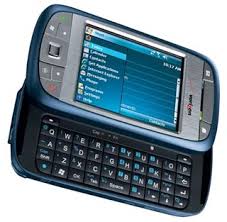
I've been using SkyFire for several months now and it's a solid Windows Mobile browser. It works quite well on my Verizon Wireless XV6800 smartphone. Version 0.9 is now available as a free download. It's still not mobile Safari on an iPhone, but it's one of the better mobile browsers for Windows Mobile. It's not as fast as Opera Mini running on a Java Virtual Machine, but it's capable of displaying Flash content.

To get it, type: http://get.skyfire.com into your mobile browser and download the CAB file. It has links built-in for Twitter and Facebook.

Sunday, April 19, 2009

Multi-Touch Screens on a Tablet PC


The phrase "multi-touch" has gotten confusing in the tablet PC industry. My Lenovo Thinkpad X200 tablet is considered to have a multi-touch screen because I can use my active digitizer pen or my finger as an input device. However, I can't use two fingers on the screen because it is a passive screen (not a capacitive touch screen like the iPhone or BlackBerry Storm).

I was walking through Best Buy today and I played with the convertible tablet PC made by HP. It was the HP tablet TX2Z that features a capacitive multi-touch display (which means that you can use two fingers on the screen and perform gestures).

Windows 7 will include the capability to use some of those cool multi-touch gestures. Apple already leverages this technology on the iPhone and on their MacBooks.

Thursday, April 16, 2009

Epocrates has a Surprise Waiting for iPhone Users!

I can't say much more. If you're an iPhone user, wait to hear about some exciting developments from the folks at Epocrates. I've been a long-time Epocrates user and I'm glad to see that they're keeping up with all the different smartphone platforms.

Sensei Launches iPhone Application for Diabetes

If you have diabetes, you're probably used to gadgets. If you have type 1 diabetes, you probably wear an insulin pump and you're really familiar with gadgets. In the world of diabetes, you have glucose monitors (from companies like Accu-Check. LifeScan, and others), insulin pens, insulin pumps that look like pagers, and even continuous glucose monitoring (CGM) systems (from companies like Medtronic, Abbott, and DexCom). It's great to see advances in healthcare technology and medical devices. I always had a passion for the medical device industry and as a kid, I thought that I would be a biomedical engineer.

The iPhone is a great medical smartphone and there is now a new diabetes application for diabetes. Sensei (a subsidiary of Humana) has released My Diabetes Guide. Looks pretty cool! LifeScan is also coming out with a diabetes application for the iPhone that may sync glucose readings from blood glucose monitors (glucometers). Hopefully, all these gadgets for diabetes will ultimately help patients improve glucose control.

Wednesday, April 15, 2009

Smartphone Use Among Physicians on the Rise

According to a recent study by Manhattan Research, the use of smartphones among physicians is now at 64%. The study is titled, "Taking the Pulse v9.0." The use of mobile devices like the iPhone and BlackBerry increased by 20% in one year. It's not a surprise that the number of physicians who use the iPhone more than doubled in the past year. Now with the availability of the touch screen BlackBerry Storm, I anticipate that more doctors will be using the BlackBerry. Overall, physicians are spending more time online and are using both computers and smartphones to stay current and access medical information. They are also using mobile devices to access CME activities. So smartphones have a bright future ahead in the medical industry. As these devices become more powerful and ubiquitous, they will permeate the healthcare space and play an even larger role in the daily workflow of medical students, residents, physicians, nurses, and pharmacists.

I currently use a Windows Mobile device (the Verizon Wireless XV6800, also known as the Sprint Mogul and the HTC Titan). If I were on the AT&T network, I'd be an iPhone user. If I had to buy a new phone on Verizon, I'd probably get the new BlackBerry Storm that will have Wi-Fi. If I were on T-Mobile, I would get the G1 running Google Android.

Tuesday, April 14, 2009

iPhone Application for OB/GYN


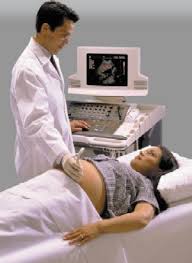
If you're on your OB/GYN rotation and you have an iPhone, then you should take a look at this application if your hospital has the Airstrip application. AirStrip Technologies has developed an iPhone application called AirStrip OB. Looks like a great application for those sleepless nights on the OB floor.