Expert Panel to Provide Patient-Centric Solutions to Improve and Streamline Delivery of Care
CHICAGO, Oct. 4, 2011 (GLOBE NEWSWIRE) -- Merge Healthcare (Nasdaq:MRGE), a leading provider of enterprise imaging and interoperability solutions, announced today the development of an Advisory Board to share clinical expertise and provide consultation on new models of care and emerging trends focused on the patient-centric experience.
The Merge Advisory Board will focus on the fact that diagnostic images make up a significant and critical part of the diagnostic process, yet today, the exchange and sharing of these images is inefficient. This inefficiency fragments the healthcare process which contributes to delays in care and skyrocketing costs. The Merge Advisory Board will also address patient safety and quality of care through, among other things, focusing on the fact that patients' radiation exposures has doubled over the past 20 years and developing solutions that reduce such exposure.

Showing posts with label radiology. Show all posts
Showing posts with label radiology. Show all posts
Tuesday, October 4, 2011


Tuesday, July 5, 2011
How 3D Imaging Can Help Detect Early Lung Cancer
At a major international lung cancer meeting this week, VisionGate is presenting data showing how its unique 3D imaging technology can help detect lung cancer in high risk people at an early stage, when the cancer is still potentially curable. Lung cancer is the most common cancer worldwide and is the leading cause of cancer deaths, with an estimated 222,520 new cases and 157,300 deaths in 2010 in the US alone. VisonGate's approach builds on a new National Cancer Institute (NCI) study published last week in the on-line ediiton of the New England Journal of Medicine (and also presented at the conference) expanding on the findings of a landmark 53,000 person study showing that low-dose computerized tomography (CT) screening of high risk individuals decreases lung cancer deaths by 20%. But CT scans generate high rates of false positive results—almost one in four--requiring invasive, expensive follow-up testing.
VisionGate’s non-invasive 3D imaging test can accurately identify early stage lung cancer cells in sputum. At the 14th World Conference on Lung Cancer, VisionGate will present a protocol and data showing how its LuCED test could be used along with CT screening to make mass testing of high risk individuals feasible and affordable.
Lung cancer screening pioneer Dr. Claudia Henschke notes, "VisionGate’s LuCED technology has demonstrated promise as an approach that may increase the feasibility of implementing widespread screening of high risk individuals, initially being used as an adjunct to improve the accuracy of CT scan results, with the potential to be used as a primary screening tool if additional trials are successful."
VisionGate’s non-invasive 3D imaging test can accurately identify early stage lung cancer cells in sputum. At the 14th World Conference on Lung Cancer, VisionGate will present a protocol and data showing how its LuCED test could be used along with CT screening to make mass testing of high risk individuals feasible and affordable.
Lung cancer screening pioneer Dr. Claudia Henschke notes, "VisionGate’s LuCED technology has demonstrated promise as an approach that may increase the feasibility of implementing widespread screening of high risk individuals, initially being used as an adjunct to improve the accuracy of CT scan results, with the potential to be used as a primary screening tool if additional trials are successful."
Future Color X-ray technology illustrated
Author: Benoit Dupont
All patients know that X-ray is a black and white image, right? And what if it would be possible to extract color information out of the image? Not for the sake of the cosmetic aspect of the picture, of course, but what if it had some diagnosis value, for the clinician? Well, it turns out it does.
• Caeleste Background
Caeleste is a begian CMOS image sensor expert design house (www.caeleste.be ). we introduced a new way to realize X-ray imagers based on energy separation (also called “color X-ray”). We are working closely with radiologists and researchers on this topic to see if it really makes sense to have such color detectors. We published early results on the value of energy differentiated color X-ray for mammography in ref [ ] and recently, researchers have proven in a publication at ESR2011 in Vienna (ref [ ]) that color X-ray applied to mammography would lead to a better diagnosis of tumor stages and Multifocality of lesion.

• Is color X-ray imaging interesting or just a hype?
We are not doctors but physicists and working with photons. When it comes to X-ray photons, their absorption by a material depends on its atomic weight. Color X-ray imaging is a technique where spectral information (“color”) is generated based on X-photon absorption versus energy differentiation. The color component in these images contains extra information: the chemical nature of the absorbing tissue.
How does this work? Next graph is the atomic composition of various body tissues and fluids:

All patients know that X-ray is a black and white image, right? And what if it would be possible to extract color information out of the image? Not for the sake of the cosmetic aspect of the picture, of course, but what if it had some diagnosis value, for the clinician? Well, it turns out it does.
• Caeleste Background
Caeleste is a begian CMOS image sensor expert design house (www.caeleste.be ). we introduced a new way to realize X-ray imagers based on energy separation (also called “color X-ray”). We are working closely with radiologists and researchers on this topic to see if it really makes sense to have such color detectors. We published early results on the value of energy differentiated color X-ray for mammography in ref [ ] and recently, researchers have proven in a publication at ESR2011 in Vienna (ref [ ]) that color X-ray applied to mammography would lead to a better diagnosis of tumor stages and Multifocality of lesion.

• Is color X-ray imaging interesting or just a hype?
We are not doctors but physicists and working with photons. When it comes to X-ray photons, their absorption by a material depends on its atomic weight. Color X-ray imaging is a technique where spectral information (“color”) is generated based on X-photon absorption versus energy differentiation. The color component in these images contains extra information: the chemical nature of the absorbing tissue.
How does this work? Next graph is the atomic composition of various body tissues and fluids:

Thursday, June 2, 2011
DR Systems Announces Upcoming Release of Ambulatory Imaging-Centric EHR
 Cloud-Based, Vendor-Neutral, Completely Certified EHR Designed Specifically for Medical Imaging Specialists' Meaningful Use Compliance
SAN DIEGO - DR Systems, one of the most respected names in healthcare information systems, announced today the company is developing an ambulatory imaging-centric EHR. The cloud-based, vendor-neutral EHR is planned to be available in the fourth quarter of 2011 and will be certified to facilitate meaningful use compliance for medical imaging specialists.
"Our new imaging-centric EHR is in keeping with our mission to enhance the clinical and financial success of our medical imaging customers," said Murray A. Reicher, M.D., F.A.C.R., Chairman of DR Systems, "It will be a vendor-neutral, cloud-based solution that can be used with any RIS, HIS, CVIS as a web-service plug-in, or standalone, so imaging specialists can obtain their incentive bonus and avoid future penalties. The intent is to help imaging specialists avoid the cost and inefficient workflow created by piecing together several certified modules. Instead, the DR System EHR will provide one system that can help specialists reach compliance within the context of medical imaging workflow, and one system that can wholly track compliance in real-time."
Tuesday, February 8, 2011
FDA launches Medical Device Innovation Initiative
DARPA-funded prosthetic is first test case
Today the U.S. Food and Drug Administration proposed the Innovation Pathway, a priority review program for new, breakthrough medical devices and announced the first submission: a brain-controlled, upper-extremity prosthetic that will serve as a pilot for the program. The FDA also announced plans to seek further public comment before the Pathway can be used more broadly.
The new proposed Innovation Pathway program for pioneering medical devices, highlighted in a report published on the FDA’s website today, is part of a broader effort underway in the FDA’s Center for Devices and Radiological Health (CDRH) designed to encourage cutting-edge technologies among medical device manufacturers.
Today the U.S. Food and Drug Administration proposed the Innovation Pathway, a priority review program for new, breakthrough medical devices and announced the first submission: a brain-controlled, upper-extremity prosthetic that will serve as a pilot for the program. The FDA also announced plans to seek further public comment before the Pathway can be used more broadly.
The new proposed Innovation Pathway program for pioneering medical devices, highlighted in a report published on the FDA’s website today, is part of a broader effort underway in the FDA’s Center for Devices and Radiological Health (CDRH) designed to encourage cutting-edge technologies among medical device manufacturers.
Monday, April 19, 2010
CDRH Transparency
 The U.S. Food and Drug Administration launched the Center for Devices and Radiological Health (CDRH) Transparency Web site today as part of the agency’s transparency initiative. The site will provide information about medical device and radiation-emitting product regulatory processes and decisions, and summaries of data that provide the rationale for agency actions.
In support of the FDA Transparency Initiative, CDRH is providing additional information to help the public understand its processes and decisions. The new information includes:
- information about regulatory decisions and the rationales for those decisions
- descriptions of regulatory processes
- data to support CDRH actions and public health activities
Thursday, December 17, 2009
Should you get a full-body "screening" CT scan?

There are various "executive health" programs that advertise that you can get a full-body screening CT scan. If you have a lot of money and your company is willing to pay for expensive (and often unnecessary) medical diagnostic tests, then maybe you're considering the utility of a screening CT. Not me.
Why expose your body to unnecessary radiation? Why risk finding an incidentaloma (which may then lead to further tests, biopsies, procedures, etc.) that might end up being nothing? Why do something that is outside of the scope of routine health screening guidelines?
I understand that large corporations may feel the need to go above and beyond to examine and maintain the health of their key executives. Many companies won't allow a large group of their executives to fly on the same flight. Should an airplane crash, they don't want to lose all their key people. So, they end up staggering people on different flights.
Monday, October 12, 2009
Should patients get scrubbed when they get admitted to the hospital?
 Infection control is a really hot issue these days. A big part of the reason is because we've seen an increase in multi-drug resistant organisms causing serious life-threatening infections in the hospital. Some examples include MRSA, VRE, and others. So why are we seeing these superbugs? One reason is because antibiotics are overused. Patients are developing superbugs because they may take antibiotics when they don't really need them.
Should patients get scrubbed from head-to-toe when they get admitted to the hospital? Have you ever scrubbed for the OR (operating room)? Would you want to take one of those sponges and scrub your entire body with it? I don't think so.What if patients are colonized with a superbug? MRSA is in the community. Could they transmit these organisms to someone else? Certain sections of hospitals (such as bone marrow transplant centers) are full of patients who are seriously immunocompromised. A mild skin infection could be lethal to someone who has a weakened immune system.
Soon, we'll be irradiating patients to sanitize them before they enter the hospital. That's the future of medical technology in hospitals. We just need hundreds of CT scanners built into the hospital admission area of every hospital. Would you sanitize someone if you passed them through a CT scanner multiple times? I'm sure radiologists will love the increased volume of CT scans and pathologists will love to biopsy all the incidentalomas we find.
Tuesday, August 25, 2009
Pneumatosis Cystoides Coli

You don't need to know how to pronounce it. You just need to know that you don't want to have this condition. The New England Journal of Medicine (NEJM) has a case of "A 25-year-old woman presented with recurrent abdominal pain that had first developed 10 years earlier..." What was the diagnosis? Pneumatosis Cystoides Coli. According to the brief article, "Pneumatosis cystoides coli can be focal or diffuse and occurs mainly in adults. It is usually asymptomatic but can cause obstruction or pneumoperitoneum as well as intermittent or persistent pain." Click here to read the case. Image source: NEJM
Wednesday, August 12, 2009
Group Backs Telemedicine for Stroke Care

This is a guest post by Ethan Segal, MD. If you're interested in submitting a guest post, please contact me.
An article “Groups Back Telemedicine for Stroke Care” appearing in the July 1, 2009 issue of JAMA reports how the American Heart Association and the American Stroke Association in early May 2009 released a statement which demands that all facilities which lack an onsite stroke neurologist should have teleconferencing systems in place to consult expert stroke neurologists at another facility. These neurologists could then remotely evaluate an acute stroke patient possibility needing tPA treatment. The group defines teleconferencing as “the use of dedicated, high quality, interactive, bidirectional audiovisual systems coupled with teleradiology for remote review of brain images.”
The main author of the statement by the AHA is Lee H. Schwamm, MD, a pre-eminent stroke neurologist at Massachusetts General Hospital. Dr. Schwamm cites preliminary work published in Neurology, which supports the notion that using telemedicine with remote neurology consultation dramatically improves acute stroke outcomes. Dr. Schwamm also raises the issue of a scarcity of stroke neurologists available in the US to see acute stroke patients (Currently, there are only four neurologists per 100,000 people in the US and many are not experts in stroke. Compare that with 700,000 acute strokes occurring annually in the US causing 163,000 deaths).
Highly critical of the statement is Dr. Robert Solomon, MD, an ER physician, and board member on the ACEP. “The committee noted a lack of comparative assessment of telemedicine to alternatives that could also improve stroke care…” notes Dr. Solomon on the supporting studies cited by Dr. Schwamm. He continues, “There seems to be an inherent assumption that if the hospital does not have a neurologist available to come to the emergency department to see the patient at the time of initial presentation, that that situation fits the definition of ‘these people don’t know what they’re doing’ and clearly they must have telemedicine with a neurologist. That’s not the reality; there are lots of hospitals where patients are getting excellent care where the neurologist is nonexistent or cannot see the patient at the time of presentation.”
Regardless, there are many obstacles to providing telemedicine at the bedside. There remain strict guidelines by Medicare on reimbursement for telemedicine consultation, only in specifically designated rural areas. Many insurers are extremely reluctant to pay for such consultation. Furthermore, there remain problems of licensing by state medical boards that restricts the out-of-state use of the technology, and liability concerns. On April 23, a bill was introduced in the House called the Medicare Telehealth Enhancement Act, which would provide $30 million to help health facilities pay for telemedicine equipment and expand Medicare reimbursement to urban and suburban areas (HR 2068 [http://thomas.loc.gov]).
Personally, I feel there would be a more direct way to deal with the shortage of stroke specialistsincrease the number of training programs. I am currently applying to neurology residency positions in the match and it seems like the average neurology class has maybe three positions. Some have one position for the entire class. Compare that with typical residency class sizes of other advanced specialties, like anesthesiology, having two or three times as many spots. 30 million dollars a year could provide a lot of neurology residency spots and stroke fellowships. Being a current applicant, maybe this is just my bias, but it seems neurology has to do more to expand training programs in the US, especially considering the rapidly aging population. The current scarcity of neurologists could very well be due to the highly inaccurate view of neurologists as “medical nihilists,” therefore useless to the medical community. Im glad that the AHA and ASA realize the urgent need in this country for neurologists and their expertise.
Telemedicine could do wonders outside the US, in desperate areas of Africa and Asia. I was lectured, by a nephrologist, on how he used teleconferencing to teach doctors at the bedside in Africa. I regularly attended grand rounds in neurology at my own medical school, which is conducted through teleconferencing between all three Boston area hospitals that make up the program. Clearly, there are educational applications for this technology. As the population continues to age and the physician shortage becomes more apparent, telemedicine and its clinical applications in the US will no doubt continue to be a hotly debated topic.
This guest post was written by Ethan Segal, MD. Ethan Segal earned a BA from Amherst College and a MD from Tufts University School of Medicine. He is currently working freelance as a medical writer and applying to residency programs for July 2010. He can be reached at Ethan.Segal(at)mac.com
Monday, June 29, 2009
Physician social networking online
Most of my physician colleagues agree that most physicians generally don't engage in online social networking. The only exceptions would be those who use Sermo, and a small handful of early adopters. So who are those early adopters? Who are those who see value in online social networking?
- Are they the physicians who have a strong interest in medical informatics (or health information technology)? Sometimes.
- Are they the physicians who are actively looking for new job opportunities? Rarely.
- Are they the physicians who tend to be more adventurous and active (such as emergency room physicians)? Sometimes.
- Are they the physicians who have way too much free time (such as dermatology and radiology physicians)? Sometimes.
- Are they those MD/MBA grads who are always trying to find new ventures. Sometimes.
Friday, May 8, 2009
Is it Dangerous to Live Next to Power Lines?

I've been asked this question by tons of people. My honest answer is that "I don't really know." We know that some people have a difficult time selling their home because they have a power line in their backyard (well, maybe not literally in their backyard).
Do you live next to a power line?
These types of environmental and public health questions are very difficult to answer. You're certainly not going to conduct a randomized control trial (RCT) to determine whether living next to power lines poses any health hazards. The best you'll do is to collect some retrospective data from samples of patients who develop certain health ailments. Or, you may follow a cohort longitudinally, but that may take a very long time.
Here's something interesting: Researchers (Wartenberg et al.) recently found that people living within 2000 ft from high-voltage electric power transmission lines (HVTL) were more likely to be white, of higher income, more educated, home owners, and exposed to magnetic fields. This was published in the Journal of Exposure Science and Environmental Epidemiology.
Interesting? So, who's most likely to live by power lines? According to this study (which was conducted in New York), the answer seems to suggest: upper-class Caucasian radiologists homeowners who are always using their cell phones (don't get me started on the cell phone radiation issue).
A Swiss study (Huss et al.) found that people who lived near electrical power lines had higher odds of developing Alzheimer's disease and senile dementia. These types of epidemiological studies may not prove causation, but they do suggest an association. This was published recently in the American Journal of Epidemiology.
Wednesday, April 22, 2009
Portable Ultrasound Fits in Your Pocket
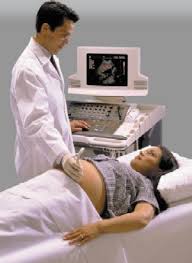
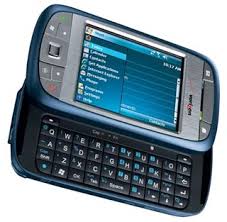
That would be the tagline for this new product if one ever gets developed. If you could convert your smartphone into an ultrasound device, would you do it? Then you'd have a real medical smartphone! Go to Washington University and you'll see what I mean. These guys (William D. Richard, Ph.D., Washington University Associate Professor of Computer Science and Engineering, and David Zar, Washington University Research Associate in Computer Science and Engineering) have developed a USB-based ultrasound probe that plugs into smartphones. Now that most smartphones are going to have a universal micro-USB port, such a probe may actually be useful in the future because all the phones will have compatible connectors. Microsoft has funded research in this area. I wonder when Apple will start providing research grants in this area. Let's hope they don't change iPod/iPhone connectors if they build a probe that plugs into the bottom of the device.
Saturday, March 7, 2009
The Evolution of the Bedside Thoracentesis

When I was a medical student many years ago, the thoracentesis was a common bedside procedure that was performed during your internal medicine clinical clerkship. Back in those days, although ultrasound technology was available, it was not routine to have a bedside ultrasound when performing a thoracentesis. Instead, you would percuss the back and determine the height of the fluid level. If you had poor physical exam skills, then you may not have inserted a needle into a lung.
Today, many general internists and hospitalists in this country are learning how to use the portable ultrasound to perform safer bedside procedures. Central line placement, thoracentesis, and even paracentesis are now often performed under ultrasound guidance. If I were a patient needing a thoracentesis, I think I'd prefer ultrasound guidance, even if I had a simple, non-loculated effusion. Technology is improving the safety of medicine and I hope that more and more people are using technology appropriately to improve patient care.
Sunday, February 15, 2009
Non-Clinical Medicine
To many people (including myself), the phrase "non-clinical medicine" sounds a bit odd. After all, the practice of medicine is clinical in nature.
Can you image the following conversation?
Q: "So what type of medicine do you practice?"
A: "I practice non-clinical medicine."
Q: "Oh, you mean like radiology or pathology?"
See, many people equate clinical medicine to seeing and treating patients. So if you're not actively engaged in direct patient contact and patient care, does that mean you're practicing non-clinical medicine? Not necessarily. The answer to the question above could also sound like this:
A: "No, I work behind in a company developing population-based disease management programs for managed care organizations."
or,
A: "No, I work in a medical education company developing continuing education programs for physicians, pharmacists, and nurses."
or,
A: "No, I now work in Wall Street"
or,
A: "No, I now work for the marketing division of a pharmaceutical company"
or,
A: "No, I work on developing market research surveys on different therapeutic topics."
or,
A: "No, I now work as a medical news reporter."
To some, the phrase "non-clinical medicine" means that you sit in an office and have full-time administrative duties. And yet to others, "non-clinical medicine" just means that you're no longer engaged in anything that directly relates with patient care.
Are public health physicians working in non-clinical medicine? Population health issues may conflict with direct patient care issues since population medicine needs to weigh decisions against the "greater good." Direct patient care is individualized medicine.
I've gone on quite a tangent, but the point I'd like to return to is this: non-clinical medicine is a very broad phrase that means different things to different people. So don't make any automatic assumptions about someone's career if they tell you that they are now engaged in pursuing a non-clinical career.
Can you image the following conversation?
Q: "So what type of medicine do you practice?"
A: "I practice non-clinical medicine."
Q: "Oh, you mean like radiology or pathology?"
See, many people equate clinical medicine to seeing and treating patients. So if you're not actively engaged in direct patient contact and patient care, does that mean you're practicing non-clinical medicine? Not necessarily. The answer to the question above could also sound like this:
A: "No, I work behind in a company developing population-based disease management programs for managed care organizations."
or,
A: "No, I work in a medical education company developing continuing education programs for physicians, pharmacists, and nurses."
or,
A: "No, I now work in Wall Street"
or,
A: "No, I now work for the marketing division of a pharmaceutical company"
or,
A: "No, I work on developing market research surveys on different therapeutic topics."
or,
A: "No, I now work as a medical news reporter."
To some, the phrase "non-clinical medicine" means that you sit in an office and have full-time administrative duties. And yet to others, "non-clinical medicine" just means that you're no longer engaged in anything that directly relates with patient care.
Are public health physicians working in non-clinical medicine? Population health issues may conflict with direct patient care issues since population medicine needs to weigh decisions against the "greater good." Direct patient care is individualized medicine.
I've gone on quite a tangent, but the point I'd like to return to is this: non-clinical medicine is a very broad phrase that means different things to different people. So don't make any automatic assumptions about someone's career if they tell you that they are now engaged in pursuing a non-clinical career.
Subscribe to:
Posts (Atom)