Showing posts with label ultrasound. Show all posts

Wednesday, April 22, 2009

Portable Ultrasound Fits in Your Pocket


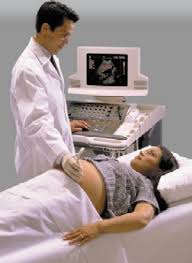
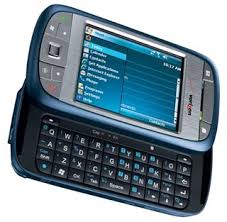
That would be the tagline for this new product if one ever gets developed. If you could convert your smartphone into an ultrasound device, would you do it? Then you'd have a real medical smartphone! Go to Washington University and you'll see what I mean. These guys (William D. Richard, Ph.D., Washington University Associate Professor of Computer Science and Engineering, and David Zar, Washington University Research Associate in Computer Science and Engineering) have developed a USB-based ultrasound probe that plugs into smartphones. Now that most smartphones are going to have a universal micro-USB port, such a probe may actually be useful in the future because all the phones will have compatible connectors. Microsoft has funded research in this area. I wonder when Apple will start providing research grants in this area. Let's hope they don't change iPod/iPhone connectors if they build a probe that plugs into the bottom of the device.

Tuesday, April 7, 2009

Extracorporeal Shock Wave Therapy for Plantar Fasciitis

Plantar fasciitis is a very common condition that causes foot pain. Advances in technology have led researchers to use ultrasound to deliver extracorporeal shock wave therapy (ESWT) and reduce the pain associated with plantar fasciitis. There have been various studies evaluating extracorporeal shock wave therapy for plantar fasciitis. One recent study suggests that radial extracorporeal shock wave therapy significantly improves pain, function, and quality of life compared with placebo in patients with recalcitrant plantar fasciitis. It's great to see how advances in technology are improving the landscape of medicine.

Saturday, March 7, 2009

The Evolution of the Bedside Thoracentesis


When I was a medical student many years ago, the thoracentesis was a common bedside procedure that was performed during your internal medicine clinical clerkship. Back in those days, although ultrasound technology was available, it was not routine to have a bedside ultrasound when performing a thoracentesis. Instead, you would percuss the back and determine the height of the fluid level. If you had poor physical exam skills, then you may not have inserted a needle into a lung.

Today, many general internists and hospitalists in this country are learning how to use the portable ultrasound to perform safer bedside procedures. Central line placement, thoracentesis, and even paracentesis are now often performed under ultrasound guidance. If I were a patient needing a thoracentesis, I think I'd prefer ultrasound guidance, even if I had a simple, non-loculated effusion. Technology is improving the safety of medicine and I hope that more and more people are using technology appropriately to improve patient care.