Showing posts with label engineering. Show all posts

Wednesday, April 24, 2013

MIT professor studying the mechanics of metastasis

Professor Roger Kamm at MIT was my advisor when I was a mechanical engineering student at MIT.

Roger Kamm, the Cecil and Ida Green Distinguished Professor of Biological and Mechanical Engineering, and his doctoral student Ioannis Zervantonakis are studying the mechanics of metastasis. They are using a 3-D microfluidic device developed in his lab, including a recent study on the effect of flow on tumor-cell migration.

Read more here.

Wednesday, December 29, 2010

2011 International Conference In Bionic Engineering

Now here's a conference that I'd really like to attend in 2011. It's called the 2011 International Bionic Engineering conference and it's being held in collaboration with the Journal of Bionic Engineering. I had a strong passion for biomedical engineering when I was an undergraduate student at MIT. Advances in technology have opened up many new dimensions in engineering and medicine.
The International Bionic Engineering Conference 2011 aims to bridge the gap between academic research and industrial development in a field that is rapidly growing and gaining recognition across many disciplines. Intended as a common ground for the exchange of ideas, the Organizers call upon key researchers in industry and academia from around the globe to engage each other with presentation and in conversation that inspires bionic solutions to some of the biggest engineering problems facing industry today. The meeting extends to North America from three successful international meetings organized by the Key Laboratory for Terrain-Machine Bionic Engineering at Jilin University in Changchun, China. The conference is also associated with the Journal of Bionic Engineering published by Elsevier and is the official title of the International Society of Bionic Engineering.
You can get more information about the conference here: http://www.bionicengineeringconference.com/

Thursday, April 8, 2010

The Luke Arm

If you're a Star Wars fan, you'll know that Luke Skywalker gets a prosthetic hand/arm in the Empire Strikes Back. Of course, we know that he wasn't the first Star Wars character to require prosthetic limbs. His father (Anakin Skywalker) ended up needing quite a few prosthetic limbs (one arm and two legs), but that's another story. Let's talk about the DEKA Arm.
Affectionately dubbed “Luke” (after Luke Skywalker), the robotic arm is a DARPA funded project intended to restore functionality for individuals with upper extremity amputations. The project is still in development, please check back for updates. This project is sponsored by the Defense Advanced Research Projects Agency and the U.S. Army Research Office.  This information does not necessarily reflect the position or policy of the government; no official endorsement should be inferred. 
When I was in high school, I was inspired to study biomedical engineering at MIT because I wanted to work on something like the Luke Arm. I made it to MIT and I ended up studying mechanical engineering, but I didn't pursue a career in robotics. Instead, I ended up in medical school and here I am blogging about the Luke Arm. In any case, I think the DEKA Arm is a great project and I'm eager to see how this project unfolds.

Friday, October 23, 2009

President Obama is speaking at MIT today about clean energy

I wonder how many MIT students got tickets to go and listen to President Obama speak about clean energy. I wonder how many of them are selling their tickets on eBay.

To view the live webcast of his speech, click here:
http://amps-web.mit.edu/public/amps/webcast/2009/obama-2009oct23/

I'm eager to listen to his speech after it gets archived. There's so much we can do to improve how we generate and use energy in this world. Let's hope that scientists and engineers find more novel ways to generate energy in the world.

http://web.mit.edu/events/presidentialvisit

Thursday, August 27, 2009

US News college rankings and MIT


MIT (Massachusetts Institute of Technology) was ranked as #4 overall among U.S. universities and #1 in engineering. Specific engineering disciplines at MIT that U.S. News also ranked as the nation's best include: aeronautics and astronautics, chemical, electrical and computer science, materials and mechanical (that was me). I studied mechanical engineering at MIT and look at me now. I'm blogging about medicine and technology. The MIT Sloan School of Management was rated the nation's fifth MBA program behind Harvard, Stanford, Northwestern and the University of Pennsylvania. A salute to all my friends and colleagues from MIT!

Thursday, June 11, 2009

Battlefield Extraction-Assist Robot (BEAR)

Have you seen Vecna's Battlefield Extraction-Assist Robot (BEAR)?

Started in 1998 by MIT alumni, and joined by others from Harvard, Stanford, Yale, Princeton, Berkeley, CMU and other top institutions, Vecna Technologies is a unique, self-funded, high-technology company. Daniel A. Theobald is the President and CTO (Chief Technology Officer) of Vecna. Daniel and I were in the same fraternity while we were at MIT. It's so great to see such innovation from MIT graduates.

CNN featured a story last year titled, "New Army Technology Could Save Soldiers' Lives."

Friday, May 22, 2009

MIT AgeLab


I have very fond memories of my days at MIT. So much has changed since those "stone ages." For instance, the MIT AgeLab (which was created in 1999) wasn't around when I was a student at MIT. Was it really that long ago?

The MIT AgeLab was created to invent new ideas and creatively translate technologies into practical solutions that improve people's health and enable them to "do things" throughout the lifespan. Based within MIT’s School of Engineering’s Engineering Systems Division, the AgeLab has assembled a multi-disciplinary and global team of researchers, business partners, universities, and the aging community to design, develop and deploy innovations to improve quality of life.

The lab uses these 3 principles:
  1. Field Research
  2. Theoretical Models
  3. Laboratory Experiments
Today's MIT students have tremendous opportunities that we didn't have several decades ago. I envy them. If I could go back as a student again, I think I'd be spending so much time in the lab doing engineering research that I'd probably pursue a PhD and not an MD.

Thursday, April 23, 2009

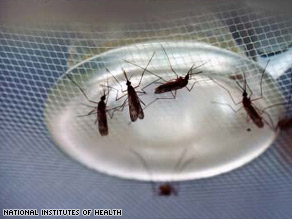
Bioengineering Mosquitoes to Cure Malaria


I hate mosquitoes. I love to hike and camp, but I hate using bug spray to keep these nasty pests away. Well, scientists are growing, or actually I should say they are bioengineering mosquitoes to create a vaccine against malaria. If the vaccine is successful, then I think we'll have a really serious global population problem on our hands. It may be strange to think that malaria actually controls the world's population in certain areas of the globe. If a vaccine eradicated malaria the same way a vaccine eradicated smallpox, then the who knows what would happen to the world's population. Maybe countries may need to enforce one-child policies that are found in China. Who knows? But this would lead to a very interesting public health ethical dilemma.

Wednesday, April 22, 2009

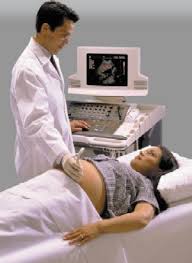
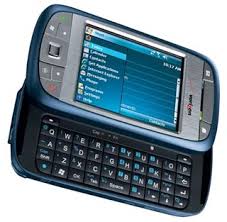
Portable Ultrasound Fits in Your Pocket


That would be the tagline for this new product if one ever gets developed. If you could convert your smartphone into an ultrasound device, would you do it? Then you'd have a real medical smartphone! Go to Washington University and you'll see what I mean. These guys (William D. Richard, Ph.D., Washington University Associate Professor of Computer Science and Engineering, and David Zar, Washington University Research Associate in Computer Science and Engineering) have developed a USB-based ultrasound probe that plugs into smartphones. Now that most smartphones are going to have a universal micro-USB port, such a probe may actually be useful in the future because all the phones will have compatible connectors. Microsoft has funded research in this area. I wonder when Apple will start providing research grants in this area. Let's hope they don't change iPod/iPhone connectors if they build a probe that plugs into the bottom of the device.

Monday, March 31, 2008

ReWalk Exoskeleton


Eliminate lower limb disability! This may not be too far in the future if concepts like this ReWalk Exoskeleton is successful. This product will allow people to potentially stand, walk, and climb stairs.

Engineers have designed this using 3D CAD (computer-aided design) software. It's great to see the advances in 3D CAD software. When I was studying mechanical engineering at MIT, I used a version of CAD called Pro-E (or Pro-Engineering). Now, a lot of engineers use SolidWorks. These software solutions are getting more sophisticated and they are not used just for drawing. You can essentially design a fully functional mechanical device using modern 3D CAD programs. I miss those mechanical engineering days...