Showing posts with label pda. Show all posts

Tuesday, March 16, 2010

Increasing smartphone use among U.S. physicians

This is being republished from http://www.medicalsmartphones.com/

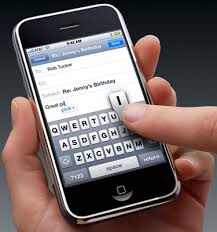
How many doctors are currently using smartphones? Here are some snippets from a recent story on Medical Marketing and Media:
  • About 80% of all US physicians will be using smart phones by 2012, and not just for drug reference or clinical information... according to Manhattan Research survey.
  • An explosion of new healthcare professional-facing apps - over 1,500 in Apple's app store alone - will expand mobile device usage to include patient care and administrative functions, according to Manhattan Research survey.
  • A recent SDI survey found that iPhones were used most among docs using smart phones to access medical information.
  • "Handheld devices are becoming more and more useful to physicians, partly because of the boom in physician-oriented apps and portable content," said Monique Levy, senior director of research at Manhattan Research.
  • Creating smart phone apps for physicians makes a lot of sense, considering that docs have been using PDAs, with applications, for a long time, said  Jeannette Kocsis, SVP, digital marketing, at Harte-Hanks Direct. The mobile-optimized web is also important, said Kocsis, particularly because updates are managed by the website host, as opposed to a physician having to update an application.

Monday, March 15, 2010

Does your doctor use a PDA or smartphone?

This is being republished from MedicalSmartphones.com


I know it's hard to believe, but so many doctors are falling behind on the use of mobile technology. They're still using PDAs that are over 5 years old and they aren't using modern smartphones. I recently attended an educational meeting where over 300 physicians had gathered. Although many were using modern smartphones, quite a few still had PDAs running the original Palm OS or Pocket PC. I'm surprised the batteries on these devices still provide enough battery life on these devices that are over 5 years old.

My wife (a family physician in private practice) and I have both gone through a few different smartphones. Our old PDAs are in our personal museum collection. What type of PDA or smartphone does your doctor use?

Friday, March 12, 2010

Epocrates Rx for Android and webOS

This is being republished from: http://www.medicalsmartphones.com/

Have you tried Epocrates Rx on your Google Android or Palm webOS smartphone?  The software is currently beta and you won't get any updates, but it's stable and it runs well. You can view photos of pills, check for drug-drug interactions, and use important tables and calculators. 

I know that many physicians rely on Epocrates on a daily basis. Are you one of those users? I still remember when Epocrates launched its company in 1998 and when PDAs were starting to enter the medical industry. Those were simple days of grayscale Palm Pilots and AAA batteries. Now, we have a wide selection of powerful devices like the Motorola Droid and the Palm Pre.

Wednesday, January 13, 2010

What am I supposed to do with my large PDR?

Like many U.S. physicians, I receive a free copy of the PDR (Physicians' Desk Reference). Who still uses this large book? I've been using the Internet or a PDA/smartphone for many years and I don't know what to do with these large books. They could be saving thousands of trees by saving these books and sending CDs or a pamphlet that includes a hyperlink and a special code.

Speaking of the PDR, the mobile version of the PDR called mobilePDR is coming back! It used to be available, then it disappeared, and now it's coming back. It will be available for a variety of smartphones including:
Apple   Windows Mobile  Palm  Blackberry  Symbian  Android
Apple iPhone; Windows Mobile; Palm OS; BlackBerry; Symbian; and Android

Do you still use a PDR?
PDR Network combines the Health Care Notification Network (HCNN) and the Physicians' Desk Reference (PDR) to provide prescribers with a complete, end-to-end service. The PDR is the leading provider of print and online pharmaceutical information to physicians, and the HCNN is the only FDA-compliant network that electronically delivers specialty-specific product safety notices to prescribers. Improving patient safety and reducing physician liability requires prompt, expert delivery of important patient-safety information: PDR Network (formerly Medem) is ideally suited to fulfill this need.

Friday, September 25, 2009

e-Learning in the world of medical education

So much continuing medical education (CME) now occurs via e-learning technologies. It's so convenient to view activities on your computer, your smartphone/PDA, or even to listen to audio programs on an MP3 player like an iPod. It's easier than ever to stay current on medical news, clinical updates, and much more thanks to computing technology.

How do you leverage e-learning technologies? It's hard to imagine how you could keep up with all the safety alerts, the FDA warnings, clinical breakthroughs, and other important medical news without modern technology. Have you tried listening to some educational podcasts on your iPod? How about live webcasts?

Reports from the ACCME  (Accreditation Council for Continuing Medical Education) have shown that the uptake of e-learning for CME continues to climb each year. Now that travel costs are so high, fewer physicians are traveling to major medical meetings. Instead, they are learning through their computers.

Friday, May 29, 2009

Medical Students and Smartphones


Today, many people are entering medical school with an Apple iPhone, BlackBerry, or other smartphone. Students may not be aware that their school has a PDA/smartphone requirement. I wonder how these requirements have evolved over the past several years. In the past, you had to record procedures and patient encounters on your PDA. Now, I’d have to think that most of these forms are web-based. If that’s the case, then you wouldn’t technically need a smartphone because you’d simply need to have access to a web browser. However, maybe some schools still have native applications that must reside on a PDA/smartphone. If that’s the case, then you’ll need to make sure that you have a smartphone that meets those system requirements.

Thursday, May 21, 2009

How Do You Calculate GFR?


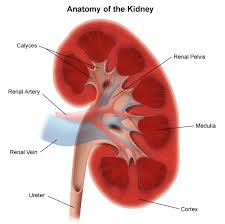
GFR = Glomerular Fitration Rate

It's an indication of how your kidneys are functioning. In medical school, we learned all sorts of formulas to calculate the GFR. Now with medical smartphones and PDAs, we can simply punch in the numbers and get an estimated GFR very easily.

The CKD-EPI (Chronic Kidney Disease Epidemiology Collaboration) has proposed a new equation to calculate GFR and they published this in the Annals of Internal Medicine. Titled, "A New Equation to Estimate Glomerular Filtration Rate," this article outlines how the CKD-EPI equation performed better than the Modification of Diet in Renal Disease Study (MDRD) equation, especially at higher GFR, with less bias, improved precision, and greater accuracy. Will this replace the Cockcroft-Gault Calculator?

Monday, April 13, 2009

MedicalSmartphones.com

I've registered a new URL: MedicalSmartphones.com

I've been an avid PDA/smartphone user for many years. During medical school and residency, I used to provide advice about these devices. I've been blogging about it for a while, but now I want to keep a dedicated blog about this topic. I hope you'll visit and find some useful information.

Saturday, April 11, 2009

FREE Epocrates Cardiology through Cardiosource

Are you a member of the ACC (American College of Cardiology)? Do you use Cardiosource? You may be happy to know that Epocrates and Cardiosource have joined forces up to provide a FREE one-year, one-time subscription to Essentials for Cardiology. Visit Cardiosource and look for the information about Epocrates by clicking here. More and more physicians are abandoning Palm and Pocket PC/Windows Mobile and moving to the iPhone and BlackBerry, so it's great to have Epocrates for these mobile devices.

Friday, April 10, 2009

At what point is a PC too small?

We live in a world of mobile technology. We see PDAs, BlackBerrys, iPhones, Smartphones, iPods, and all sorts of other mobile devices. Computers are also getting smaller and we see young people using UMPCs, netbooks, micro PCs, and other miniature computers. But at what point is the PC so small that you fail to be productive? At what point does the small size hinder your ability to do what you need to do? How do you balance size, weight, and functionality? After all, you can probably find a PC in a very small size, and then if you look some more, you can probably find another one that's 25% larger. So how should a physician, pharmacist, or nurse decide on the size of that mobile PC when working in the clinical setting? At what point is an ultra-mobile PC too small?

Wednesday, April 8, 2009

MobileHealthComputing.com

I secured a new URL today: http://www.mobilehealthcomputing.com/


I've been writing about UMPCs (ultra-mobile PCs), netbooks, MIDs, PDAs, Smartphones, iPhones, iPods, tablet PCs, and other mobile devices for a while now. I thought it was time to get a new URL for my old blog that focuses on these gadgets and mobile technology in healthcare. Welcome to the world of cloud computing.

Thursday, March 26, 2009

ZAGG Invisible Shield

If you need to protect your cell phone, PDA, smartphone, pager, iPod, iPhone, UMPC, or any other gadget, I would suggest the ZAGG Invisible Shield. They make some incredible device protectors that go beyond protecting the screen. I used to protect everything, but recently I've decided that it's not really worth the hassle because I switch gadgets too frequently (I admit I am trying to change that). I've also found that as long as I'm careful, I usually don't end up with any scratches. However, if you're clumsy, then you should definitely protect your device.

Wednesday, March 25, 2009

Iris Browser Update


The Torch Mobile Iris Browser has been updated again. It's a good mobile browser for my XV6800 Windows Mobile PDA/Smartphone, but I occasionally get an "out of memory" error if I visit busy web pages. Like many other mobile browsers, you can zoom in and out very easily and scan pages quickly. I've also been playing around with Opera Mobile, Opera Mini, Skyfire, and Pocket Internet Explorer. Proxy servers speed things up if they're configured properly.

Wednesday, March 18, 2009

Free Epocrates® Essentials for Medical Students – Download Days iPhone March 17-18, 2009

Free Epocrates® Essentials for Medical Students – Download Days iPhone March 17-18, 2009

If you're a US medical student, go here:
http://www.epocrates.com/downloaddays/

It's great to see Epocrates offering this 1-year license for free to medical students. Med students have enough student loans and books cost a fortune. So, anything that's free is generally warmly welcomed.

Tuesday, March 17, 2009

Torch Mobile Iris Browser

Torch Mobile has released an updated version of its Iris mobile web browser. This browser is similar to Opera Mobile and Skyfire and allows you to view full web pages and easily zoom in and out. I've run into a few "out of memory" errors on my Windows Mobile XV6800 while using Iris, so it's not optimized for devices that have limited amounts of internal RAM. I'm sure you won't have any problems if you have a newer PDA smartphone that's faster and more equipped than my old device.

As mobile browsers become more powerful, I often wonder how medical students and residents will use their smartphones in the hospital setting. If they can literally access any website in its entirety, then this opens up tremendous educational resources. I think that's probably one of the biggest reasons why the iPhone has been so popular among medical students and residents. Speaking of the iPhone, Apple just announced the updated iPhone OS 3.0 and it seems silly that you still can't multi-task on the iPhone. It reminds me of the old Palm OS.

Saturday, March 7, 2009

10 Years Ago - The Palm V Was Great

Wow, I was just reminded that the Palm V was a really popular PDA 10 years ago. The Gadgeteer has a great review of this now-ancient PDA. I still have a Palm V in my office. It's a relic - a literal antique. Isn't it amazing how quickly technology changes? Wow, 10 years have gone by very quickly.

I should build a mini museum of all the different gadgets I've owned. It goes way back to the Sharp Wizard/ Zaurus, then the Apple Newton Messagepad series, then the Palm Pilot, and then you have grayscale Windows CE devices, then they changed the name to Pocket PC and the iPaq was the device to have, then smartphones emerged and became very popular so I got the Windows Mobile Treo 700wx, and now here I am with a Windows Mobile (Microsoft changed the name again) XV6800, an OQO model 02, and a Samsung Q1 Ultra UMPC.

Medical Students and PDA SmartPhones

What percentage of 3rd and 4th year medical students have either a PDA or a mobile smartphone? I would guess that number is very high, especially since many schools now require it. They require students to carry a PDA (either running Palm OS or Windows Mobile) so they can record patient encounters, procedures, etc. Several years ago, the dominant operating system was the Palm OS. I'm not sure what the case is right now. Are medical schools developing software that is compatible for the new Palm OS (which will be running on the Palm Pre), RIM/BlackBerry, and Apple iPhone? I'd have to think that it makes more sense to make everything web-based. This way, you can have any device you want. Most hospitals have Wi-Fi, so as long as you can get connected, you can enter all your information. As the iPhone becomes more common among medical students, residents, and attending physicians, there is a growing need to develop medical software. Or, will everything become web-based? It's difficult to multi-task if all your applications are dependent on a web browser.

Saturday, February 14, 2009

Data plan now required with verizon wireless


If you're on Verizon Wireless and you want to get a new smartphone (or PDA phone if you will), you MUST get a data plan. This policy started last September. Why?

I'm so disappointed by this. My wife has been using a Treo for a while now (without a data plan) and now she needs a replacement smartphone. She doesn't need a data plan, but now she's forced to get one if she wants to keep a smartphone. Doesn't sound right, does it?

What's going on Verizon? At least offer the pay per KB plan for all smartphones and BlackBerry devices. That's the least you can do for all those users who don't need a data plan but want to combine a phone and a PDA.

Wednesday, February 11, 2009

MIT and Harvard using PDAs to monitor TB in Peru

The folks over at MIT and Harvard are at it again. They are using a PDA to monitor TB treatment in patients living in Peru. The Harvard/MIT Health Sciences and Technology (HST) program is really about the technology. As I read about these types of projects, I wish I could be a college or medical student again. The opportunities are endless for students these days. Technology allows them to do so much more than ever before.