Showing posts with label psychiatry. Show all posts

Thursday, December 20, 2012

What do we know about Asperger syndrome?

The medical community has only recognized Asperger syndrome as its own distinct medical entity since 1994. Most clinicians consider Asperger syndrome to be in the autism spectrum disorder (ASD) or pervasive developmental disorder (PDD). Currently, the medical community does not have a clear consensus on the exact ways to define Asperger disorder and how to distinguish it from other autistic disorders.

The DSM IV describes Asperger disorder as a child with atypical social development (impairment in social interaction) with no delay in language or cognitive development. The child may have restricted, repetitive and stereotyped patterns of behavior, interests, and activities.

If a clinician suspects Asperger syndrome, the child should be referred for evaluation by a developmental-behavioral pediatrician, a child psychiatrist, a child neurologist, or a neuropsychologist with expertise in autism spectrum disorders.

Speaking of autism, we know that mobile tablets like the Apple iPad have been beneficial for kids with autism. You can read about that here.

Wednesday, January 19, 2011

Novel Antidepressant in the Pipeline: NMDA Receptor Antagonists

Author: Brian Gabriel

In a given year, approximately 26.2% of Americans (or roughly 1 in 4 adults) will suffer from a mental disorder. The most prevalent mental disorder, major depressive disorder, strikes anywhere from 6.7% to 9.5% of U.S. adults each year. 15% of these individuals will commit suicide, making depression the second-largest cause of adult mortality in the U.S. following coronary artery disease (furthermore, studies are beginning to illuminate the positive correlation between these two diseases).

Historically, psychopharmaceuticals have putatively targeted the “monoamines” of the brain; namely serotonin, norepinephrine, and dopamine. The first widespread class of antidepressants, monoamine oxidase inhibitors (MAOIs), was serendipitously discovered to benefit those suffering from depression after patients treated with these antihypertensive medications reported elevated moods. MAOIs are fraught with side-effects, however, including the potentially fatal hypertensive crisis. Because of side-effects, MAOIs are less frequently prescribed today. Similarily, tricyclic antidepressants are also characterized by numerous burdensome side effects including fatal cardiotoxicity in overdose. Finally, while safer than MAOIs and tricyclic antidepressants, selective serotonin reuptake inhibitors (SSRIs) present additional difficulties including a delayed onset of action. While subtle variations on SSRIs have developed (including selective serotonin and norepinephrine reuptake inhibitors-SNRIs), truly novel antidepressants outside the paradigm of monoamines are currently lacking. Below is a brief discussion of one such novel class of antidepressant currently in development.

Monday, January 18, 2010

triskaidekaphobia

Do you know anyone who suffers from  triskaidekaphobia?  I don't think you'll find an FDA-approved therapy for this specific condition.

Here is a definition from Merriam-Webster:  
triskaidekaphobia • \triss-kye-dek-uh-FOH-bee-uh\  • noun
: fear of the number 13

Example sentence:
"Billy Hart suffers absolutely no triskaidekaphobia. The Salem Avalanche infielder has worn No. 13 for six years…." (Katrina Waugh, The Roanoke Times [Virginia], July 14, 2007)

Did you know?
It's impossible to say just how or when the number thirteen got its bad reputation. There are a number of theories, of course. Some say it comes from the Last Supper because Jesus was betrayed afterwards by one among the thirteen present. Others trace the source of the superstition back to ancient Hindu beliefs or Norse mythology. But if written references are any indication, the phenomenon isn't all that old (at least, not among English speakers). Known mention of fear of thirteen in print dates back only to the late 1800s. By circa 1911, however, it was prevalent enough to merit a name, which was formed by attaching the Greek word for "thirteen" -- "treiskaideka" (dropping that first "e") -- to "phobia" ("fear of").

Autism: searching for a cure

We currently have drug therapies for a wide variety of conditions. We have ways to treat diabetes and reduce the risk for heart attacks. We have medications for depression and anxiety. We even have medications for schizophrenia and bipolar disorder.

When will we find a drug treatment for autism?

If you visit ClinicalTrials.gov, you'll find almost 200 trials if you type the word "autism" into the search box. Roughly half of those studies are recruiting volunteers, but the problem is that many parents do not wish to subject their children to clinical studies. So, how will researchers conduct their research? How will the medical community find a cure or treatment for autism unless we have enough clinical studies evaluating various treatment options?

Speaking of treatments, there's a startup company based in Cambridge, MA called Seaside Therapeutics and this company is testing a compound that dampens synaptic activity by mimicking GABA (an inhibitory chemical messenger in the brain). The company is evaluating this compound in patients who have fragile X and also in those who have autism.

Tuesday, December 22, 2009

Psych patients won't be hiding this pill in their mouths

Some psychiatry patients may be in the habit of hiding pills in their mouths. Why? Because they may be in an in-patient setting and they are required to adhere to their medication regimen. You've probably seen this in the movies:
  • Psychiatry patients in an in-patient ward line up for their meds.
  • They are given a cup full of meds and they take their pills along with a cup of water.
  • Someone monitors compliance. "Open your mouth" and someone checks to make sure the pills are all gone. Then the patient is dismissed.
  • Did the patient really swallow the pills? Or did the patient hide the pill somewhere in his/her mouth to spit it out later?
Now, some patients may "cheek" their pill and hide it somewhere in their mouth. Well, you won't be able to that if you have a pill that dissolves in your mouth. Some dissolvable pills may not get absorbed very well if they're swallowed, so the irony is that some patients may need to swallow their pills if they don't want to effectively "take their medicine." Give someone a mouthful of pills and let's see if anyone can selectively swallow a single one.

So asenapine (Saphris) is one of the newest anti-psychotic medications that has been approved by the FDA. This pill is a sublingual tablet. That means that you put it under the tongue and the tablet will dissolve within a few seconds. There's no way to effectively hide this pill in your mouth. By the time you try, the pill dissolves. So, as long as the pill enters the mouth (and the mouth isn't completely dry), the pill will dissolve and the medication will get absorbed into the body.

Of course, if you're really trying to ensure maximal compliance to your drug regimen, then you can always just give an injection. Speaking of injections, Risperdal (risperidone) and Zyprexa (olanzapine) are both available as injections.

Monday, November 16, 2009

What caused Dr. Stephen Wolf to kill his son?


Dr. Stephen Wolf, 51, faces first-degree murder charges in Oklahoma City. According to this story on CNN, Dr. Wolf is being charged for killing his 9-year-old son. We have very few details at this time, but this is a very sad and troubling story. My heart goes out to his family and to all those affected by this tragic loss.

Doctors are often held to a higher standing so when something shocking like this occurs, we all struggle to understand what could have caused this person do act in such a way. The human mind is complex and mysterious and it's something that we will never fully understand in our lifetime. Advances in medical technology will never unravel the inner workings of the complex human mind.

Friday, November 6, 2009

Doctors and mistakes: big and small


Doctors are humans and we all make. Some are really big and others are small. Over the past week, we've seen two dramatic examples of physicians who appear to have done some terrible things. I don't write this to judge them, but to say that physicians are vulnerable to stress, mental health problems, greed, and other conditions.
It's a sad reality, but doctors can fall and make some really big mistakes. I don't know if we'll ever fully understand why these individuals did the things they did. Some may think that it's a simple matter of greed, anger, or hatred. Perhaps they suffered serious mental trauma. I personally think that it probably involves a combination of many different psychological factors to cause physicians to make such poor decisions. After all, the brain is very complex and we really don't understand what makes certain people do crazy things that are irrational and bizarre.

Thursday, November 5, 2009

Military stress and tragedy at Fort Hood


My heart goes out to all the families recently affected by this tragic event at Fort Hood Texas. CNN is reporting that the suspect in this shooting case is a military psychiatrist (Maj. Nidal Malik Hasan) who was practicing at Darnall Army Medical Center at Fort Hood. Previously, he worked at Walter Reed Army Medical Center.

It's hard to imagine the level of stress some people must go through. According to this story, Hasan was to get deployed to Iraq. What caused this type of erratic behavior? Was it stress? The human mind is so complex that it's hard to imagine what Hasan must have been experiencing as a military psychiatrist.

Friday, September 4, 2009

Teen cries tears of blood (haemolacria)


This is a very unusual case. Calvino Inman is a 15-yr-old teen who lives in Tennessee. When he cries, he cries tears of blood. According to this story on CNN: Dr. Barrett G. Haik, director of the University of Tennessee's Hamilton Eye Institute, says... "crying blood," a condition called haemolacria, is common in people who have experienced extreme trauma or who have recently had a serious head injury." The strange part is that Inman has no history of head trauma. So why would he be crying blood?

The CNN story also notes that Inman will under a psychiatric evaluation to rule out the possibility that he might be faking those bloody tears.

Saturday, August 29, 2009

Alleged kidnapper Phillip Garrido kept a blog


According to CNN, the alleged kidnapper Phillip Garrido kept a blog (http://voicesrevealed.blogspot.com). Garrido's blog entries are posted by "THEMANWHOSPOKEWITHHISMIND." The blog currently has hundreds of unmoderated comments.

Considering the nature of the current case, I doubt this blog will remain online very long. This story has now reached international levels and I have to think that someone at Google will shut down this blog. According to the nature of his content, it sounds like he thought he had mind controlling powers. It seems like Garrido was delusional and/or he may have had some type of psychiatric illness. However, I'm not his doctor, so there's no way I could know that.

My heart goes out to Jaycee Lee Dugard and her entire family. I wish you the best as you restart a new life in freedom.

Friday, August 28, 2009

Jaycee Lee Dugard and a life of isolation


This really is a tragic story and it's all over the news. What a way to start the weekend. In case you haven't heard, Jaycee Dugard is a woman who was abducted at the age of 11 and she lived in some backyard sheds for 18 years. Essentially, she was living in a primitive environment (akin to camping) and she even gave birth to two girls in this type of environment. According to CNN, Phillip Garrido is a registered sex offender, listed as having been convicted of forcible rape. How in the world did the authorities find these tarps and sheds? According to the story on CNN, "a psychiatrist envisioned a slow and overwhelming adjustment for Jaycee Lee Dugard." She and her daughters have been living in complete isolation. Can you imagine what it must be like to transition into modern society? To read about the California backyard sheds, click here. Image source: CNN (age-progression image)

Saturday, August 15, 2009

FDA Approves Saphris (asenapine)


Here it is from the FDA: FDA Approves Saphris to Treat Schizophrenia and Bipolar Disorder

The U.S. Food and Drug Administration has approved Saphris tablets (asenapine) to treat adults with schizophrenia, a chronic, severe and disabling brain disorder, and to treat bipolar I disorder in adults, a serious psychiatric disorder that causes shifts in a person's mood, energy, and ability to function.

“Mental illnesses like schizophrenia and bipolar disorder can be devastating to patients and families, requiring lifelong treatment and therapy,” said Thomas Laughren, M.D., director of the Division of Psychiatry Products in the FDA’s Center for Drug Evaluation and Research. “Effective medicines can help people with mental illness live more independent lives.”

The most common symptoms of schizophrenia include hearing voices, or seeing things that are not there, having false beliefs (for example, believing that others are controlling thoughts, reading minds, or plotting harm), and being inappropriately suspicious or paranoid. These thoughts may be terrifying and can cause fearfulness, withdrawal, agitation or violence.

Bipolar I disorder is a chronic, severe, and recurrent psychiatric disorder that causes alternating periods of depression and high, increased activity and restlessness, racing thoughts, talking fast, impulsive behavior, and a decreased need for sleep.
Saphris is in a class of drugs called atypical antipsychotics. All atypical antipsychotics contain a boxed warning, the FDA’s strongest warning. The warning alerts prescribers to an increased risk of death associated with off-label use of these drugs to treat behavioral problems in older people with dementia-related psychosis (a brain disorder that lessens the ability to remember, think, and reason). Saphris is not approved for these patients.

The efficacy of Saphris in treating schizophrenia was studied in three short-term placebo-controlled and active-drug controlled clinical trials. In two of the trials Saphris demonstrated superior efficacy compared to an inactive pill (placebo) in reducing the symptoms of schizophrenia.

The efficacy of Saphris in the treatment of bipolar disorder was studied in two short-term placebo-controlled and active-drug controlled clinical trials in which Saphris was shown to be superior to placebo in treating symptoms of bipolar disorder.

The most common adverse reactions reported by patients in clinical trials being treated for schizophrenia with Saphris were the inability to sit still or remain motionless (akathisia), decreased oral sensitivity (oral hypoesthesia) and drowsiness (somnolence).

The most common adverse reactions reported by patients in clinical trials using Saphris to treat bipolar disorder were drowsiness, dizziness, movement disorders other than akathisia and weight increase.

Saphris is manufactured by Schering-Plough, Kenilworth, N.J.

Click here to read this news release on the FDA website.

Thursday, August 6, 2009

New Frontiers in Schizophrenia and Bipolar Disorder Research

Here's a video from the Department of Brain and Cognitive Sciences at MIT. The title of this video is: "New Frontiers in Schizophrenia and Bipolar Disorder Research" and the presenter is Dr. Edward Scolnick, Director, Psychiatric Disease Program and the Stanley Center for Psychiatric Research at the Broad Institute. At the Broad Institute, Edward Scolnick, MD works to identify risk genes for bipolar disorder and schizophrenia.

Friday, July 31, 2009

Do your children need ADHD medications?


Kids are hyper, aren't they? They also have really short attention spans, don't they? Did you catch the CNN story titled, "Does your child need ADHD drugs?" If you're not a healthcare professional, can you evaluate whether your children (who have ADHD) should be taking medications for their ADHD? What do we (as healthcare professionals) really understand about ADHD? We certainly know a lot more than we did 10 or 20 years ago. However, we probably also have a lot more to learn about the brain.

My concern with this CNN story is that parents (or children) may read this and decide that they may want to perform a little experiment and stop taking their ADHD medications. In this example, the girl eventually told (or confessed) to her parents that she had intentionally stopped taking her meds. But what if your child does the same thing and never tells you? Physicians don't generally recommend that children with ADHD should be making decisions about stopping medications. Who likes taking medications? I don't.

The CNN story also points to the dangers associated with free drug samples. You're not going to find free drug samples of cheap, generic drugs. Instead, you get samples of the latest and greatest. What happens when the samples run out? You end up paying for the latest and greatest instead of paying for cheap generics. For some families, that may not be a big deal. For others, that could become a significant financial strain. So do your children need ADHD medications? If so, which drugs are the best options?

Did you know that Consumer Reports has a list of ADHD drug recommendations? I love Consumer Reports, but should they be making such medical recommendations when ADHD therapy really needs to be tailored for each individual? These types of reports could mislead parents and children, so although they may be helpful for some, they could also confuse or mislead others. At the end of the day, I hope you're working with a really good healthcare professional who can explain why you (or your child) may need ADHD medications.

Tuesday, June 16, 2009

Are ADHD Meds Causing Unexplained Deaths?


If you follow CNN, you may have seen the story titled, "Study links some ADHD meds to rare deaths." That's not the type of headline you can ignore, even if you have ADHD (attention deficit hyperactivity disorder). So what's going on here?

Let me remind you that we should never judge an article by its headline. This story is based on a recent publication in the American Journal of Psychiatry. Researchers noted that stimulant medications may pose a risk in children who have no underlying heart problems. A matched case-control design was performed. United States mortality data from 1985–1996 were used to identify 564 cases of sudden death occurring at ages 7 through 19 years. The primary exposure measure was the presence of amphetamine, dextroamphetamine, methamphetamine, or methylphenidate. The authors concluded that, "This case-control study provides support for an association between the use of stimulants and sudden unexplained death among children and adolescents."

Here's a brief snippet from CNN from the lead author of the study Madelyn S. Gould, PhD, MPH, a professor of psychiatry and public health at Columbia University, in New York: "There probably does need to be more careful monitoring, but the bottom line is that parents should not take their children off stimulant medication they're currently on and should not be scared to have their child go on a stimulant if that's what they and their doctors decide is the best thing for their child."

Access the American Journal of Psychiatry abstract by clicking here. Image source: CNN

Saturday, May 30, 2009

Health Effects of Texting in Teens


Do you text? I'm not a huge fan of texting, but I tweet like crazy (however, most of my tweets are automated). Teenagers and other young people have taken texting to an entirely new level by creating a language of acronyms that can only be understood for those who are familiar with texting. According to the Nielsen Company, teens sent and received an average of 2,272 text messages per month in the fourth quarter of 2008. Wow!

The NY Times has an article on the health effects of texting. Physicians and psychologists are worried about anxiety, distraction in school, falling grades, repetitive stress injury and sleep deprivation. That doesn't sound good, does it? The article quotes Sherry Turkle, a psychologist who is director of the Initiative on Technology and Self at the Massachusetts Institute of Technology (MIT). Here's a snippet of the quote: "Among the jobs of adolescence are to separate from your parents, and to find the peace and quiet to become the person you decide you want to be," she said. "Texting hits directly at both those jobs."

Frequent typing on tiny thumb keyboards can also cause BlackBerry thumb.

Monday, May 11, 2009

A Sad Story on CNN

CNN has a tragic story of a U.S. soldier who killed his fellow comrades in Iraq. With all that violence and mental trauma, this person was suffering and was receiving therapy at a stress-relief clinic treatment center. I'm not sure anyone can ever receive enough counseling and therapy for going through actual combat. My heart goes out to the grieving families.

Women and Mental Illness


What role does gender play in the diagnosis, course and treatment of mental illness? Are women more prone to mental illness? The U.S. Department of Health and Human Services' Office on Women's Health (OWH) has a report called "Action Steps for Improving Women's Mental Health." According to that report, women are twice as likely to suffer from major depression; three times as likely to attempt suicide; and they experience anxiety disorders two to three times more often than men. Why? What makes women so different from men?

CNN has a story about this interesting topic and highlights the personal stories of a few individuals. As technology improves brain imaging abilities and we gain a better understanding of how hormones affect our mood and cognition, are we as healthcare professionals moving in the right direction when it comes to the management of mental conditions?

Tuesday, May 5, 2009

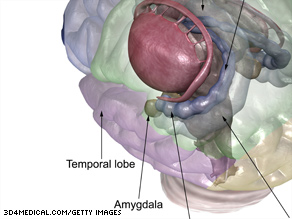
Autism and the Amygdala


CNN is reporting the results of a study published in the Archives of General Psychiatry where researchers found that the amygdala was 13% larger in children with autism. Advances in medical technology are revealing new things in the science of medicine. This is absolutely fascinating, but I wonder what it means. Could this lead to a cure someday? The topic of autism has received much attention lately, especially in the area of vaccines. So many parents are afraid to vaccinate their children because they fear that vacccines may be linked to autism. As a result, this may lead to some serious public health problems if we have all these kids out there who are not vaccinated. Thankfully, herd immunity should help a bit, but it won't protect everyone. Image source: CNN

Monday, April 27, 2009

Heard of Priligy (Dapoxetine)?


I saw a sign today that caught my attention (I won't tell you where I saw it, but you can probably take a guess). It was for a new drug called Priligy (Dapoxetine). This agent has been approved in several countries in Europe ,but not in the USA. Approved for what? For premature ejaculation. The drug is an SSRI (selective serotonin reuptake inhibitor), similar to those used to treat depression and anxiety. However, it is a short-acting formulation and is meant to be taken "as needed." It is currently approved in Sweden and Finland and is marketed by Janssen-Cilag, a part of the Johnson & Johnson family of companies.

Sexual health is one of those topics that many healthcare professionals don't really like to talk about. When new drugs like Viagra, Cialis, and Levitra emerged on the scene, this allowed clinicians to be a bit more comfortable having open conversations with their patients about sexual topics. So which topic is more uncomfortable to discuss: erectile dysfunction or premature ejaculation?