I've been writing about
swine flu for several days and I wish to make one thing very clear: It is not my intent to increase national or global hysteria about
swine flu. However, I want people to be aware of the POSSIBILITIES that may be associated with a true pandemic (which is another way of saying global epidemic).
Right now, we haven't even seen the tip of the iceberg. We're only seeing a tiny ice cube floating on the ocean. If things stay that way, then we have nothing to worry about. However, if things erupt around the world, then we'll see a massive iceberg come out of the sea.
I've been following swine flu on
CNN and the latest is that there are
787 global cases of confirmed H1N1 and places like
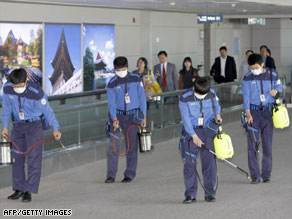
South Korea are sanitizing airports after a single identified case.
Meanwhile, the
CDC is tracking the number of cases in each state. As of May 3, there are 226 cases. This means that almost 1/3 of the confirmed cases are in the USA. Why is that a big deal? Because people from all over the world travel to and from the USA. We are a major international travel hub. As the summer approaches, we will see a rise of tourists and other travelers. New York now has 63 confirmed cases. Yesterday, NY had 50. If there's one US city that attracts international tourists, it's NYC. We're already in May and schools are about to enter summer break. College students will be traveling home. We're about to see a major surge in domestic travel as well.
Anthrax was a scare, but it isn't transmitted as easily as the flu.
SARS was a really big scare (especially because I knew friends living in Hong Kong), but Hong Kong isn't the type of major international travel hub like the USA.
Here in the U.S., we have a large supply of anti-viral therapies like Tamiflu (oseltamivir) and Relenza (zanamivir). Do other countries have the supply like we do? How much do these anti-viral therapies impact the course of the disease? It's probably too early to know the answer to that question. However, it may not be unreasonable to think that anti-viral therapy may be one of the reasons why mortality in the U.S. hasn't been as high as Mexico (but I don't have any scientific evidence to support that statement).

 Today was the first day of the 2nd International mHealth Networking Conference. It's been a full day of presentations and discussions about mobile health. As a physician champion for the HCPLive Network, I'm excited to blog about some of the highlights from this meeting. You can also follow updates about the mHealth Networking Conference on HCPLive.com.
 This afternoon, there was a presentation focusing on international perspectives on mHealth. The presentation was titled, "The Most Advanced Hospital in the World? Report from Severance Cardiovascular Hospital in Korea" by Byung-Chul Chang, MD. This hospital is part of the Yonsei University Health System (YUHS). Dr. Chang spoke about the digital infrastructure that's found in their hospital. He showed a marketing video that demonstrates how doctors in their hospital are using mobile PCs, smartphones, RFID, and other technologies. I love the idea of an automatic payment system that leverages a card (similar to a credit card) and an ATM-like machine in the hospital lobby.