Showing posts with label transplant. Show all posts

Monday, March 21, 2011

Full Face Transplant in Boston

According to this story on MedPageToday, a Texas man horribly burned in an electrical accident has been given a full face transplant by surgeons in Boston.
The 15-hour procedure -- involving more than 30 physicians, nurses, anesthesiologists, and residents -- replaced Dallas Wiens' nose, lips, and facial skin, as well as the facial muscles and nerves.
Isn't it amazing? This is the world's second full face transplant. Remember the 1998 movie Face/Off starring John Travolta and Nicolas Cage? Will full face transplants become a procedure that is routinely performed? Or, will full face transplants occur on a rare, sporadic basis for those with serious conditions? The ethical implications of a face transplant are highly complex.

Tuesday, September 1, 2009

How much is a kidney worth? $20,000 on the black market.


Wow, this is quite an interesting story. In this story, CNN is reporting that one kidney donor responded to a black market ad and received $20,000 for donating a kidney for organ transplantation. According to the editor's note: Since the FBI arrested a Brooklyn businessman in late July on federal charges of organ trafficking, CNN has been conducting a worldwide investigation into the sale of kidneys using willing donors and willing recipients from China to Israel to the United States.

Nick Rosen has made his story public by creating a documentary film called "Kidney Beans." Sounds like a very fascinating tale. When I stop to think about all the corruption that's in the world, I'm surprised that we're not hearing more stories of involuntary donation of organs - where people are literally forced to donate their organs. I've heard of rumors that prisoners in China are often forced to donate their organs (I have no idea of this is true, so I'm not trying to spread rumors). I wonder how many unreported organ transplants occur in other countries. If Israel is really leading the world in organ trafficking, I wonder which countries are second and third. My guess would be countries where human rights laws are not heavily enforced.

I know several people who have donated kidneys. It's very noble and I respect them highly for their sacrifice. It's such a shame to think that some are doing it for cash (and that others may be forced into it).

Wednesday, July 15, 2009

More labeling changes from the FDA: Transplant Drugs


Who's had a kidney transplant? Which immunosuppressant drug are you taking? Here is the latest update from the FDA:

The U.S. Food and Drug Administration (FDA) is requiring the makers of certain immunosuppressant drugs to update their labeling to reflect that immunosuppressed patients are at increased risk for opportunistic infections, such as activation of latent viral infections, including BK virus-associated nephropathy. These immunosuppressant drugs are used to protect against the rejection of certain organ transplants.

Class labeling changes are required for the following immunosuppressant drugs:

  • sirolimus marketed as Rapamune
  • cyclosporine marketed as Sandimmune and generics
  • cyclosporine modified marketed as Neoral and generics
  • mycophenolate mofetil marketed as Cellcept and generics
  • mycophenolic acid marketed as Myfortic

The FDA conducted analyses of its Adverse Event Reporting System (AERS) to characterize the association between BK virus-associated nephropathy and the use of these immunosuppressant drugs. The occurrence of BK virus-associated nephropathy is primarily observed in renal transplant patients.

BK virus-associated nephropathy can progress to renal allograft loss. Monitoring for this serious risk and early intervention by the health care provider is critical. Adjustments in immunosuppression therapy should be considered for patients who develop BK virus-associated nephropathy.

The association of BK virus-associated nephropathy has previously been reported for another immunosuppressant drug, tacrolimus (marketed as Prograf). Information about the increased risk for opportunistic infections, including activation of latent viral infections, is included in the prescribing information for Prograf. Currently the prescribing information for the other immunosuppressant drugs does not adequately warn about this possible serious adverse event. Based on this new safety information, FDA is requiring, under the authorities granted under the Food and Drug Administration Amendments Act (FDAAA) of 2007, that manufacturers of these immunosuppressants update their prescribing information to include stronger warnings about the risk of BK virus-associated nephropathy

This information reflects FDA’s current analysis of data available to FDA concerning these products. FDA intends to update this document when additional information or analyses become available.

FDA is continuing to review the safety of immunosuppressant drug products used in renal transplantation. The FDA urges both healthcare professionals and patients to report side effects from the use of immunosuppressant drug products to the FDA's MedWatch Adverse Event Reporting program using the contact information at the bottom of this sheet.

Information about the increased risk for opportunistic infections already is included in the labeling of the immunosuppressive drug Prograf (tacrolimus).

So who markets these drugs? Do you know?
  • Rapamune (sirolimus) is marketed by Wyeth.
  • Sandimmune (cyclosporine) is marketed by Novartis.
  • Neoral (cyclosporine modified) is marketed by Novartis.
  • Cellcept (mycophenolate mofetil) is marketed by Roche.
  • Myfortic (mycophenolic acid) is marketed by Novartis.
  • Prograf (tacrolimus) is marketed by Astellas.
To read the FDA alert, click here.

Saturday, June 27, 2009

Steve Jobs and his Tennessee liver transplant


With all this talk about Michael Jackson, I decided that it was time to blog about another celebrity: Steve Jobs (co-founder of Apple). We know that a few months ago, Jobs underwent a liver transplant in Tennessee. He's been battling pancreatic cancer and he's been on medical leave for some time. He lives in California, so you may be wondering: why did he have liver surgery in Tennessee?

Let me introduce you to something called the MELD (Model for End-Stage Liver Disease) score. The MELD system was implemented February 27, 2002 to prioritize patients waiting for a liver transplant. MELD is a numerical scale used for adult liver transplant candidates. The range is from 6 (less ill) to 40 (gravely ill). The MELD score is calculated based on these 3 blood tests:
  • INR (international normalized ratio)
  • Bilirubin
  • Creatinine (Cr)

Here's how the MELD score is calculated = (0.957 * ln(Serum Cr) + 0.378 * ln(Serum Bilirubin) + 1.120 * ln(INR) + 0.643 ) * 10

You'll see that common liver enzymes such as AST and ALT are not a part of this equation. We also don't look at GGT or Alk Phos. The INR is reflective of the liver's ability to produce the proper clotting factors, so it's shows how the liver is functioning. You may be wondering why creatinine (a marker of kidney function) is used in the MELD score. The reason is because kidney dysfunction is often associated with liver failure. You may have heard of hepatorenal syndrome (HRS), which is kidney failure in the setting of cirrhosis or liver failure. Anyway, let's return to MELD. The four MELD levels are:
  1. greater than or equal to 25
  2. 24-19
  3. 18-11
  4. less than or equal to 10
Now let's talk about United Network for Organ Sharing (UNOS). UNOS uses a computerized point system to distribute organs in a fair manner. Recipients are supposed to be chosen primarily on the basis of medical urgency. Is there a way to beat the system?

So the big question is: did Steve Jobs use his money to somehow "cut the line" and get a liver transplant ahead of others? Can money buy you better health care? I think we all know the answers, but we may not wish to admit them. USA Today writes, "Jobs' liver transplant shows money can make a difference." If you have a high MELD score, that means you're really sick and you probably can't afford to travel very far. Most patients awaiting liver transplants can't afford to get on many waiting lists. If you have a ton of money, then you may have the luxury to get on multiple waiting lists.

Friday, June 26, 2009

Jackson's health and mental problems

We know that Michael Jackson had many health problems (and many rumored health conditions). We don't know the details about his mental health or about the care he received for his addictions and other mental health conditions. CNN reports that we know Jackson had the following problems:
  • He was addicted to pain killers
  • He had numerous plastic surgery
  • He had vitiligo
  • He's been accused of child molestation
  • Rumors about alpha-1 antitrypsin deficiency
  • Rumors about the need for a lung transplant
  • Rumors about skin cancer
Celebrities never get any privacy, do they? Would you like the entire world to know about the list of your health and mental conditions?

Wednesday, May 20, 2009

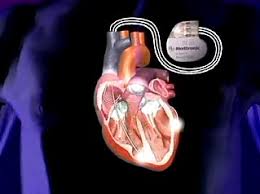
Medtronic: Pacemaker Defects


Some people out there rely on a pacemaker to survive. Others may have a pacemaker as a "backup" in case their heart rate drops or does something funny. Medtronic has warned physicians that 37,000 Kappa pacemakers may have a defect which can cause the battery to stop working. Since the pacemaker is under the skin, it's not easy to go in there and change the battery.

I wonder what pacemakers will look like in the future. You'd have to think that with advances in medical technology, we may come up with a self-powered pacemaker that doesn't rely on a battery, right? I bet that in the future we'll see doctors regenerating the sinoatrial node (SA node or sinus node) in a Petri dish and transplanting that into a heart. That will be called a "pacemaker transplant" and we won't need battery-powered devices anymore.

According to Medtronic CEO Bill Hawkins, "most" of the defective pacemakers were distributed overseas. I'm sure many people want to know what "most" means. I also wonder if this is related to the fact that Medtronic is cutting 1,500-1,800 jobs.

Saturday, May 9, 2009

Double Hand Transplant!


Wow, the University of Pittsburgh is keeping busy these days! CNN has an exciting story about a pastry chef who received a double hand transplant. Can you do that? Apparently you can. Advances in surgical technology and microsurgery techniques have made this possible. Jeff Kepner is 57 and he went through a nine hour surgery that was led by Dr. W. P. Andrew Lee, chief of the division of plastic surgery and professor of surgery and orthopedic surgery at the University of Pittsburgh Medical Center (UPMC). This was the first double hand transplant to take place in the United States. What other transplants will we be seeing in the future?