The following is a guest post:
Whether it is alcoholism, drugs, or a behavioral addiction, addiction itself is an intricate and painful disease, both mentally and physically; it’s no wonder that finding the right rehab or treatment facility can seem just as difficult at times. Getting help for your addiction will ensure your success, but finding the right facility will truly determine the longevity of your success and sobriety. With the immense amount of options available to one seeking treatment, it’s extremely tempting to merely just pick any facility, which is a mistake some make. It is imperative to take time to research your options, finding a program that adequately fits with your personal situation, needs and preferences will significantly increase the likelihood that you will achieve recovery.

Showing posts with label addiction. Show all posts
Showing posts with label addiction. Show all posts
Tuesday, May 28, 2013


Thursday, September 27, 2012
Take the Pledge: The Medicine Abuse Project
 Teens are growing up associating medicine with solving problems — and have a heightened awareness of Rx and OTC medicines.
Teens also have easy access to medicine. Two-thirds (65 percent) of teens who report abuse of prescription medicine are getting them from friends, family and acquaintances.

Make a difference and end medicine abuse.
The Medicine Abuse Project aims to prevent half a million teens from abusing medicine within five years. Take the Pledge. Sign here: http://medicineabuseproject.org/
Thursday, June 30, 2011
American Board of Addiction Medicine Approves Addiction Medicine Associates’ Training Program for Physicians
Certification in addiction medicine training will help increase number of addiction medicine specialists
Brookline, MA, June 30, 2011 --(PR.com)-- Addiction Medicine Associates today announced that the American Board of Addiction Medicine (ABAM) has approved the organization to offer a one-year training program in addiction medicine for physicians. The first physician has been accepted into the program and will be starting in the summer of 2011. Once training is successfully completed, the physician will be able to take the board examination in December 2012. According to Dr Wendel Price, the physician selected for the program, “The training of Primary Care physicians does not get into addiction treatment to any real degree and a comprehensive training program would be invaluable”
Brookline, MA, June 30, 2011 --(PR.com)-- Addiction Medicine Associates today announced that the American Board of Addiction Medicine (ABAM) has approved the organization to offer a one-year training program in addiction medicine for physicians. The first physician has been accepted into the program and will be starting in the summer of 2011. Once training is successfully completed, the physician will be able to take the board examination in December 2012. According to Dr Wendel Price, the physician selected for the program, “The training of Primary Care physicians does not get into addiction treatment to any real degree and a comprehensive training program would be invaluable”
Wednesday, October 13, 2010
FDA approves Vivitrol to treat opioid-dependent patients

Vivitrol is an extended-release formulation of naltrexone administered by intramuscular injection once a month. Naltrexone works to block opioid receptors in the brain. It blocks the effects of drugs like morphine, heroin, and other opioids. It was approved to treat alcohol dependence in 2006.
You can read more here.
Saturday, April 17, 2010
CNN on persistent genital arousal disorder (PGAD)
CNN has a story that seems to be capturing quite a bit of traffic this weekend. Titled, "When being turned on is a turnoff," this article focuses on an unusual medical condition called persistent genital arousal disorder (PGAD). According to Wikipedia, PGAD used to be called Persistent Sexual Arousal Syndrome (PSAS) and Restless Genital Syndrome or Mempin Syndrome (ReGS or RGS). I admit that I never learned about persistent genital arousal disorder during medical school. I also don't remember learing about hypoactive sexual desire disorder (HSDD) during medical school.
So, what exactly is PGAD? Could it be linked to restless legs syndrome? How about priapism? I think we probably have more questions than answers when it comes to PGAD and I imagine that we'll learn more as science unveils the underlying pathophysiology of PGAD. You may be surprised to hear that PGAD could be linked to abruptly stopping antidepressants like selective serotonin reuptake inhibitors (SSRIs).
Earlier this week, we also heard this: "U.K. woman has been diagnosed with persistent genital arousal disorder after falling off her Wii Fit board and damaging a nerve, the Toronto Sun reported." PGAD has been gaining more visibility through television shows like "20/20" and "Grey’s Anatomy."
Tuesday, July 14, 2009
Prescription drug abuse - who's fault is it?

CNN has a story about prescription drug abuse because a recent celebrity (I think we all know who) may have had some problems related to pain pills and sedatives. The story starts with this line:
People who abuse prescription drugs often do so believing the pills are safe because they are prescribed by doctors and approved by the Food and Drug Administration, addiction experts tell CNN.When we look at the recent statistics, we realize that this is a huge problem:
In 2005, non-medical use of painkillers contributed to more than 8,500 deaths. Overdose deaths involving prescription pain relievers increased 114 percent from 2001 to 2005.Perhaps the media is to blame? Do you feel that celebrity death stories (related to drug abuse) have been glamorized in any way? We all know that many celebrities have problems with substance abuse. How does that get portrayed to young people living in America?
By 2008, according to the Drug Enforcement Administration's Web site, 38 states had passed legislation to create a database for physicians and pharmacists to prevent abusers from obtaining multiple prescriptions.Many drug addicts are very sophisticated and they have developed clever schemes to beat the system. Some have multiple identities. Others cross state lines and they eventually learn where they can go for their drugs.
So who's to blame for this drug abuse problem? The doctor? The patient? The drug company? The FDA? Or "all of the above"? What can be done to alleviate this common problem? Certain patients refuse to take controlled substances because they fear addiction. Some physicians
To read the story, click here.
Sunday, July 5, 2009
Should we eliminate combination products that contain acetaminophen?

So many combination products contain acetaminophen. You'll find them in prescription drugs (like Vicodin and Percocet) as well as in many over-the-counter (OTC) cough/cold medicines. For instance, Nyquil has an equivalent dose of 1000 mg of Tylenol (acetaminophen). If someone took Nyquil for a cold and then took some additional Tylenol for a headache, he could have a serious liver problem in a few days from a Tylenol overdose. Many people don't look at the ingredients of cold/cough medicines and they also don't realize that acetaminophen = Tylenol (just a different name).
Now, the FDA panel focused on prescription combination products that contain acetaminophen. Why? Because the data shows that acetaminophen-related overdoses occur mainly with prescription drugs. Maybe that's because some people are taking Vicodin and Percocet for drug-abuse problems and they're more prone to suicidal tendencies. Perhaps some people are "popping pain pills" to relieve intractable pain.
Regardless, I think that if we're going to change combination prescription drugs, then we should also re-evaluate combination OTC products that contain acetaminophen. Otherwise, consumers may get the wrong message. My hope is that we simply improve labeling and public health awareness but that all the products still remain available.
Thursday, April 23, 2009
Are People Getting Addicted to Facebook?
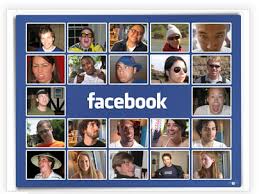
Are people getting addicted to Facebook? We recently heard that the older generation (specifically, women over the age of 55) are the fastest growing segment on Facebook. So how can you tell if you're addicted to Facebook? Check for these "five clues" that appeared on CNN. Will Facebook addiction get added to the DSM-V?
Here are the 5 clues:
1. You lose sleep over Facebook
2. You spend more than an hour a day on Facebook
3. You become obsessed with old loves
4. You ignore work in favor of Facebook
5. The thought of getting off Facebook leaves you in a cold sweat
What do you think? Are you getting addicted?
Wednesday, April 8, 2009
Drug and Alcohol Rehab Programs
I've seen many patients who have needed some type of drug or alcohol rehabilitation. Do you know where to go to find help? It can be difficult to find a good drug rehab facility because of the social stigma associated with addiction problems. It's also very difficult for addicts to quit their addictions. I don't think that most people or family members would feel comfortable asking their friends and colleagues for referrals to rehab programs. However, it is important to find a good program that has the proper support structure and that centers around your beliefs and values.
Many celebrities fall into drug and alcohol addiction. Remember the musician Ray Charles? He was a heroin addict. The biographic movie about Ray Charles had some graphic scenes showing him go through heroin withdrawal. Heroin withdrawal can be difficult to witness at home, so it's important to have your loved one in a safe and professional environment. Ray Charles should have gone through a detox program and heroin rehab.
Many celebrities fall into drug and alcohol addiction. Remember the musician Ray Charles? He was a heroin addict. The biographic movie about Ray Charles had some graphic scenes showing him go through heroin withdrawal. Heroin withdrawal can be difficult to witness at home, so it's important to have your loved one in a safe and professional environment. Ray Charles should have gone through a detox program and heroin rehab.
Subscribe to:
Posts (Atom)