Showing posts with label Annals of Internal Medicine. Show all posts

Tuesday, July 20, 2010

Defensive medicine is widespread

A report from the American Medical News says, "Defensive medicine to avoid liability lawsuits is widespread."  This report is based on a 2010 paper published in the Annals of Internal Medicine titled, "Physicians’ Views on Defensive Medicine: A National Survey."  Since that article doesn't have an abstract, here's a brief summary from the American Medical News story:
Many doctors in a nationwide survey agreed that unnecessary diagnostic tests will not end without protections against unwarranted lawsuits. 
Here are some snippets:
  • About nine in 10 physicians said doctors order more tests and procedures than patients need so they can protect themselves against lawsuits.
  • 91% of the 1,231 physicians surveyed nationwide agreed that doctors will not stop using unnecessary diagnostic tests without protections against unwarranted lawsuits.
  • The cost of defensive medicine is estimated to be $60 billion annually.
Frivolous lawsuits are driving physicians to practice defensive medicine and the high volume of unnecessary tests are often leading to additional tests and procedures. When will this country experience the type of reform we need to improve the health care system so that we're not experiencing so much waste in this country?

Friday, May 22, 2009

The Demise of Primary Care


Sounds like a depressing title, doesn't it? That was the title of a recent article in the Annals of Internal Medicine.

"The demise of primary care: a diatribe from the trenches."

The trenches? Is it really that bad? Most medical students are not inclined to pursue a career in primary care, and now this comes out to encourage them even more? Something doesn't make sense here.

Here's a segment from the abstract: "Individualized clinical judgment has been devalued; thinking has been replaced by algorithms. Practice guidelines have been usurped by pay-for-performance police, on patrol for deviations--not understanding that knowing and allowing for exceptions is the heart and soul of primary care. The coercive surveillance of "Quality Improvement" has become oppressive, making single organ-system specialties increasingly attractive (or at least more tolerable). Generalists are spending so much time proving they are good doctors, they don't have time to be good doctors."

Then, the author (David D. Norenberg, MD) proposes a very interesting idea: a pilot project of volunteer salaried internists (more trusted, less audited) commissioned to our expandable national health care program, Medicare.

So, what do you think? Is primary care dying? Dead? Does it have a chance of getting revived? Will Obama create new policies that will bring new life to the world of primary care? Or, will primary care physicians slowly get replaced by non-physician healthcare providers like nurse practitioners, physician assistants, and others?

Thursday, May 21, 2009

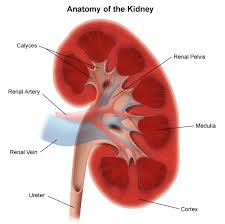
How Do You Calculate GFR?


GFR = Glomerular Fitration Rate

It's an indication of how your kidneys are functioning. In medical school, we learned all sorts of formulas to calculate the GFR. Now with medical smartphones and PDAs, we can simply punch in the numbers and get an estimated GFR very easily.

The CKD-EPI (Chronic Kidney Disease Epidemiology Collaboration) has proposed a new equation to calculate GFR and they published this in the Annals of Internal Medicine. Titled, "A New Equation to Estimate Glomerular Filtration Rate," this article outlines how the CKD-EPI equation performed better than the Modification of Diet in Renal Disease Study (MDRD) equation, especially at higher GFR, with less bias, improved precision, and greater accuracy. Will this replace the Cockcroft-Gault Calculator?

Monday, April 13, 2009

Quit Smoking

What's the best way to help patients quit? Are there any evidence-based smoking cessation strategies that really work? What is the Most Effective Way to Quit Smoking? These are some of the questions that frequently come up when you ask healthcare professionals about smoking cessation.

Clinicians need to remind patients that the Most Effective Way to Quit Smoking is to try, try, and try again. In fact, you may need to try again after you quit successfully because you may relapse. But then you have to try again, and again, and again... (I think you get the picture). According to a new study published in Annals of Internal Medicine titled, "Effect of Varying Levels of Disease Management on Smoking Cessation", healthcare professionals need to treat smoking as a chronic condition that needs to be addressed at every office visit. Furthermore, patients may require some intensive interventions that include medication and counseling, as well as continued dialogue with their healthcare provider. The study was funded by the National Cancer Institute and included 50 rural primary care practices.

Clinicians need to approach smoking cessation management as "disease management." The news was so compelling that the ACP had a press release go out on Business Wire. So what is the Most Effective Way to Quit Smoking? Try, try, and try again.