Showing posts with label cancer genes. Show all posts

Sunday, May 24, 2009

Novel Cancer Biomarkers, Oncogenes, and Targeted Therapies


Since I graduated from medical school (many years ago), we have discovered so many new cancer biomarkers and oncogenes. The world of genomics has really taken off! As I think about the future of medicine, I often wonder about how many more biomarkers and oncogenes we will discover. How many new drugs will get developed to specifically target the overexpression of specific oncogenes? Human genetics and molecular biology are becoming more fascinating topics because we now have the ability to engineer drugs that target specific genes and gene products.

Here are a few examples of some of the newer areas of cancer research:
  • DNA Methylation Biomarker, Septin 9, (Colorectal Cancer)
  • Non-codingRNA (microRNA)
  • Metabolomics-derived Biochemical Markers (Prostate Cancer)
We all know about BRCA1 and BRCA2. We also know that HER2 overexpression can be targeted by an anti-HER2 humanized monoclonal antibody (called trastuzumab or Herceptin). The topic of personalized medicine has been gaining tremendous traction, especially in the oncology world. What if there was a way to prevent hereditary cancers? If we can identify ways to target the specific gene (or genes) that are causing cancer, then we might be able to prevent those malignancies. Advances in drug development have led to many biologic agents (targeted therapies) that act on specific pathways like VEGF (vascular endothelial growth factor) and block the formation of new blood vessels. You've probably heard of bevacizumab or Avastin, which is a VEGF-inhibitor.

Speaking of biologic drugs, I still remember when the first tyrosine kinase inhibitor (TKI) came out. Remember when Gleevec (imatinib) came out? TKIs have now evolved into agents that target multiple different tyrosine kinase pathways and even inhibit EGFR (epidermal growth factor receptor). We now have nilotinib (Tasigna), dasatinib (Sprycel), erlotinib (Tarceva), gefitinib (Iressa), and several more coming. How do medical students keep up with all these drugs? Students today are even learning about new compounds like histone deacetylase inhibitors (HDAC inhibitors or HDIs). We've certainly come a long way in the world of cancer biomarkers, oncogenes, and targeted therapies. What will the future look like as we learn how to target these biomarkers and oncogenes? Image source:

Friday, May 22, 2009

Is Breast Cancer a Different Disease in Young Women?


We often think of breast cancer as primarily being a disease that affects older individuals. However, there are many cases of young, healthy women developing breast cancer and most of them have positive genetic markers to genes like BRCA1 and BRCA2. These genes are currently implicated in the majority of inherited breast (and even ovarian) cancers.

When breast cancer hits a really young woman (say in her early 30's), is it an entirely different disease? This seems to be an area that causes confusion in the oncology community. In a recent CME-certified activity titled, "Breast Cancer in Women Under 40," Jeffrey Peppercorn, MD, MPH discusses this issue. He remarks how breast cancer in women under 40 are more likely to be:
  • estrogen receptor-negative (or ER negative)
  • higher grade
  • HER2-positive
Plus, he indicates that "young African-American women are more likely to have triple-negative breast cancer (estrogen receptor–negative, progesterone receptor–negative, and HER2-negative)."

Advances in medical science are helping us understand the disease process of cancer as researchers explore different treatment options including chemotherapy, hormone therapy, radiation, and other modalities. With all these advances in medicine and technology, will we ever find a cure for breast cancer?

Speaking of breast cancer, one topic I don't think anyone really understands is the spontaneous regression of tumors (when tumors disappear by themselves). It's very rare, but it does occur. Miracle healings! One minute you're told you have a tumor, the next minute it's gone! Do modern day miracles still happen? I believe they do. Scientists have postulated various mechanisms by which tumors may disappear by themselves. One researcher lists these possible explanations: "immune mediation, tumor inhibition by growth factors and/or cytokines, induction of differentiation, hormonal mediation, elimination of a carcinogen, tumor necrosis and/or angiogenesis inhibition, psychologic factors, apoptosis and epigenetic mechanisms." The list doesn't include supernatural healings, but psychologic factors? I'm not so sure about that.

If we can gain a better understanding of why certain tumors may disappear by themselves, then this information may someday lead to a cure for cancer. I'd like to see more research on the topic of spontaneous regression.

Tuesday, May 12, 2009

The ACLU Sues Over Patents on Cancer Genes


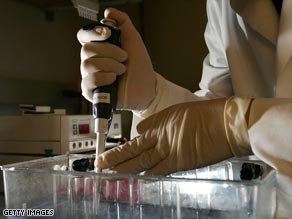
CNN: "Patents on two human genes linked to breast and ovarian cancers are being challenged in court by the American Civil Liberties Union (ACLU), which argues that patenting pure genes is unconstitutional and hinders research for a cancer cure." According to the ACLU, "Myriad's patents give it exclusive right to perform diagnostic tests on the genes -- forcing other researchers to request permission from the company before they can take a look at BRCA1 and BRCA2."

What do you think about this?

Scientists are identifying more cancer genes all the time. We already know that several forms of breast and ovarian cancers are linked to specific genes (like BRCA1 and BRCA2) that can be detected through special genetic tests. Oncologists and geneticists often struggle with the ethical dilemmas that frequently complicate genetic testing. Image source: CNN