Showing posts with label biomedical. Show all posts

Tuesday, April 26, 2011

FutureMed Executive Program

Introducing FutureMed Executive Program for a Deep Immersion into the Future of Medicine

Understand & Leverage Disruptive Exponential Technologies for Healthcare and Medicine so you can make Better Decisions

How will rapidly developing technologies such as low cost genomic sequencing, artificial intelligence, telemedicine, robotics, 24/7 body wearable monitors, smart pills, stem cells, synthetic biology, gene therapy, social networks, gamification of behavior, and crowd sourced health data affect the future of healthcare and medicine?

Singularity University’s new FutureMed, is an Executive Program, to be held May 10th-15th on the NASA Ames Research Park in Silicon Valley, which will provide a multidisciplinary, immersive and hands-on experience designed for those interested in exploring the future of health, biomedicine and convergent exponential technologies.

Monday, January 11, 2010

Biomedical Informatics at Stanford and Boston (Harvard, MIT, BU, and Tufts)

Many of my friends went to Stanford. I chose to head out to the East Coast, so I ended up at MIT. As a result, I made many friends at MIT, Harvard, Tufts, and Boston University. Stanford has a Biomedical Informatics program that I'd like to write about. This program, the Stanford Center for Biomedical Informatics Research (BMIR), used to be called Stanford Medical Informatics. Back in 2007, Stanford changed the name from Stanford Medical Informatics to the Stanford Center for Biomedical Informatics Research. Here's a little snippet from their website:
The BMI training program encompasses bioinformatics, clinical informatics, and public health informatics. Bioinformatics focuses on methods for relevant to basic biology. Clinical informatics focuses on methods relevant to patient care. Public health informatics focuses on methods relevant to entire health systems.
Now, if you head to the east coast, you'll find the BIRT. What's BIRT?
The Boston-area Biomedical Informatics Research Training (BIRT) program is a consortium of leading informatics laboratories at Harvard, MIT, Boston University, and Tufts and is supported by a grant from the National Library of Medicine. BIRT participants comprise a vibrant academic community of individuals with diverse backgrounds and broad-ranging interests, providing fellows with many opportunities for interaction and collaboration.
Speaking of BIRT, here are the different labs that offer programs:
Harvard

    Beth Israel Deaconess Medical Center
Division of Clinical Informatics
    Brigham and Women's Hospital
Center for Clinical and Quality Analysis

Decision Systems Group
    Children's Hospital
Children's Hospital Informatics Program
    Massachusetts General Hospital
Laboratory of Computer Science
    Partners Healthcare
Center for Information Technology Leadership

Clinical Informatics Research & Development
    School of Public Health
School of Public Health


MIT
Clinical Decision Making Group


Tufts Medical Center

Division of Clinical Decision Making, Informatics, and Telemedicine


Boston University
Medical Information Systems Unit

Saturday, November 7, 2009

An artificial hand that can "feel"

This is very cool: An artificial hand that can "feel."
According to CNN, the SmartHand project is funded by the European Union and is a collaboration between researchers from across the continent. It has produced a prototype motorized prosthetic hand that researchers say gives unprecedented sensory feedback.

Thursday, June 11, 2009

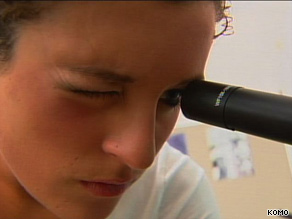
Teenager Diagnoses her Crohn's Disease in AP Science Class


CNN has a very interesting story about a teenager named Jessica Terry who diagnosed her Crohn's disease in her AP (Advanced Placement) science class (called the Biomedical Problems class). She somehow got a piece of her intestine and was looking under the microscope when she saw a granuloma - a sign that she had Crohn's disease (a type of inflammatory bowel disease or IBD, not to be confused with irritable bowel syndrome or IBS. People get IBD and IBS mixed up all the time, so I had to clarify). Here's a snippet from CNN: "Crohn's disease is often misdiagnosed or diagnosed very late, says Dr. Corey Siegel, director of the Inflammatory Bowel Disease Center at Dartmouth-Hitchcock Medical Center in Lebanon, New Hampshire." In the case of Jessica Terry, she got her own intestinal biopsy slides and made the diagnosis herself! Read the full CNN story here.

Thursday, May 14, 2009

MIT Research: Monitoring Cancer Tumor Growth


MIT students are having so much fun with research these days. Nanotechnology has taken biomedical research to an entirely new level. In many ways, this research reminds me of my days at MIT when I was involved in some biomedical cancer research. I was working on biopsy needles that involved hyperthermia treatment, but this story is about an implantable device that continuously monitors how a malignant tumor responds to treatment. Researchers at MIT engineered a tiny cylindrical, 5-millimeter implant that contains magnetic nanoparticles coated with antibodies. Can you do that?

Lead author of the research paper (published in Biosensors & Bioelectronics) is Karen Daniel, a recent MIT PhD recipient. Other authors are recent PhD recipients Grace Kim (not related - as far as I know) and Christophoros Vassiliou; Marilyn Galindo, research affiliate in the Harvard-MIT Division of Health Sciences and Technology; Alexander Guimares, a radiologist at Massachusetts General Hospital; Ralph Weissleder, a professor of radiology at Harvard Medical School; Al Charest, visiting assistant professor of biology at MIT; and David H. Koch Institute for Integrative Cancer Research Professor Robert Langer.

The research was funded by the National Cancer Institute Centers of Cancer Nanotechnology Excellence and the National Science Foundation. Image source: MIT news site.

Wednesday, April 2, 2008

CDC chief Gerberding spoke at MIT today


I sure miss Kresge Auditorium at MIT. Julie Gerberding, director of the Centers for Disease Control and Prevention, spoke at MIT today. Gerberding's talk, sponsored by MIT's Center for Biomedical Innovation (CBI), was titled "Health System Transformation: Getting Our Money's Worth of 'Healthness.'" I wish I could have been there. It was open to the public, so I would have gone.