Yammer is often called Facebook Inc. for the workplace because it creates private social networks inside companies. Yammer—launched in 2008—also has file-sharing tools and other software.
According to several reports, Microsoft will be buying Yammer for $1.2 Billion.
There are a number of hospitals currently using Yammer to power its own corporate social network so that physicians, hospital administrators, and other clinicians can communicate on a unified platform.

Showing posts with label Microsoft. Show all posts
Showing posts with label Microsoft. Show all posts
Saturday, June 16, 2012


Wednesday, June 15, 2011
Coordinating Care Across Communities with Microsoft HealthVault Community Connect
Coordinating Care Across Communities with Microsoft HealthVault Community Connect

Time: 1 p.m. Eastern / 10 a.m. Pacific
Duration: 1 Hour
As more healthcare organizations move to models of accountable care, where they're reimbursed for results rather than by volume of procedures, care coordination becomes particularly important. If they can't eliminate waste and maintain quality, then the economics of being an accountable care organization become problematic. Today, care coordination can help improve patient outcomes and experiences. Tomorrow, it will have an impact on a healthcare organization's bottom line.
Complimentary one-hour web seminar
Date: Thursday, June 16, 2011Time: 1 p.m. Eastern / 10 a.m. Pacific
Duration: 1 Hour
As more healthcare organizations move to models of accountable care, where they're reimbursed for results rather than by volume of procedures, care coordination becomes particularly important. If they can't eliminate waste and maintain quality, then the economics of being an accountable care organization become problematic. Today, care coordination can help improve patient outcomes and experiences. Tomorrow, it will have an impact on a healthcare organization's bottom line.
Wednesday, April 6, 2011
Congratulations to Dr. Bill Crounse for the International Leadership Award!
 Here's a photo of Bill providing the opening keynote and receiving the "International Leadership Award" from the Institute for Health & Productivity Management (IHPM) at their international meeting today in Orlando.
Bill Crounse, MD, is Senior Director, Worldwide Health for the Microsoft Corporation. He is responsible for providing worldwide thought leadership, vision, and strategy for Microsoft technologies and solutions in the healthcare provider industry. Prior to joining Microsoft, Dr. Crounse was Vice President, CIO and Chief Medical Information Officer for Overlake Hospital Medical Center and the Overlake Venture Center in Bellevue, Washington. He is also the co-founder of a technology company dedicated to improving information exchange and connectivity between physicians and their patients. Dr. Crounse is known internationally for his work in medical communications and information technology.
Tuesday, March 22, 2011
A Case Study on the Impact of Automating the User Account Creation Process
Here's a complimentary health IT webinar:
The Methodist Hospital System: A Case Study on the Impact of Automating the User Account Creation Process
Date: Tuesday, April 5, 2011 I Time: 2 p.m. Eastern / 11 a.m. Pacific I Duration: 1 Hour
Sponsored by: Microsoft
Please join us for a webinar on April 5 to learn how Methodist Hospital System in Houston, TX, recently completed phase 2 of its Identity and Access Management strategy, which was aimed at automating the creation, modification and deletion of user accounts.
Methodist will share:
* Challenges involved with their previous provisioning solution.
* Methodology used to assess and identify key needs for their provision solution.
* Considerations that guided selection of the proVision solution.
* Implementation and change management process that resulted in the successful installation of the proVision solution.
* Current assessment of the results achieved by deploying proVision.
The Methodist Hospital System: A Case Study on the Impact of Automating the User Account Creation Process
Date: Tuesday, April 5, 2011 I Time: 2 p.m. Eastern / 11 a.m. Pacific I Duration: 1 Hour
Sponsored by: Microsoft
Please join us for a webinar on April 5 to learn how Methodist Hospital System in Houston, TX, recently completed phase 2 of its Identity and Access Management strategy, which was aimed at automating the creation, modification and deletion of user accounts.
Methodist will share:
* Challenges involved with their previous provisioning solution.
* Methodology used to assess and identify key needs for their provision solution.
* Considerations that guided selection of the proVision solution.
* Implementation and change management process that resulted in the successful installation of the proVision solution.
* Current assessment of the results achieved by deploying proVision.
Monday, December 6, 2010
Will the Microsoft Kinect help you lose weight?

Now, Microsoft has entered the physical activity gaming world with the Kinect. It's great to see that we're moving away from sedentary games and introducing physical activity into video games. Young kids (and old kids) who spend too much time in front of a video game may actually start getting exercise again!
We've now entered a new revolution where gaming is now turning in a form of exercise. I can't wait to see what comes next. Maybe it will be some type of Star Trek holodeck that leverages true virtual reality technology!
Wednesday, November 3, 2010
Practice Fusion Teams up with Microsoft's Windows Azure MarketPlace to Support Health Research
 This press release was published last week, but I was on the road so I missed it.
 Practice Fusion Teams up with Microsoft's Windows Azure MarketPlace to Support Health Research
Researchers and developers are invited to use Microsoft's integrated platform and Practice Fusion's free clinical dataset to find answers for improving public health
REDMOND, WA – October 28, 2010 – Practice Fusion's Research Division has teamed up with Microsoft's Windows Azure MarketPlace to offer a set of de-identified health information to researchers entirely for free. The companies announced this news as part of the Windows Azure MarketPlace launch today at Microsoft PDC.
The clinical dataset provided by Practice Fusion's Research Division includes insight on vitals, diagnoses, medications, prescriptions, immunizations and allergies in a de-identified, HIPAA-compliant format. The dataset can be combined with other Microsoft research partners to answer pressing public health questions around obesity trends, drug efficacy, disease outbreaks and treatment outcomes. View a video overview of the Microsoft and Practice Fusion research initiative.
Monday, November 2, 2009
Microsoft HealthVault in Thailand

Microsoft's personal health record (PHR) service HealthVault is going to Bumrungrad International Hospital in Bangkok, Thailand. I've never been to Thailand but I know some people who moved to live there a few years ago. Here's a snippet from InformationWeek about HealthVault in Thailand:
With HealthVault, international patients who receive treatment at Bumrungrad will be able to access and share their medical records via the Web once they're back home, promoting continuity of care. The records are available free to Bumrungrad's approximately 420,000 international patients as well as to those living locally.Sounds like some exciting developments in the international PHR space. Since we're all connected by the Internet, it should be relatively easy to access health records from anywhere in the world. I'm sure we'll be hearing some interesting things about Google Health in the near future as they make inroads in the PHR space.
Bumrungrad has 1.5 million patients, and about 45,000 of those annually are Americans who travel to Thailand for healthcare services that are too expensive in the U.S., or aren't readily available to them if they're living outside the U.S. as expatriates.
Sunday, October 4, 2009
MSN and personal health management
 Microsoft got into the personal health record (PHR) business through HealthVault. Now, they have launched "My Health Info," a personal health management service. Store your data on HealthVault and then manage your health using My Health Info.
 The names seem a bit confusing to me. The name "My Health Info" seems to reflect another PHR. After all, your health record is information. Is Microsoft evolving HealthVault and simply adding a few widgets, or are they really trying to launch an entirely different service that goes beyond the PHR?
Wednesday, April 29, 2009
Install Service Pack 2 for Office 2007
Make sure to install Service Pack 2 for Office 2007. You should notice some significant performance improvements!
Wednesday, April 22, 2009
Portable Ultrasound Fits in Your Pocket
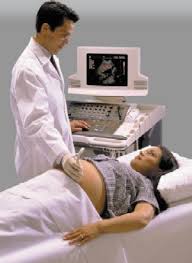
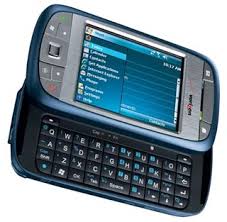
That would be the tagline for this new product if one ever gets developed. If you could convert your smartphone into an ultrasound device, would you do it? Then you'd have a real medical smartphone! Go to Washington University and you'll see what I mean. These guys (William D. Richard, Ph.D., Washington University Associate Professor of Computer Science and Engineering, and David Zar, Washington University Research Associate in Computer Science and Engineering) have developed a USB-based ultrasound probe that plugs into smartphones. Now that most smartphones are going to have a universal micro-USB port, such a probe may actually be useful in the future because all the phones will have compatible connectors. Microsoft has funded research in this area. I wonder when Apple will start providing research grants in this area. Let's hope they don't change iPod/iPhone connectors if they build a probe that plugs into the bottom of the device.
Sunday, April 19, 2009
Windows 7 Much Better than Vista and XP

I didn't have high hopes for Windows 7. I didn't think that Microsoft could build an operating system that was more efficient than XP for slower machines like ultra-mobile PCs (UMPCs). For these reasons, I've been running Windows XP on my Samsung Q1 Ultra which has a very slow processor (single core, 800 MHz). It's not like my Lenovo Thinkpad X200 Tablet that has a blazing Intel Core 2 Duo processor.
My hat's off to you Microsoft. You've learned from your mistakes (and failures) on Vista and you've created a great operating system with Windows 7. I'm very impressed by the way that Windows 7 is running on my Ultra-Mobile PC (UMPC). I had tried a few of the earlier builds of Windows 7 on my Samsung Q1 Ultra and they were not better than Vista. However, the latest build of Windows 7 (build 7077) has been fast, efficient, and very responsive. If you're still running Windows XP, I urge you skip Vista and go to Windows 7.
Tuesday, April 14, 2009
Experimenting with Windows 7 (Build 7077)
I have to admit: I did not have high expectations for Microsoft Windows 7. I had the chance to test some of the earlier beta versions of Windows 7 (including the public beta) and they didn't really impress me. However, I recently installed the latest build (build 7077) and I have to say that I've been very impressed. I installed this version on a convertible tablet (Fujitsu) and an ultra-mobile PC (Samsung Q1 Ultra) It's very fast and responsive and it doesn't lock up like Vista. If you have an older notebook/laptop, you may want to give it a try.
Monday, April 13, 2009
Upgrade Your Treo 700wx to Windows Mobile 6.1
You may have heard that some developers have gotten their hands on Windows Mobile 6.1 for the Palm Treo 700wx. If you want to learn more, then take a look at this forum on XDA-Developers:
http://forum.xda-developers.com/showthread.php?t=397134
Flashing a phone's ROM is not for beginners. This is true especially when you're loading a custom ROM. If you make a mistake, then your phone may turn into a permanent brick that you can use as a paperweight. I always advise people to ask for assistance or to hand the phone over to an expert who can do the flashing correctly.
In my opinion, there are significant advantages to running Windows Mobile 6.1 over Windows Mobile 6.0. That change from ".0" to ".1" at the end of 6 makes a big difference. Now we have Windows Mobile 6.5 but that's not available for the Treo (at least not now). Not sure about the version differences? Take a look at this chart that provides an overview of Windows Mobile 5.0, 6.0, and 6.1:
http://www.microsoft.com/windowsmobile/en-us/meet/version-compare.mspx
http://forum.xda-developers.com/showthread.php?t=397134
Flashing a phone's ROM is not for beginners. This is true especially when you're loading a custom ROM. If you make a mistake, then your phone may turn into a permanent brick that you can use as a paperweight. I always advise people to ask for assistance or to hand the phone over to an expert who can do the flashing correctly.
In my opinion, there are significant advantages to running Windows Mobile 6.1 over Windows Mobile 6.0. That change from ".0" to ".1" at the end of 6 makes a big difference. Now we have Windows Mobile 6.5 but that's not available for the Treo (at least not now). Not sure about the version differences? Take a look at this chart that provides an overview of Windows Mobile 5.0, 6.0, and 6.1:
http://www.microsoft.com/windowsmobile/en-us/meet/version-compare.mspx
Sunday, April 12, 2009
Windows 7 Build 7077 Runs Well on the Samsung Q1 Ultra UMPC

I'm happy to report that Windows 7 (build 7077) actually runs quite well on the Samsung Q1 Ultra UMPC (or Q1U, for those who like to differentiate them from the original Samsung Q1). I had tested a few of the earlier builds on my device and they did not work well at all. Somehow, the engineers at Microsoft have refined Windows 7 so that it actually runs fairly well on a slow machine that has an 800 MHz processor. I've been pleasantly surprised by Windows 7, so I've removed the Vista partition on my device and I've replaced it with Windows 7. I still have XP as a backup, but over the next few weeks I'll be mainly using Windows 7 to see how well it works on my mini tablet device.
Saturday, April 11, 2009
Windows 7 Build 7048 on Samsung Q1 Ultra UMPC
I decided to give Microsoft Windows 7 another try on my little Samsung Q1 Ultra UMPC. This is the older model that is thinner but also slower. The 800 MHz processor just isn't fast enough to run Vista effectively. I have to admit that Build 7048 is much better on the Q1 Ultra. I had tested some earlier builds and they just didn't work well at all.
There is another Build of Windows 7: Build 7077. I haven't had the chance to get my hands on that version yet, but that will be my next project (maybe I'll get to it next weekend). In the meanwhile, I will play around with Build 7047 this week and write about my findings. I've been running XP on my Q1 Ultra, but this week I plan to use Windows 7. My excitement for Windows 7 has been renewed. I'm not being overly optimistic (yet), but I am hopeful that this OS may replace XP on my Q1 Ultra.
There is another Build of Windows 7: Build 7077. I haven't had the chance to get my hands on that version yet, but that will be my next project (maybe I'll get to it next weekend). In the meanwhile, I will play around with Build 7047 this week and write about my findings. I've been running XP on my Q1 Ultra, but this week I plan to use Windows 7. My excitement for Windows 7 has been renewed. I'm not being overly optimistic (yet), but I am hopeful that this OS may replace XP on my Q1 Ultra.
Friday, April 10, 2009
Windows 7 Build 7077 on the Samsung Q1 Ultra UMPC

This is my next project: Windows 7 Build 7077 on my Samsung Q1 Ultra UMPC. This build 7077 is rumored to become the RC or Release Candidate version of Windows 7. The last time I installed Windows 7 on my Q1 Ultra, I was not impressed by the results. However, now that Microsoft has had a chance to fix some bugs, clean the code, and make some improvements, I'm willing to give it another try.
The future of medicine relys advances in technology such as mobile computers, UMPCs, gadgets, and other devices. It's exciting to see how the world of medicine is changing because of technology.
Wednesday, April 8, 2009
MobileHealthComputing.com
I secured a new URL today: http://www.mobilehealthcomputing.com/
I've been writing about UMPCs (ultra-mobile PCs), netbooks, MIDs, PDAs, Smartphones, iPhones, iPods, tablet PCs, and other mobile devices for a while now. I thought it was time to get a new URL for my old blog that focuses on these gadgets and mobile technology in healthcare. Welcome to the world of cloud computing.
I've been writing about UMPCs (ultra-mobile PCs), netbooks, MIDs, PDAs, Smartphones, iPhones, iPods, tablet PCs, and other mobile devices for a while now. I thought it was time to get a new URL for my old blog that focuses on these gadgets and mobile technology in healthcare. Welcome to the world of cloud computing.
Monday, April 6, 2009
Downgrading from Windows 7 to XP

Looks like Microsoft XP continues to live on. According to rumors, consumers will be able to downgrade from Windows 7 to XP. Maybe the netbook version of Windows 7 will really be XP with a new skin. I still use XP on most of my machines and I run Vista on my Lenovo Thinkpad X200 Tablet PC. To be quite honest, my expectations for Windows 7 are not very high. I've been doing some beta testing and I haven't been impressed with the new OS. I hope to be pleasantly surprised, but I'm not getting my hopes up.
Sunday, April 5, 2009
HIMSS 2009 Chicago
How many of you are enjoying HIMSS in Chicago? Microsoft is heavily involved at HIMSS (have you checked out Microsoft Surface yet?)
There are some great topics this year, especially with so much buzz around health IT driven by talks about economic stimulus. We've heard so much about this from President Obama. The American Recovery and Reinvestment Act of 2009, signed by President Obama on February 17, includes $19.2 billion for healthcare information technology (health IT). This means that there are many pieces to this gigantic pie for different companies raning from small and large corporations. How do you plan to contribute to the health IT revolution?
There are some great topics this year, especially with so much buzz around health IT driven by talks about economic stimulus. We've heard so much about this from President Obama. The American Recovery and Reinvestment Act of 2009, signed by President Obama on February 17, includes $19.2 billion for healthcare information technology (health IT). This means that there are many pieces to this gigantic pie for different companies raning from small and large corporations. How do you plan to contribute to the health IT revolution?
Friday, April 3, 2009
Are You Ready for Windows 7?
Have you tried Windows 7? I've been so unhappy with Vista that I've gone back to XP on most of my machines, including my mission critical PC. However, I'm quite intrigued by Windows 7. We will probably see a slim (or lite) version of Windows 7 for UMPCs and netbooks. I'm still running XP on my Samsung Q1 Ultra UMPC and my OQO model 02. Will Windows 7 be the ideal operating system for power PCs and ultra-low-cost machines?
In the healthcare field, XP will probably continue to dominate for a few more years because of the way many EHR/EMR systems are configured. Plus, you're often using older peripherals like scanners, printers, bar code scanning devices, and other devices. Some ambulatory EHRs have an EKG attachment that hooks up via USB. My guess is that most of those older connections will only work on PCs running XP. So, I think that health IT will lag behind other industries and we'll be using XP for a long time.
In the healthcare field, XP will probably continue to dominate for a few more years because of the way many EHR/EMR systems are configured. Plus, you're often using older peripherals like scanners, printers, bar code scanning devices, and other devices. Some ambulatory EHRs have an EKG attachment that hooks up via USB. My guess is that most of those older connections will only work on PCs running XP. So, I think that health IT will lag behind other industries and we'll be using XP for a long time.
Subscribe to:
Posts (Atom)