Showing posts with label obesity. Show all posts

Wednesday, March 6, 2013

President Clinton speaks at #HIMSS13 today

Today, President Clinton delivered a keynote and the entire auditorium was completely packed and all the overflow areas were full as well. When you have 35,000 people in the New Orleans convention center, that's what you get: a very crowded room that overflows.

He spoke about a number of public health topics ranging from worldwide healthcare disparities, the pediatric obesity epidemic, and the need to provide patients with their own health data so that they can be empowered to manage their own health. He also emphasized the importance to understand people who are different from us. Very different from us. For example, do you know anyone who doesn't have health insurance? How about people in a different socioeconomic status? A different ethnicity? How well do you know and understand these people? How well do you understand how they are navigating the health care system in this country?

I admit that the health care system is a very confusing system for anyone to navigate. We are all consumers of the system and even health care professionals get confused with the processes, the paperwork, the billing, the insurance forms, and more.

Today, HIMSS announced the New Clinton Global Initiative Commitment to Action - an extension of the Clinton Global Initiative that HIMSS joined in September 2012 to advance its work on its Healthcare Transformation Project. The Healthcare Transformation brings senior healthcare provider leaders together, with year-round events, research and networking, as they decide and act upon their own commitments to action.

Thursday, December 13, 2012

President Clinton speaking about health care at #DellWorld 2012

Today at Dell World, Bill Clinton went on stage and spoke to the audience about the evolution in technology. Roughly 20 years ago when he took office (1993 to 2001), the average cell phone weighed 5 pounds. He sent 2 emails during his presidency.

Technology has advanced considerably since then, hasn't it?

Now, at the age of 66, Clinton is busy with the Clinton Foundation - set up to improve global health, strengthen economies, promote healthier childhoods and health and wellness, and protect the environment.

Here at Dell World, Clinton spoke about the childhood obesity epidemic that is being fought through better nutrition and changes in dietary habits. He spoke about the advances in pediatric cancer research that are possible due to collaborative data sharing. He mentioned the Health Matters conference that's organized by the Clinton Foundation.

Clinton also spoke about global economic issues around inequality, the importance of non-zero-sum, and how the future depends on creative networks of cooperation. He also entertained the audience by wearing some stylish cowboy boots, thus proving that he's a real cowboy.

Bill Clinton will be speaking at HIMSS 2013, so I look forward to seeing him again in a few months.

Wednesday, July 18, 2012

FDA approves weight-management drug Qsymia with a REMS

Here's the press release about a new obesity drug Qsymia (pronounced kyoo-SIM-ee-uh):

FDA approves weight-management drug Qsymia

The U.S. Food and Drug Administration today approved Qsymia (phentermine and topiramate extended-release) as an addition to a reduced-calorie diet and exercise for chronic weight management.

The drug is approved for use in adults with a body mass index (BMI) of 30 or greater (obese) or adults with a BMI of 27 or greater (overweight) who have at least one weight-related condition such as high blood pressure (hypertension), type 2 diabetes, or high cholesterol (dyslipidemia).

Wednesday, June 20, 2012

Friday, April 22, 2011

New link between mother's pregnancy diet and offspring's chances of obesity

You may not have expected this, but there is new research to suggest that what a mom eats during pregnancy can impact the baby's chances of becoming obese.

Here's the press release:

New link between mother's pregnancy diet and offspring's chances of obesity found
Scientists have discovered that a mother's nutrition during pregnancy can strongly influence her child's risk of obesity many years later, by altering their DNA

Scientists have discovered that a mother's nutrition during pregnancy can strongly influence her child's risk of obesity many years later.

An international study, led by University of Southampton researchers and including teams from New Zealand and Singapore, has shown for the first time that during pregnancy, a mother's diet can alter the function of her child's DNA. The process, called epigenetic change, can lead to her child tending to lay down more fat. Importantly, the study shows that this effect acts independently of how fat or thin the mother is and of child's weight at birth.

Monday, November 29, 2010

7 weight loss strategies for the holidays

I know that a number of people will be feasting this holiday season. I'm already stuffed from all the turkey (and non-turkey foods) that I ate over the weekend. I felt like I was going from one party to another. Now, my BMI is going up and my pants won't fit.

Are there any practical weight loss strategies for the holidays? Perhaps you've picked up some weight loss books. Some ideas may seem radical and others may sound like they're simply not going to work.

Here are 7 practical tips that can help you lose some weight this holiday season:
  1. Minimize alcoholic beverage and soda consumption. Replace them with water or unsweetened beverages. Most people don't think about the number of calories that are in an alcoholic beverage. A glass of wine may have 100 to 150 calories.
  2. Set aside some extra time to exercise in the mornings and evenings. You're probably going to eat more than your normal amount as you get surrounded by snacks, treats, and good food at parties.
  3. Make it a point to walk and to take the stairs. If you're shopping this holiday season, park away from the door. Walk around the mall several times. Give yourself an extra 10 minutes just to walk briskly.
  4. Drink a few glasses of water before you start eating at a party. When you're at a party, you'll be tempted with all types of goodies. Drink a couple of glasses of water before you start eating (as long as you're not on any type of water restriction for health reasons). 
  5. Eat slowly. We have a tendency to eat too quickly and our body doesn't have time to tell us that we're full. Eat slowly and drink plenty of water between your courses.
  6. When you're at a buffet, choose vegetables over meat dishes. You're probably getting plenty of meat in your diet. Avoid those high-calorie foods, especially foods that are fried.
  7. Finally, we have to talk about sweets and desserts. We all have our weaknesses. I love chocolate. If you're going to eat a dessert, cut it in half, and eat only half a portion per day. This way, you still get to satisfy your sweet tooth, but you'll also be watching your caloric intake.
These principles may seem rather simple, but that's the only way you'll be able to keep off the weight. Weight loss is a matter of calories in vs. calories out. Exercise regularly, avoid those late-night meals, and control your portions.

Monday, September 20, 2010

College students are losing weight for credit

There's a story on the Chronicle of Higher Education titled, "On Campus and Online, Students Lose Weight for Credit." (To read the full article, you need a subscription). The story has a photo (shown on the right) with the following description:
Katherine Culbreath takes notes in the "Principles of Weight Management" course at the U. of Texas at San Antonio. Students with both personal and professional motivations have enrolled.
Does that person in the photo appear to have a weight management problem? (then again, perhaps this student has lost weight because of the course and now appears to have a healthier weight) What if the wrong type of students are enrolling in weight management classes? We already have a huge public health problem with eating disorders such as anorexia and bulimia. Let's hope they're not enrolling in these courses unless the courses are also teaching about eating disorders and the health dangers of being too thin.

I think it's great to see colleges promoting healthy weight management courses and allowing overweight students to receive college credit as they lose weight.  There's even been some discussion about making such courses mandatory for certain students, but that still remains highly controversial.

Wednesday, September 8, 2010

September is National Childhood Obesity Awareness Month

AMA Supports National Childhood Obesity Awareness Month

Reiterates the importance of getting all family members involved in making healthy food choices and increasing physical activity

CHICAGO – Today, the American Medical Association (AMA) announced its support for National Childhood Obesity Awareness Month and renewed its commitment to help improve the health of our nation’s children.

“Obesity kills more Americans every year than AIDS, all cancers, and all accidents combined. It is causing health problems in children that were unthinkable 30 years ago. That is why the AMA is working to halt the spread of obesity,” said AMA Board Member Mary Anne McCaffree, MD. “As physicians, we know the importance of instilling healthy habits early in a person’s life and getting all family members involved in making healthy food choices and increasing physical activity.”

Wednesday, July 7, 2010

Chewable Lipitor for kids in Europe

Chewable Lipitor. Can you imagine? Should kids be taking statins? As our nation faces an obesity epidemic, we're seeing all types of lipid disorders in children and young people are dying from heart disease. Some kids have genetic conditions that predispose them to hypercholesterolemia, so it's really not based on their diet or exercise patterns. But for the rest of the kids out there who are living with elevated cholesterol levels, should they be taking a chewable statin so that they don't have a heart attack or a stroke as a teenager?

The European Union recently approved a chewable form of Lipitor for kids.

Soon, kids at school will need to pull out their pill boxes at lunch time. Let's hope they don't trade their pills like their lunch box snacks.  I wonder what the television commercials will be like if we see direct-to-consumer ads for chewable pediatric Lipitor someday.

Tuesday, January 19, 2010

FDA warning about counterfeit Alli

If you buy Alli, make sure you're getting the real product. The FDA is warning consumers about counterfeit Alli.
Preliminary laboratory tests conducted by GlaxoSmithKline (GSK)—the maker of the FDA approved over-the-counter weight-loss product— revealed that the counterfeit version did not contain orlistat, the active ingredient in its product. Instead, the counterfeit product contained the controlled substance sibutramine. Sibutramine is a drug that should not be used in certain patient populations or without physician oversight.  Sibutramine can also interact in a harmful way with other medications the consumer may be taking.
Learn more by reading the recent FDA press release here.

Friday, January 8, 2010

What's a healthy weight?

Here in the United States, we seem to struggle with two extremes of weight: those who are too light for their size, and those who are too heavy for their size. We used to rely on Body Mass Index or BMI, but then we recognized that BMI has some significant limitations. So we added waist circumference as an additional measure.

There's a strong movement to get people to accept any type of weight. Some feel that people can be very healthy at any weight. Is this true?

I don't think you'll find a physician who agrees that a patient can be healthy at any weight. Instead, there is a healthy weight range that is optimal for each individual. If you're grossly outside of this range (either too low or too high), then you will be at increased risk for some serious health problems. This isn't to say that you'll definitely encounter such health problems, but epidemiological evidence reveals that people who are either too underweight or overweight will have health problems.

As we start this New Year, do you plan to change your weight? Weight loss is one of the most common New Year's Resolutions that people make. The problem in our society is that we have many people trying to lose weight when they're already at a healthy weight. We also have many people who are not at a healthy weight and they're not trying to lose weight. When will our culture accept the concept of a healthy weight?

Saturday, December 26, 2009

Are you gaining weight this holiday season?


I ate so much yesterday. On average, an adult living in the United States gains approximately one pound each year. Have you been gaining weight over the past 5 or 10 years? It's so difficult to maintain a negative calorie balance over the holidays, but you can control your portions, select healthy food selections, eat desserts in moderation, and make time to exercise.

Did you get (or give) a gym membership this holiday season?
Did you get (or give) any fitness equipment this holiday season?

It's the day after Christmas and I'm in the mood to go to the gym today. Who's going to join me? The other great way to exercise is to go walking. I'll be doing some of that by heading out to the malls to do some shopping!

Friday, December 4, 2009

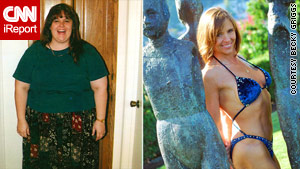
Inspirational weight loss story on CNN


You don't hear about these types of weight loss stories every day. It's great to see that some people out there are being very intentional about weight loss. This story on CNN is about Becky Griggs who lost 200 pounds over six years by exercising at the gym. If you do the math, that equates to roughly 2.8 pounds per month. Imagine how much you'd weight if you gained 2.8 pounds each month (that's over 30 pounds per year!)

At her heaviest, Becky was 352 pounds. (Can you guess her BMI?) She's 43 and she works as a fitness trainer. Now that's inspiration! Are you planning on making some major life changes in 2010? I haven't been to the gym in a while. I'll definitely have to go this weekend!

Tuesday, December 1, 2009

Should obese students be forced to take a special class?


According to this story on CNN, students at Lincoln University who have a body mass index (BMI) that is greater than 30 are being forced to take a fitness course that meets three hours each week. Those who do not complete this course can't graduate from college.

Is this fair? Is this right? Is this legal?

One student writes that she thinks all students should need to take the fitness course.

When I was a college student at MIT, we had to pass a swimming test (or successfully complete a swimming course) in order to graduate. This was a mandatory swim requirement. If you're attending a college that's next to a river like the Charles River, then you really ought to know how to swim.

So, returning to Lincoln University - what's going to happen? I think this new rule will upset some people, but personally, I think they should reconsider their BMI numbers. Instead of setting the bar at 30 (obesity), they should set it at 25 (overweight). Furthermore, those who have a low BMI (less than 18.5) should take a course on eating disorders, healthy eating, etc. BMI has its limitations, so I'm glad to see that they're also using waist circumference as a measure.

Thursday, July 23, 2009

Medical treatment based on the color of your skin


Racism may not be obvious, but it can present itself in very subtle ways. CNN has a story titled, "Does your doctor judge you based on your color?"

I'd hate to think that doctors are racist, but the title implies exactly that point. Are doctors racist? Here's a quote from the story:
Reid, who is African-American (and who also has diabetes), firmly believes that if he'd been a white man, the junior doctor wouldn't have been so quick to order the cheaper and more drastic solution over his objections... Reid says he thinks the young doctor assumed he wasn't smart enough to think through a medical decision.
CNN contacted the hospital but Montefiore Medical Center refused to discuss his case.

"It's absolutely proven through studies that a black man and a white man going to the hospital with the same complaint will be treated differently," Dr. Neil Calman, a family physician and president of the Institute for Family Health in New York, said. Where's the proof, right?
  • A 2005 study found African-American cardiac patients were less likely than whites to receive a lifesaving procedure called revascularization, where doctors restore the flow of oxygen to the heart.
  • A 2007 study involving clinical case vignettes found that doctors were more likely to recommend lifesaving drugs when they thought the patient was white than when they thought the patient was black.
Doctors are humans and they are prone to bias. It's a part of human nature. In some cases, doctors may make an extra effort to treat minorities with extra care. Is that fair for non-minorities? At the end of the day, we all want equal care. We don't want favoritism, but it happens because we're all human. It's not just about race, either. According to CNN, a study from researchers at the New York University School of Medicine found more than 40 percent of the doctors surveyed had a negative reaction to obese people. Here we go again. Some people find the word "obese" to be offensive, and they may sue you if you call them that.

Friday, July 10, 2009

Concept of "overweight" may be relative


Although we have tools like body mass index (BMI) calculators, most consumers probably don't rely on those to assess their body. According to a story on CNN titled, "As nation gains, 'overweight' is relative":
Research shows that, when it comes to self-perception, the concept of "overweight" may be relative... people's perceptions of overweight have shifted, and "normal" is now heavier than it used to be.
If you look at the NHANES (National Health and Nutrition Examination Surveys) data from 1988-1994 and compare that data with 1999-2004, you'll see that weight misperception based on BMI is decreasing among women but staying roughly the same for men. This means that women with normal BMIs from 1999-2004 were less likely to say they're overweight compared to women from 1988-1994. If you have a normal BMI, you're probably not overweight. There may be some exceptions to that rule, but I'm not going to get into that right now.

So, we know that the BMI of the U.S. population has been increasing over time. Based on the NHANES data comparison, it appears that people are getting used to being overweight and many people with high BMIs may not consider themselves to be overweight. So, are attitudes about weight shifting? Or, are people with normal BMIs feeling more "normal" as they see more people with elevated BMIs? To read the CNN story, click here.

Friday, July 3, 2009

Contest eaters face serious health issues


In a former life, I was almost a contest eater. Not for speed, but for quantity. That was a very long time ago. Do you ever watch those food eating contests? They are crazy! CNN has a story titled, "Speed eaters gain weight, clog arteries but have few regrets." Maybe they don't have many regrets while they're still young and relatively healthy, but this type of behavior can catch up to you, especially if you're Don Lerman who set a record by eating seven sticks of salted butter in five minutes. During six years of competitive eating, he gained 100 pounds! The average adult in the U.S. gains 1 pound per year. If you gain 100 pounds in 6 years, how many pounds are you gaining each year? (certainly you're above the mean)

In 2007, University of Pennsylvania School of Medicine doctors who specialize in gastroenterology and radiology conducted an experiment on the stomach activities of a competitive eater and an average eater. Do you know what they found? Competitive eaters lacked muscle contractions called peristalsis, which move the food down the digestive tract. The researchers published a paper where they warned about: possible "morbid obesity, profound gastroparesis, intractable nausea and vomiting, and even the need for a gastrectomy." Yikes!

I wonder what we're going to learn about competitive eaters over the next decade. If you exercise, can you eat anything you want to eat? Does exercise give you freedom to eat? (It does for me - that's why I can enjoy ice cream and be guilt-free). Read the CNN story here.

Thursday, July 2, 2009

Mississippi tops U.S. obesity rankings


The state of Mississippi tops U.S. obesity rankings according to CNN. In fact, it's held this title for the 5th year in a row - for both adults and children. 32.5% are obese in Mississippi. In addition, 44.4 percent of Mississippi children ages 10 to 17 are classified as overweight or obese, the study found. This is a serious public health problem and the state of Mississippi desperately needs help to control this obesity epidemic. Unfortunately, Southern style cooking is often rooted in deep fried foods, so it's going to be very difficult to change cooking patterns that are deeply ingrained in Southern culture. Obesity is linked to a variety of health problems such as diabetes, heart disease, and hypertension. Many people who are obese really struggle to lose weight and keep it off. So what's the solution? Bariatric surgery?

This is where preventive medicine needs to take a very active role. Educational efforts alone are not enough. Interventions must begin in the classroom as children learn and develop lifestyle habits. Unless things change at a fundamental level, the problem will only continue to get worse. Perhaps the government needs to channel some money into structured weight loss programs. People living below the poverty line probably can't afford to pay for Weight Watchers or Jenny Craig. They also can't afford expensive gym memberships. They are often eating unhealthy foods and they often lack access to exercise facilities. To read the entire CNN story, click here.

Tuesday, June 23, 2009

Is it better to eat ice cream after lunch or dinner?


In the U.S., people have a tendency to eat a lighter lunch and then a heavier dinner. This is one of the main reasons why salads are so popular during lunch. Well, I love ice cream and I tend to eat ice cream after dinner. Fortunately, I have a healthy BMI (body mass index) and I exercise regularly, so my ice cream eating habit hasn't made a big impact on my weight yet. However, I think about my health whenever I eat ice cream. For the last few days, I've been thinking about switching my routine ice cream eating routine. Instead of eating ice cream after dinner, I think I'm going to eat it after lunch. After all, I tend to eat less for lunch (I've succumbed to the American way of things) and this way, I get to burn those ice cream calories during the day.

So is it better to eat ice cream after lunch or dinner? I don't think you'll find many clinical studies answering that question. Allow me to conduct this little study on myself and I'll report my findings. Consider this a case report: ice cream after lunch vs. after dinner.