Showing posts with label VTE. Show all posts

Friday, September 24, 2010

From to ximelagatran to dabigatran - how far have we come?

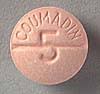
I still remember the days when people thought ximelagatran was going to change the world of anticoagulation. The days of the Coumadin (warfarin) clinics seemed numbered. People who would require frequent INR checks would no longer have to get poked with needles. They could eat all the green vegetables they desire. They would no longer take rat poison. Then, the sad news about ximelagatran hit the news. Ximelagatran (proposed trade name Exanta) was not going to be approved by the FDA because of liver toxicity. That was 2006.

Fast forward now to 2010 and we see that the FDA advisory committee (not the FDA, but the FDA advisory committee) unanimously today recommended the approval of dabigatran. This means that the FDA will probably approve dabigatran in the near future, but we still need to wait and see. Meanwhile, a host of other new anticoagulant drugs are waiting in line.

So what are these new oral anticoagulants? Let's see what Wikipedia has to say:
  • Direct thrombin inhibitors (DTIs) are a class of medication that act as anticoagulants (delaying blood clotting) by directly inhibiting the enzyme thrombin. Agents in the pipeline include: dabigatran, melagatran (and its prodrug ximelagatran), and others.
  • Direct factor Xa inhibitors ('xabans') are a class of antithrombotics which act directly upon Factor X in the coagulation cascade, without using antithrombin as a mediator. Agents in the pipeline include: rivaroxaban, apixaban, edoxaban, otamixaban, and others.
The landscape of oral anticoagulation is about to change if these new oral agents get approved by the FDA. What role will Coumadin (warfarin) play in all of this? Will we look back in 20 years and wonder how we managed patients on a drug like Coumadin? Will these new anticoagulants stand the test of time? What will happen to all the injectable agents like enoxaparin (Lovenox), certoparin (Sandoparin), tinzaparin (Innohep), dalteparin (Fragmin), and others?

Physicians will need to be more familiar with the pharmacological profiles (half-life, interactions, etc.) as they choose among the myriad of available agents when they're treating patients with atrial fibrillation, DVT, or PE. Hospitalized patients at risk for DVT may no longer need to suffer from multiple injections if they simply need to take a pill. These emerging agents may also be used for patients who have artificial heart valves, those who have other types of hypercoagulable disorders, and more.

Back in 2006, we thought we were going to see a revolution in anticoagulation management, but it didn't happen. Now, in 2010, it appears like we may truly be looking at a new era.

Monday, September 13, 2010

sP-selectin and D-dimer used to predict VTE risk in cancer patients

Cancer patients have a higher risk for VTE, but should they all receive anticoagulation therapy? When is pharmacological prophylaxis warranted?  A recent published paper seems to suggest that sP-selectin and D-dimer may be used to help predict VTE risk in cancer patients.

Here's the abstract:

The risk of venous thromboembolism (VTE) is increased in cancer patients. To improve prediction of VTE in cancer patients, we performed a prospective and observational cohort study of patients with newly diagnosed cancer or progression javascript:void(0)of disease after remission. A previously developed risk scoring model for prediction of VTE that included clinical (tumour entity and body-mass-index) and laboratory (hemoglobin level, thrombocyte- and leucocyte-count) parameters was expanded by incorporating two biomarkers, soluble P-selectin and D-dimer. Of 819 patients 61 (7.4%) experienced VTE during a median follow-up of 656 days. The cumulative VTE probability in the original risk model after 6 months was 17.7% in patients with the highest risk score (≥3, n=93), 9.6% in those with score 2 (n=221), 3.8% in those with score 1 (n=229) and 1.5% in those with score 0 (n=276). In the expanded risk model, the cumulative VTE probability after 6 months in patients with the highest score (≥5, n=30) was 35.0% and 10.3% in those with an intermediate score (score 3, n=130) as opposed to only 1.0% in patients with score 0 (n=200); the hazard ratio of patients with the highest compared to those with the lowest score was 25.9 (8.0-84.6). Clinical and standard laboratory parameters with addition of biomarkers enable prediction of VTE and allow identification of cancer patients at high or low risk of VTE.

Ay C, Dunkler D, Marosi C, Chiriac AL, Vormittag R, Simanek R, Quehenberger P, Zielinski C, Pabinger I. Prediction of venous thromboembolism in cancer patients. Blood. 2010 Sep 9.

Click here to read the abstract.

Thursday, July 9, 2009

Hospital infections still killing thousands each year


It constantly amazes me when I meet people who want to be hospitalized for something minor. So many patients fail to realize how dangerous the hospital can be. Not only are you at risk for developing a blood clot (deep vein thrombosis or DVT) and dying from it (fatal pulmonary embolism or PE), but you're at very high risk for infection. These hospital-acquired or nosocomial infections are some of the worst types of infections out there!

There's a CNN story about hospital infections and here are the highlights:
  • Every year, hospital-acquired infections sicken 1.7 million, kill 99,000 in U.S.
  • They add more than $28 billion to health care costs annually
  • Small changes -- using a checklist and brushing patients' teeth -- can lower rates
  • Expert: Attitude is slowly shifting away from accepting infections as inevitable
So, do you enjoy being in the hospital or are you the type who tends to leave against medical advice (AMA)? To read the CNN story, click here.

Friday, May 22, 2009

Coumadin and Pharmacogenetics


I know many people who have to take warfarin (Coumadin) because they have a history of venous thromboembolism or VTE. Blood clots can be deadly. Coumadin isn't an easy drug to take. The effects of the drug can really vary based on what you eat, especially if you eat anything that is high in vitamin K like green leafy vegetables. Coumadin acts by blocking the actions of vitamin K (it's often called a vitamin K antagonist).

The The International Warfarin Pharmacogenetics Consortium researchers have found that "the use of a pharmacogenetic algorithm for estimating the appropriate initial dose of warfarin produces recommendations that are significantly closer to the required stable therapeutic dose than those derived from a clinical algorithm or a fixed-dose approach." Sounds pretty interesting, doesn't it? Take a look at the New England Journal of Medicine (NEJM) article here if you'd like to read more about this interesting pharmacogenetic algorithm.