Showing posts with label Medtronic. Show all posts

Tuesday, January 26, 2010

FDA announces new drugs and recall of certain needles

Over the past few days, the FDA has made some major announcements.

First, they announced a few new drugs:
  • Victoza (liraglutide), a once-daily injection to treat type 2 diabetes in some adults (Novo Nordisk). Victoza is in a class of medicines known as glucagon-like peptide-1 (GLP-1) receptor agonists that help the pancreas make more insulin after eating a meal.
  •  Morphine Sulfate Oral Solution for the relief of moderate to severe, acute and chronic pain in opioid-tolerant patients (Roxane Laboratories). This medicine will be available in 100 milligrams per 5 mL or 20 milligrams per 1 mL. This is the only FDA approved morphine sulfate oral solution available at this concentration.
The FDA also announced  the approval of a new cardiovascular medical device:
  • Medtronic Melody Transcatheter Pulmonary Valve and Ensemble Delivery System, the first heart valve to be implanted through a catheter, or tube, in a leg vein and guided up to the heart. This new approach to the treatment of adults and children with previously implanted, poorly functioning pulmonary valve conduits can delay the need for open-heart surgery. The FDA approved the Melody under the Humanitarian Device Exemption (HDE) program, which supports the development of medical devices intended to benefit patients in the treatment or diagnosis of diseases or conditions affecting fewer than 4,000 people in the United States per year. Under an HDE, the FDA can approve a device for limited use if there is a reasonable assurance that the device is safe and if the probable benefit to health outweighs the risk of injury or illness. Such products can only be used at medical institutions with an overseeing Institutional Review Board.
Finally, the FDA announced a Class I recall of Exel/Exelint Huber needles, Exel/Exelint Huber Infusion Sets and Exel/Exelint “Securetouch+” Safety Huber Infusion Sets, manufactured by Nipro Medical Corporation for Exelint International Corporation. Huber needles are used to access ports implanted under the skin of chronically ill patients for repeated access to veins for the withdrawal of blood and infusion of medication, nutritional solutions, blood products, and imaging solutions. These needles should be designed to penetrate the port without cutting and dislodging any silicone cores (or slivers) from the ports into which they are inserted.

You can catch up with all these recent FDA updates by clicking here to read their latest press releases.

Friday, January 15, 2010

JDRF and Animas to develop an artificial pancreas

I've always been intrigued by the concept of a truly "artificial pancreas." Someday, we will have a truly closed-loop system that will regulate blood glucose levels in patients who have diabetes. Those who have type 1 diabetes are the ones who will benefit the most.

Well, the Juvenile Diabetes Research Foundation International (JDRF) recently announced an interesting project:

JDRF in Groundbreaking Partnership with Animas to Develop First-Generation Artificial Pancreas System

Several medical device companies have been working on the concept of a truly closed-loop system and it's great to see that the JDRF will be partnering with J&J (Animas Corporation) to develop an innovative system. You can read more about this by clicking here.

Sometimes, I wish I could go back in time so that I could pursue a career in biomedical engineering and medical devices. I have a passion for medical technology and when I studied engineering at MIT, I really thought that I would be working on implantable medical devices in humans.

Monday, July 13, 2009

Medtronic recalls certain Paradigm® Quick-Set® Infusion Sets


If you have diabetes and you're using a Medtronic MiniMed Paradigm insulin pump, you'll want to read this:

According to the FDA, Medtronic, Inc. has initiated a voluntary recall of specific lots of Quick-set® infusion sets that are used with MiniMed Paradigm insulin pumps. Affected infusion sets are reference numbers MMT-396, MMT-397, MMT-398 and MMT-399 with lot numbers starting with the number “8.” Medtronic recently discovered that approximately two percent of “Lot 8” Quick-set infusion sets (which represents approximately 60,000 infusion sets out of an estimated 3 million infusion sets currently with customers) may not work properly.
Patients should discontinue using “Lot 8” Quick-set infusion sets.
Visit the Medtronic Diabetes website at www.medtronicdiabetes.com/lot8 to view the labels of “Lot 8” Quick-set infusion sets. Customers are being asked to return any affected infusion sets to the company. Medtronic is providing customers with replacement Quick-set infusion sets at no additional charge. To view the entire FDA press release, click here.

Wednesday, May 20, 2009

Medtronic: Pacemaker Defects


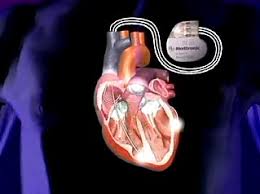
Some people out there rely on a pacemaker to survive. Others may have a pacemaker as a "backup" in case their heart rate drops or does something funny. Medtronic has warned physicians that 37,000 Kappa pacemakers may have a defect which can cause the battery to stop working. Since the pacemaker is under the skin, it's not easy to go in there and change the battery.

I wonder what pacemakers will look like in the future. You'd have to think that with advances in medical technology, we may come up with a self-powered pacemaker that doesn't rely on a battery, right? I bet that in the future we'll see doctors regenerating the sinoatrial node (SA node or sinus node) in a Petri dish and transplanting that into a heart. That will be called a "pacemaker transplant" and we won't need battery-powered devices anymore.

According to Medtronic CEO Bill Hawkins, "most" of the defective pacemakers were distributed overseas. I'm sure many people want to know what "most" means. I also wonder if this is related to the fact that Medtronic is cutting 1,500-1,800 jobs.

Thursday, April 16, 2009

Sensei Launches iPhone Application for Diabetes

If you have diabetes, you're probably used to gadgets. If you have type 1 diabetes, you probably wear an insulin pump and you're really familiar with gadgets. In the world of diabetes, you have glucose monitors (from companies like Accu-Check. LifeScan, and others), insulin pens, insulin pumps that look like pagers, and even continuous glucose monitoring (CGM) systems (from companies like Medtronic, Abbott, and DexCom). It's great to see advances in healthcare technology and medical devices. I always had a passion for the medical device industry and as a kid, I thought that I would be a biomedical engineer.

The iPhone is a great medical smartphone and there is now a new diabetes application for diabetes. Sensei (a subsidiary of Humana) has released My Diabetes Guide. Looks pretty cool! LifeScan is also coming out with a diabetes application for the iPhone that may sync glucose readings from blood glucose monitors (glucometers). Hopefully, all these gadgets for diabetes will ultimately help patients improve glucose control.