Showing posts with label ADA. Show all posts

Thursday, January 7, 2010

Health Insurance Companies should be required to Reimburse for “Virtual Office Visits”

This is a guest post by Tessa G. Lebinger, M.D. If you're interested in submitting a guest post, please contact me.

Health Insurance Companies should be required to Reimburse for “Virtual Office Visits”

I am a Pediatric Endocrinologist who for more than 10 years has utilized e-mail as a supplement to office visits in the management of children with diabetes. Patients send me records of their blood sugars, food intake, insulin, and exercise along with comments and questions and I e-mail back recommendations and answers. I have provided this service for free because insurance companies do not reimburse patients for “Virtual Office Visits”. If the patients were to come into my office with their logs and receive the same advice “face-to-face” from me, medical insurance companies would pay for these services as a routine office visit.

Frequent adjustment of the treatment plan is necessary for children with diabetes whose needs are constantly changing. Although they should be seen in person a few times a year to evaluate their growth, physical development, and have their thyroid glands examined, many children need to have their insulin doses revised much more frequently than this. E-mail is the perfect way to provide this comprehensive care in between office visits. This is good for the children because they don't miss school and good for the parents because they don't miss work. For families who live a long distance from a Pediatric Endocrinologist, communication by e-mail can save them the inconvenience of frequent, long trips.

Diabetes is a chronic disease which if not properly controlled can lead to life threatening complications. Patients with diabetes have the ability to collect an enormous amount of information themselves through frequent self- monitoring of their blood sugars at home, but they often need professional advice to adjust their insulin based on these results. Patients with other chronic diseases like hypertension or asthma also have the ability to collect data such as blood pressure readings and peak flow measurements (an indication of lung function) at home. Many of these individuals can also benefit from “Virtual Office Visits” to facilitate frequent fine tuning of their medications.

There is a growing trend towards providing health services online for an increasing number of both acute and chronic disorders. Many healthcare providers already offer advice by personal e-mail. As more physicians implement electronic medical records, they will have the capability of secure online written communication with their patients that will automatically be recorded in the medical record. Private companies are entering the market of facilitating web-based “Virtual Office Visits”, either in “real time” utilizing audiovisual teleconferencing or with a short delay through secure online messaging. “Virtual Office Visits” may take place between individuals and their own personal healthcare providers or, with some services, patients can request a “Virtual Consultation” any time of day from an independent physician who is on call. Often laboratory tests can be requested and prescriptions ordered online.

Clearly, not all symptoms and diseases can be managed online. If a patient is having chest pain or severe abdominal pain, he/she needs to be examined in person. However, most medical questions that are typically asked over the telephone can both be submitted and answered by e-mail – without playing “phone tag”. With audiovisual conferencing capabilities, more extensive evaluation of the patient can be performed.

A “Virtual Office Visit” does not require the services of a medical assistant or secretary and does not need to be done during office hours or even in a medical office. Therefore the cost is usually significantly less than that of a traditional office visit. Many patients are willing to pay out of pocket for the convenience of these “Virtual Visits” and some large employers are subsidizing e-Consultation services for their employees to decrease absenteeism. A few health insurance companies have recently started to pay for “Virtual Office Visits”, but most don't yet.

In my opinion, insurance companies should be required to reimburse for these services. Healthcare Providers incur medical liability every time they give medical advice, whether face-to-face in the office, over the phone, by fax, or by e-mail. If they incur liability, they should receive compensation for their services and time.

I propose mandatory reimbursement for “Virtual Office Visits” as part of health care reform.

This guest post was written by Tessa G. Lebinger, M.D., Pediatric Endocrinologist and Medical Writer, Baltimore, MD

References:

Thursday, November 5, 2009

November is American Diabetes Month


We probably all know someone who has diabetes. Sometimes it hits home. My dad had diabetes. His sister had diabetes and went blind and had both her legs amputated.

Let's join the American Diabetes Association (ADA) in a national movement to Stop Diabetes. Here are some things to consider (taken from the ADA website):
November is American Diabetes Month®—a time to shine a spotlight on a serious disease that leads to potentially life-threatening complications such as heart disease, stroke, kidney disease, blindness, and amputation.

This year, we need to take a bolder, more audacious approach to American Diabetes Month.

Consider that:

•24 million children and adults in the United States live with diabetes
•57 million Americans are at risk for type 2 diabetes
•1 out of every 3 children born today will face a future with diabetes if current trends continue
So, what can you do?
  • Share. Inspire others to join the movement by sharing your personal story. Visit stopdiabetes.com and join us on Facebook and Twitter to learn about all the exciting ways to be a part of the Stop Diabetes movement. Invite your family, friends, and co-workers to join this effort as well.
  • Act. Whether you want to walk*, bike* or simply tell a friend, there will be many ways to help us build momentum for the Stop Diabetes movement.
  • Learn. The American Diabetes Association has many resources throughout the country to help Stop Diabetes. If you, or a loved one, already have diabetes* or are at risk* for developing it, we can provide medical, lifestyle and motivational information to prevent this disease from taking control of your life and the lives of those around you.
  • Give. Sign up with your local American Diabetes Association office to help raise money for diabetes research, federal and state advocacy and public education.
To learn more about the Stop Diabetes initiative, visit the ADA.

Tuesday, June 30, 2009

Does Lantus (insulin glargine) increase the risk of breast cancer?


We've seen some troubling information emerge in the world about diabetes. We now have controversy regarding the saftey of Lantus (insulin glargine). With the heading, "Lantus insulin: a possible link with cancer which requires further investigation," we see a press release from Diabetologia titled, "Possible link between insulin glargine and cancer prompts urgent call for more research." The next line says: "But experts stress patients should not stop using insulin and consult their doctor if concerned."

The press release starts with: "The European Association for the Study of Diabetes (EASD) today makes an urgent call for more research into a possible link between use of insulin glargine (an insulin analogue, brand name Lantus) and increased risk of cancer, following evidence from studies in Germany, Sweden and Scotland. However, until this further research becomes available, these experts are stressing that patients with diabetes taking Lantus should continue to do so, although some might wish to consider alternative types of insulin. The studies are reported in Diabetologia (the journal of EASD)."

What were the findings? "Professor Edwin Gale, Editor of Diabetologia, and Professor Ulf Smith, President of EASD, realised the significance of these findings but wanted them replicated in other studies from other European countries before announcing them formally. Studies were thus carried out using databases from Sweden, Scotland, and the UK.
  • The Swedish study found that compared with patients on insulins other than Lantus insulin, patients on lantus insulin alone had double the risk of breast cancer.
  • The Scottish study found a non-significant increased risk for breast cancer specifically.
  • The UK study found no link between insulin glargine and cancer."
Yet these studies have some significant limitations:
  • Although the data were adjusted for a number of variables, the characteristics of the groups of patients taking lantus insulin alone (generally older, higher blood pressure, more overweight) were different to those on other forms of insulin. Thus any difference in cancer risk could be attributed to the pre-treatment characteristics of the groups, rather than the treatment itself.
  • The numbers of cases of breast cancer in the Swedish and Scottish studies were very small, meaning the findings could have occurred due to chance.
So, how does that make you feel? Maybe if you're Swedish or Scottish, you may feel concerned. If you're British, you may feel relieved. Sounds silly, doesn't it? When we have conflicting data, the topic becomes a controversy. We have no causal data. We have no consensus statements. We have no definitive stances from major diabetes associations. What does the American Diabetes Association (ADA) have to say about this? We don't know yet. Hence, we now have a controversial topic on our hands. The investigators recognize that this is a controversy and they stress (once again) "that patients should not stop using insulin and consult their doctor if concerned."

The EASD released a statement, which reads: "These studies are described and commented on in greater detail in the webcast by Professor Ulf Smith (University of Göteborg, Sweden), and Professor Edwin Gale (University of Bristol, UK). EASD emphasises that the studies reported are far from conclusive, but they do indicate the need for further investigation of this issue..."

To read the full press release on Diabetologia, click here.

Tuesday, June 9, 2009

Endo 2009


On the heels of the ADA (American Diabetes Association) 69th Scientific Sessions, the Endocrine Society is having its annual meeting in Washington D.C.

Endo 09 runs from June 10-13. I wonder if the same hot topics that permeated ADA will be present at Endo (I'd have to think that most of them will carry over).

Monday, June 8, 2009

CNN is Talking about HbA1c and Diabetes


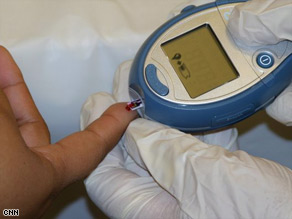
CNN has a story about the HbA1c test for diabetes. Will we be changing the way we diagnose diabetes? Instead of using fasting glucose levels, will we rely on the HbA1c? That would eliminate the need for fasting (unless you're checking cholesterol levels). This is a very hot topic at the ADA (American Diabetes Association) 69th Scientific Sessions. Experts seem to be pushing for the HbA1c. Let's see what ends up happening. I know that many physician already use HbA1c to screen non-diabetic patients for possible diabetes. Insurance companies may not be paying for such tests, so maybe that's going to change.

ADA 2009: New Drugs for Type 2 Diabetes


Much has changed in the world of type 2 diabetes. In the past, we used to write type 2 diabetes as type II diabetes (notice the difference between 2 vs. II)? At ADA this year, we're seeing some exciting research about new treatment options for type 2 diabetes. This includes DPP-IV (or should that be DPP-4) inhibitors, GLP-1 analogues, and more.
  • Saxagliptin, an investigational dipeptidyl peptidase-4 (DPP-4) inhibitor, may yield cardioprotective effects as shown in a meta-analysis. Since diabetes is considered a cardiovascular risk equivalent, anything that offers cardioprotection would be beneficial for patients with diabetes. If saxagliptin gets approved, how will it compare to Januvia (sitagliptin)?
  • There's also an investigational once-weekly formulation of exenatide (Byetta) that's in the works. Speaking of GLP-1 analogues, I'm also eager to hear more about the research on liraglutide (an investigational agent).

Sunday, June 7, 2009

ADA 69th Scientific Sessions


The American Diabetes Association (ADA) is having its 69th Scientific Sessions this week. The conference began on June 5 and will run until June 9. I'm eager to see what types of advances will be revealed this year. The ADA is also using Twitter to post updates, but I don't see many people following @AmDiabetesAssn or @SciSessions2009. Do you use Twitter? Follow @DrJosephKim to all my updates.

Some of the hot issues seem to focus on:
  • Using HbA1c to diagnose diabetes. How often do you check HbA1c in patients who don't have diabetes? Some are using that test to screen patients for elevated glucose levels. Is that warranted? Is there a role for using HbA1c to diagnose diabetes? Is the HbA1c better than a fasting glucose test or the glucose tolerance test?
  • Final results from the RECORD (Rosiglitazone Evaluated for Cardiac Outcomes and Regulation of Glycaemia in Diabetes) study. Rosiglitazone (Avandia) may increase heart failure, but does it increase mortality? The answer appears to be "no."
I hope that New Orleans is making a recovery from Katrina. I've seen many medical meetings take place in New Orleans over the last few years, so hopefully that is helping some of the businesses in that city.