Saturday, May 30, 2009

Health Effects of Texting in Teens


Do you text? I'm not a huge fan of texting, but I tweet like crazy (however, most of my tweets are automated). Teenagers and other young people have taken texting to an entirely new level by creating a language of acronyms that can only be understood for those who are familiar with texting. According to the Nielsen Company, teens sent and received an average of 2,272 text messages per month in the fourth quarter of 2008. Wow!

The NY Times has an article on the health effects of texting. Physicians and psychologists are worried about anxiety, distraction in school, falling grades, repetitive stress injury and sleep deprivation. That doesn't sound good, does it? The article quotes Sherry Turkle, a psychologist who is director of the Initiative on Technology and Self at the Massachusetts Institute of Technology (MIT). Here's a snippet of the quote: "Among the jobs of adolescence are to separate from your parents, and to find the peace and quiet to become the person you decide you want to be," she said. "Texting hits directly at both those jobs."

Frequent typing on tiny thumb keyboards can also cause BlackBerry thumb.

Sermo vs. Ozmosis: Physician Social Networking


Sermo is a physician-only social networking community that has gained tremendous traction since it started. Ozmosis is another physician-only social networking community, but it hasn't seen the level of participation like Sermo. Why? I'm inclined to think that the main reasons is because Ozmosis doesn't really offer many incentives for physicians to join. If you don't have opportunities to make money, then why join or refer colleagues? Why spend time on the Internet when you could be doing other things, right?

The other difference between is anonymity. On Sermo, most physicians maintain anonymity and they post anything. You're identified by your username, and that's about it (you can choose to display your actual name on your profile if you'd like to, but few do that). On Ozmosis, most physicians display their actual name (because you have to manually change your name if you want to maintain). In my opinion, the user interface on Ozmosis needs some work.

Ozmosis has teamed with Veratect to offer real-time Public Health Alerts. The latest alert is this: New Jersey: State Officials Confirm 65 Cases of Influenza A (H1N1); "Concerns" Cause School Closures.

Friday, May 29, 2009

Wellness is a Hot Topic (Especially During the Summer)

Wellness is everywhere! We see celebrities promoting different ways of staying healthy and we even see commercials about age-defying products. What do you think about the commercials that you see on television? Are you a skeptic? Each year, consumers spend billions of dollars on nutritional supplements. We see products like Intramax and Poly MVA getting gobbled up by people who believe that these supplements and vitamins are promoting wellness and helping them defy the natural aging process. Patients are bringing all sorts of bottles to their doctors and asking questions like, "What do you think of this supplement?" Or, "Do you think I should continue taking all these supplements?"

As the summer approaches, I think about how many people fail to protect their skin from sun damage. People forget about the long-term consequences of their actions and they often focus too much attention on the immediate. Interestingly, more and more consumers are getting obsessed with organic products and they even choose to wear Natural Sunscreen. Instead of spending billions of dollars on age-defying products, people should spend less time sunbathing and smoking. Sun damage and smoking causes wrinkles that won't go away with age-defying creams, lotions, or potions. So what will you be doing this summer? If I see you at the beach, I'll be under an umbrella.

Prescription Drug Rehab

Do you know of any good California Drug Rehab programs? When I was in medical school, I used to work in a Veterans Affairs (VA) hospital. I saw many patients who had drug and alcohol addictions. They were essentially using drugs and alcohol to cope with depression, stress, anxiety, and even PTSD (Posttraumatic Stress Disorder). Drug abuse is a common problem, even among non-military veterans. The statistics can be quite staggering. Many adults struggle with anxiety and they become dependent on benzos (like Ativan, Valium, and others) to help them relax. In the United States, benzodiazepines are Schedule IV drugs under the Federal Controlled Substances Act.

There is a strong need for better Prescription Drug Rehab programs in this country. Because of the addictive potential associated with opioids, many patients now need Vicodin Rehab (I'm not picking on a single opioid, I'm just using an example). Other commonly abused opioids include: Percocet, Dilaudid, Demerol, and Fentanyl (yes, even this drug gets misused). Opioid withdrawal symptoms can include severe dysphoria, sweating, nausea, rhinorrea, depression, severe fatigue, vomiting and pain. You've seen it in the movies. Don't let your loved ones go through withdrawal alone. Make sure to find a good rehab program for them.

Bronchial Thermoplasty for Asthma


Have you heard of Bronchial Thermoplasty? There's a company called Asthmatx that has a system (a medical device) called Alair. This device is being studied for the treatment of asthma in the AIR2 trial (which is currently closed to new patients).

The objective of bronchial thermoplasty is to reduce the airway smooth muscle in all airways reachable by the bronchoscope in hopes of reducing the ability for the airways to constrict. Sounds interesting, doesn't it? The picture almost looks like you're performing angioplasty in a bronchus. You won't be placing any stents in the lung with this device.

I've always had a fascination for medical devices. As an engineering student at MIT, I thought that I'd be working on innovative medical devices. Instead of pursing a career in biomedical engineering, I chose a carrer in medicine. Now, I get to blog about medical devices!

Interested in a Degree in Clinical Research Organization/Mgmt?

Given the current economy, many people are going back to school to get a master's degree. If you have an interest in advancing your career and pursuing opportunities in clinical research, then you may want to take a look at this master's program offered by Drexel University College of Medicine: Clinical Research Organization and Management

Medical Students and Smartphones


Today, many people are entering medical school with an Apple iPhone, BlackBerry, or other smartphone. Students may not be aware that their school has a PDA/smartphone requirement. I wonder how these requirements have evolved over the past several years. In the past, you had to record procedures and patient encounters on your PDA. Now, I’d have to think that most of these forms are web-based. If that’s the case, then you wouldn’t technically need a smartphone because you’d simply need to have access to a web browser. However, maybe some schools still have native applications that must reside on a PDA/smartphone. If that’s the case, then you’ll need to make sure that you have a smartphone that meets those system requirements.

Thursday, May 28, 2009

Do We Need More Primary Care Doctors?

There's a new commentary on CNN about the topic, but this one takes a different view from an earlier CNN commentary (by Clayton Christensen, Jason Hwang and Vineeta Vijayaraghavan) that argued that we don't really need more doctors in the U.S.

Ted Epperly, M.D. is a family physician and president of the American Academy of Family Physicians (AAFP). He points out that the model of the PCMH (Patient-Centered Medical Home) calls for a primary care physician to coordinate all that care and we already have a significant shortage of PCPs.

If we are to see some major healthcare reform occur in this country, then perhaps we don't need more doctors but we need to see a significant shift in the percentage of physicians who choose primary care over other specialties.

Household Hazards and Kids


The tragic death of Mike Tyson's daughter has reminded millions of people that the home can be a dangerous place for kids. You may have outlet covers and cabinet locks, but those are only the first steps of making your home a safer place for young ones. You don't have to be a public health expert to appreciate the importance of childproofing your home.

CNN has a nice article that outlines some of the common household hazards that can be very dangerous to kids. Even if you don't normally have kids in your house, it's still a good idea to be familiar with these because you never know when children may come to visit. When there are multiple children running around your home, it may become challenging to keep an eye on every one of them. Image source: CNN

More H1N1 Deaths in the U.S.

CNN is reporting that two more people have died from the H1N1 (swine flu) virus. Arizona reported its fourth death and Illinois reported its second death. The story ends with this little snippet: "Though the H1N1 strain is considered relatively mild, public health officials have been scrutinizing its spread since it was first identified in April in Mexico because they are concerned it could mutate and become more severe."

Most Americans don't seem to be too concerned over swine flu. Is this due to the fact that we really have nothing to worry about? Or, are consumers in denial? Perhaps they are ignorant of the possibility that lies ahead and they don't think that a real pandemic could occur (especially given all the advances in modern medical technology, right?). At this point, I think it's vital that we continue to monitor the swine flu situation as the winter months approach. I still believe that swine flu may have a devastating impact this flu season.

Is MIT a Leader in Health IT?


It's great to see a school like MIT getting heavily involved in the world of health information technology (health IT, HIT, or HITECH). I don't think many people would argue with me if I say that MIT is a leading technology institute in this country.

MIT is holding a HIT Symposium next month (called the HIT Symposium at the Massachusetts Institute of Technology) and I'm seriously thinking about attending (either in-person or virtually via online webinars, etc.). I really miss those days in Boston when I was a care-free college student at MIT. I would trade anything to go back to those days.

You may be interested to know who will be providing special keynote addresses:
  • David Blumenthal, MD, MPH; National Coordinator for Health Information Technology, Department of Health and Human Services, Former Director, Institute for Health Policy, Massachusetts General Hospital, Samuel O. Thier Professor of Medicine, Harvard Medical School, Washington, DC
  • Clayton M. Christensen, MBA, DBA; Robert and Jane Cizik Professor of Business Administration, Harvard Business School, Co author, Innovator's Prescription: A Disruptive Solution for Health Care, Author, The Innovator's Dilemma and Disrupting Class: How Disruptive Innovation Will Change the Way the World Learns, Cambridge, MA

Stelara (ustekinumab) Delayed by the FDA

The psoriasis Stelera (ustekinumab) is a biologic agent that is being reviewed by the FDA for the treatment of psoriasis. The FDA wants more time to review the safety of this biologic (I wonder if this is related to the fact that Raptiva (efalizumab) was voluntarily removed from the market because of safety concerns). Raptiva was approved in 2003 and was used to treat over 46,000 patients. Ustekinumab is a monoclonal antibody given by injections and works on interleukin-12 (IL-12) and interleukin-23 (IL-23). Stelera is currently an investigational agent manufactured by Johnson & Johnson.

Do you know why all these biologic agents sound somewhat familiar? They all seem to end in ab or mab, don't they? Take a look at this: Anticytokine Therapies - confusing names?

Wednesday, May 27, 2009

MIT: The Future of Science Journalism

As a blogger, I consider myself to be an informal medical journalist. Some people like CNN's Dr. Sanjay Gupta have created tremendous careers in science and medical journalism.

This video is from an MIT presentation on science journalism. MIT President Dr. Susan Hockfield states that science journalism “is now, and in the decades ahead, absolutely indispensable.” As we confront global warming and health pandemics, science reporting must be sustained, Hockfield says, “in its rightful place, at the top of the profession and in the thick of the national conversation.”


Speakers:
Jill Abramson
Managing Editor, The New York Times

Philip Hilts
Director, Knight Science Journalism Fellowships, MIT

Cristine Russell
Senior Fellow, Harvard Belfer Center for Science and International Affairs

Andrew Revkin
Reporter and blogger, The New York Times

Ivan Oransky
Managing Editor, Online, Scientific American (previously served as deputy editor of , editor in chief of the medical student section of the Journal of American Medical Association or JAMA.

Evan Hadingham
Senior Science Editor, NOVA

MIT AgeLab Agnes Suit


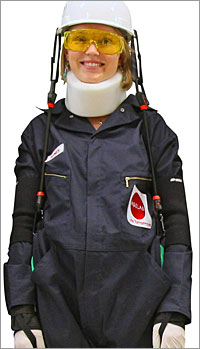
Have you heard of the MIT AgeLab? How about the AgeLab AGNES suit? The Age Gain Now Empathy System, or AGNES, is a suit that mimics the physical restrictions of age when worn. Sounds interesting, doesn't it? If you want to imagine what it feels like to be 80 or 90 years old, then the AGNES can give you that "virtual reality" experience. So, the next time you're about to provide instructions for your geriatric patient, consider how he or she moves around the house. If you're not sure, then get in line to try the AGNES suit for a few days and you'll quickly know what some people go through on a daily basis. Image Source: Boston Globe

Patient Centered Medical Home


Have you heard of the Patient Centered Medical Home (PCMH)? It's a concept that has recently emerged to encourage comprehensive medical care in today's complex (and often confusing) health care system. It focuses on improving quality and safety of the whole person (from start to finish) through the use of integrated care (or coordinated care) and enhanced access. Essentially, physicians are forming partnerships with patients and family members.

To read the Joint Principles of the PCMH, click here. These were developed by the following four groups:
  • American Academy of Family Physicians (AAFP)
  • American Academy of Pediatrics (AAP)
  • American College of Physicians (ACP)
  • American Osteopathic Association (AOA)

My Personal Growth on Twitter: 6,000 New Followers in 30 days!


Although I had a Twitter account since 2008, I only started using Twitter seriously about two months ago. At the beginning of April, I only had about 30 followers. I had started to place links to Twitter on my blogs and I was promoting my Twitter account on various sources. Then, my Twitter traffic started to increase rapidly (and I attribute most of this to blog traffic and several other Twitter marketing techniques that don't involve viral marketing techniques).

I am not a fan of viral marketing techniques. However, I generally like to follow people who follow me because I've found that I can gain some interesting insights and perspectives this way. I've applied that personal philosophy to Twitter and look at my growth pattern:
  • 30 days ago (April 27), I had roughly 1,000 followers.
  • Today (May 27) - I now have over 7,000 followers!
Does this mean that I'll have 14,000 followers 30 days from now? I doubt that because my Twitter growth has started to level off a bit and I'm no longer seeing those huge jumps in my numbers. TwitterCounter is currently predicting that I'll have roughly 10,500 followers in 30 days. Let's see if that comes true.

Thanks for following me on Twitter! I appreciate all the tips, suggestions, and helpful feedback. In these two months, I've learned many ways to leverage the power of Twitter to drive traffic to my sites and to grow my social network. I hope you're enjoying the content found on my sites. Please tell others know about my blogs:

Tuesday, May 26, 2009

FDA Approves Samsca


Last week, the FDA approved Samsca (tolvaptan) for the treatment of hyponatremia (or low blood sodium levels). The topic of hyponatremia often confuses medical students because of the complex physiology involved in sodium regulation. You have hormones like ADH (antidiuretic hormone) affecting the kidney. Then you may get patients with mental illness who may also have primary (or psychogenic) polydipsia. These individuals drink so much water that their blood sodium level gets dangerously low.

Samsca is approved to treat hyponatremia associated with congestive heart failure, liver cirrhosis, and the syndrome of inappropriate antidiuretic hormone secretion (SIADH). What's also interesting is that the FDA is requiring a Risk Evaluation and Mitigation Strategy (REMS) that requires a patient Medication Guide be given out when the drug is dispensed. Why? Because Samsca comes with a boxed warning about the possibility of osmotic demyelination syndrome (ODS). Samsca is marketed by Otsuka Pharmaceuticals Co. Ltd., Tokyo, Japan.

Want to Go Back in Time?


I know so many physicians who want to travel back in time to the days before direct-to-consumer (DTC) advertising was allowed. In those days, patients did not get bombarded with television, Internet, radio, and magazine ads about specific drugs. Pharmaceutical companies spend billions of dollars each year on DTC advertising. Many people want to see DTC go away. However, proponents of DTC would argue that these commercials have improved public health awareness of certain conditions (like cervical cancer) and have also informed patients that treatment for specific conditions are available.

So, what if we simply changed the rules behind DTC marketing?
  • Instead of mentioning a specific drug name, mention the condition and urge consumers to "talk to your doctor" about the options that are available. Will pharmaceutical companies continue DTC advertising if that became the new rule? Perhaps only those companies that have the ONLY drug for a specific condition (how often does that occur?). Maybe this type of change isn't feasible.
  • What if DTC ads were multi-sponsored or multi-supported? In other words, take all the drug manufacturers who make a drug for a specific condition (let's say restless leg syndrome or RLS). Then, have them all contribute funds towards an RLS commercial. The commercial will improve public awareness of this condition and also list each of the drugs that are used to treat this condition. Would this work?
What are your thoughts about DTC? We probably won't see DTC completely disappear. Some want to delay DTC ads for one year (let the doctors learn about the new drugs before the patients learn about them). I'd personally like to see the funds for DTC channeled towards efforts that focus on improving public health and health/medical education for both consumers and healthcare professionals.

Simple Blogging Tips for Physicians

I'd like to offer some very simple blogging tips for physicians and other healthcare professionals who wish to start a blog (but who are also not super computer-savvy). You don't have to be a problogger to start a simple blog. If you decide that you really enjoy blogging, then you may wish to invest some time, energy, and resources into it.

One of the most popular frequently asked questions is: How do you increase traffic? Here's something that may be helpful: Medical Blogging Tips to Increase Traffic

My PCP Makes House Calls. Does Yours?


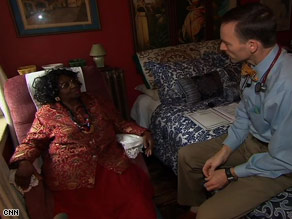
My primary care physician (PCP) makes house calls. Does yours? CNN is reporting about a geriatric physician who makes house calls with a black bag and a BlackBerry. I'm not sure how the BlackBerry fits into the picture since many physicians carry a smartphone these days.

Here's an interesting point from CNN: "Ten years ago, Medicare made it easier for physicians to receive payments for house calls by modifying the way doctors bill for their procedures. And this month, a new "Independence at Home" bill -- designed to coordinate benefits for Medicare's most expensive beneficiaries... -- will be reintroduced, making it easier and less expensive to carry out house calls."

So, if your physician doesn't make house calls, maybe you should tell him or her about this story. That may make it easier for you to get someone to see your geriatric loved one who has a difficult time leaving the house.

Monday, May 25, 2009

Are You Sceptical about What Causes or Prevents Cancer


According to the BBC News, people in the UK are "deeply sceptical about scientific claims for what causes or prevents cancer." Hmm, let's see exactly what this poll tried to uncover.

Here's the first snippet: "The YouGov survey of 2,400 people for the World Cancer Research Fund (WCRF) found more than half thought scientists were always changing their minds."

I admit that we as medical scientists and researchers have made some mistakes in the past. At one time, we physicians made claims about the healthy effects of cigarette smoking. Either we were all being bribed by the tobacco industry or we really had an erroneous knowledge of the carcinogenic effects of smoking. Now, we all know that smoking causes lung cancer. The scientific evidence is very compelling and I doubt that anyone would argue that point.

How about red meat and colon cancer? That seems to be another point where some scientists are going back and forth (regarding whether we have enough evidence to substantiate that eating red meat does or does not increase the risk of colon cancer).

Here's another snippet from the article: "The WCRF says that most scientists agree about the steps people can take to reduce their risk of cancer - and that this advice has largely stayed the same for the last 10 years." The basics have not changed. We should eat a healthy diet and exercise regularly. I don't think any scientist will argue that the evidence has changed on these aspects of healthy living.

Happy Memorial Day!


Formerly known as Decoration Day, Memorial Day commemorates U.S. military who died in service. If you work in a Veterans Affairs (VA) hospital, then this holiday may be more meaningful to you since you're constantly surrounded by military veterans.

I'm not working today. In fact, I've been away for the weekend, spending time with my family in the mountains. We've done some hiking and it's been great! I've been doing a tiny bit of blogging when everyone else has been napping, but I hope to get back into the full swing of things later this week.

Sunday, May 24, 2009

Nine Swine Flu Deaths in Six States


CNN is reporting that a 2nd death has occurred in New York. There have now been nine deaths in the U.S. in six different states due to H1N1, and this case now brings the total up to 10 U.S. deaths. I don't think we'll see many deaths related to swine flu over the summer but I'm worried about the upcoming fall and winter. I doubt we'll be eradicating swine flu, so it will come back and hit many people this flu season. I just hope that we find an effective vaccine before that happens. The CDC is currently evaluating a candidate vaccine. Let's hope that it works! Image source: CNN

Novel Cancer Biomarkers, Oncogenes, and Targeted Therapies


Since I graduated from medical school (many years ago), we have discovered so many new cancer biomarkers and oncogenes. The world of genomics has really taken off! As I think about the future of medicine, I often wonder about how many more biomarkers and oncogenes we will discover. How many new drugs will get developed to specifically target the overexpression of specific oncogenes? Human genetics and molecular biology are becoming more fascinating topics because we now have the ability to engineer drugs that target specific genes and gene products.

Here are a few examples of some of the newer areas of cancer research:
  • DNA Methylation Biomarker, Septin 9, (Colorectal Cancer)
  • Non-codingRNA (microRNA)
  • Metabolomics-derived Biochemical Markers (Prostate Cancer)
We all know about BRCA1 and BRCA2. We also know that HER2 overexpression can be targeted by an anti-HER2 humanized monoclonal antibody (called trastuzumab or Herceptin). The topic of personalized medicine has been gaining tremendous traction, especially in the oncology world. What if there was a way to prevent hereditary cancers? If we can identify ways to target the specific gene (or genes) that are causing cancer, then we might be able to prevent those malignancies. Advances in drug development have led to many biologic agents (targeted therapies) that act on specific pathways like VEGF (vascular endothelial growth factor) and block the formation of new blood vessels. You've probably heard of bevacizumab or Avastin, which is a VEGF-inhibitor.

Speaking of biologic drugs, I still remember when the first tyrosine kinase inhibitor (TKI) came out. Remember when Gleevec (imatinib) came out? TKIs have now evolved into agents that target multiple different tyrosine kinase pathways and even inhibit EGFR (epidermal growth factor receptor). We now have nilotinib (Tasigna), dasatinib (Sprycel), erlotinib (Tarceva), gefitinib (Iressa), and several more coming. How do medical students keep up with all these drugs? Students today are even learning about new compounds like histone deacetylase inhibitors (HDAC inhibitors or HDIs). We've certainly come a long way in the world of cancer biomarkers, oncogenes, and targeted therapies. What will the future look like as we learn how to target these biomarkers and oncogenes? Image source:

Top Posts Last Week: Medicine and Technology

Here are the top posts for last week:
  1. CIMZIA and OXO GOOD GRIPS

  2. Medical Software for the BlackBerry Storm

  3. Jobs for Physicians with No Residency Experience

  4. How Do You Calculate GFR?

You can see that some people (or I should say recent medical school graduates) are still very interested in finding jobs for physicians with no residency experience. That post was written last June! Because I got so many questions about this topic, I created a site specific about "non-clinical jobs, careers, and opportunities."