
Wednesday, January 28, 2009
Attending the Alliance for CME Conference in San Francisco
I'm now in San Fransisco attending the Alliance for CME conference. I wasn't sure if I was going to get here today because of the crazy weather in the northeast. Fortunately, the plane took off after some thorough deicing and now I'm here in California. The Alliance is a very large meeting and its membership has grown considerably since 1996.


Monday, January 26, 2009
Intel Webinar on Mobile Health Technology
If you're interested in learning more about mobile health technology, then take a look at this free Intel Webinar.
Managing Change: How to Overcome Obstacles and Encourage Mobile Technology Adoption
Can you make the case for healthcare IT to your staff and clinicians?
This complimentary, one-hour webinar shows you how to create a change-management process, one that succinctly outlines the benefits of adopting mobile point-of-care solutions including:
Managing Change: How to Overcome Obstacles and Encourage Mobile Technology Adoption
Can you make the case for healthcare IT to your staff and clinicians?
This complimentary, one-hour webinar shows you how to create a change-management process, one that succinctly outlines the benefits of adopting mobile point-of-care solutions including:
- More safeguards to prevent life-threatening errors
- Faster decisions in caring for patients based on the latest changes in their condition
- More time for nurses to spend at a patient’s bedside and less pushing paper
- More efficient care, which means less waste and less cost
Mobile point-of-care technologies contribute to efficiency and patient safety, but moving staff and clinicians into this new world can be a battle. At this event you'll hear Ohio Health, SunStone Consulting, and St. John’s Hospital tell their own adoption stories. You'll also get a chance to submit questions and join the conversation.
A recent national survey reveals that adoption of new technologies by clinicians is the biggest challenge when launching mobile point-of-care solutions (63 percent).
Improved Clinical Outcomes through Informatics

The current issue of the Annals of Internal Medicine has some really interesting articles for those of you interested in health informatics. The main study is a multi-hospital study that evaluates the use of health IT resources and actual patient outcomes. Here's the bottom line: "Hospitals with automated notes and records, order entry, and clinical decision support had fewer complications, lower mortality rates, and lower costs."
David Bates, MD, MSc, also writes a nice editorial on the effects of health information technology on inpatient care.
Does your hospital use an electronic health record (EHR) system? HIT is expensive, but it's worth the investment when you see the type of impact it makes on patient care and clinical outcomes.
Sunday, January 25, 2009
30 Best Careers?
There's a story on Business Week that was published last month. It's the "30 best careers for 2009." There were several healthcare positions on that list. However, "physician" didn't make the list. Interestingly, physician assistant (or PA) did make the cut. Do you know what else was interesting? Ghostwriter was also on that list. So was health policy specialist? If you want to see the entire list and read more about these different types of jobs, then take a look at the story.
Thinking About Business School?

If you're a healthcare professional (physician, pharmacist, nurse, PA, NP, etc.), and you're thinking about business school (also referred to as "B school,") to get an MBA, then you may be doing some research into part-time programs. After all, you probably can't afford to stop work and enter a full-time program. This is a common scenario for many clinicians. Even though I don't have an MBA, I frequently get asked questions about B school from doctors and medical students.
Business Week has a nice summary of part-time MBA programs:
http://bwnt.businessweek.com/interactive_reports/bschool_ptmba_2007/
It's an old summary, but it may give you some direction as you plan your future. Care to share your thoughts about B School? I'd love to hear from you.
Looking for a Job?
If you're looking for a job, you may want to try clicking on the links seen on the right column. These jobs are posted by JobThread and you may find something that sparks your interest. Furthermore, you may also get a glimpse at the different types of jobs that are available.
Plan to purchase the Samsung Q1EX? Future of UMPCs
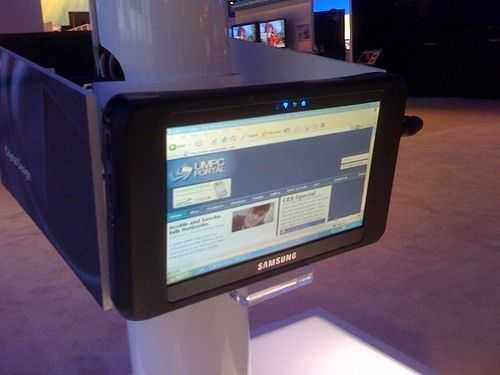
Who plans on getting the new Samsung Q1EX? No navigation buttons, no keyboard buttons. It's been a bit confusing keeping up with all the different Samsung UMPC tablets. There was the Q1, then the Q1Ultra (or Q1U), followed by the Q1 Ultra Premium (Q1UP), and now the Q1EX. Does any of this make sense?
Since most consumers are getting a netbook, who's still buying these UMPCs? Sony got rid of the Vaio UX series and came out with the Vaio P Lifestyle PC. Why didn't Sony include a touch screen? My guess: to keep the device as thin as possible. Maybe the next edition of the P series will have one. You can get the best of both worlds with the Fujitsu U820. Here, you get a clamshell device with a touch screen and a keyboard.
Subscribe to:
Posts (Atom)